
Illustration & Design
Image-Guided Maze Art
Style guide
Black right-angled walls and branching white passages vary in density, with tiny junctions and dead ends creating readable tones.
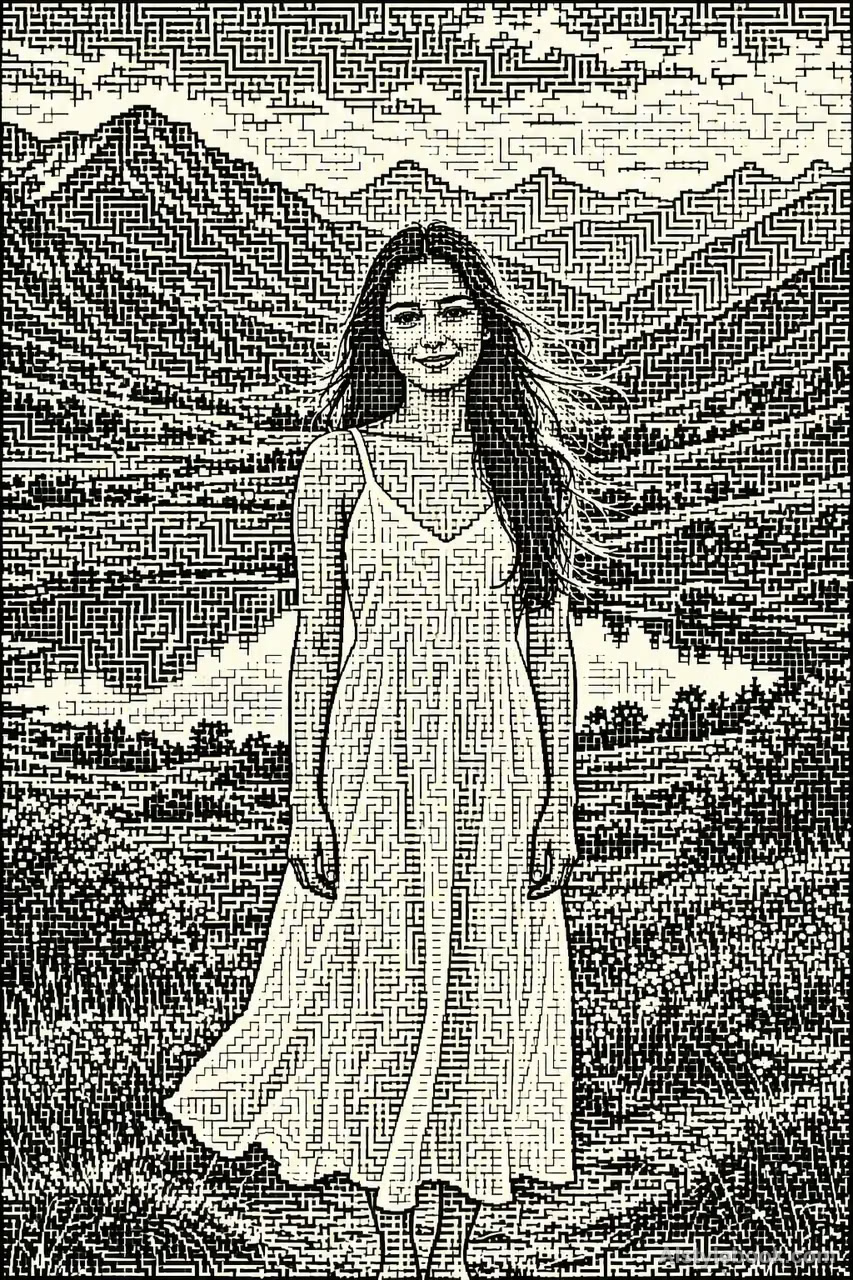
PortraitStyle effect
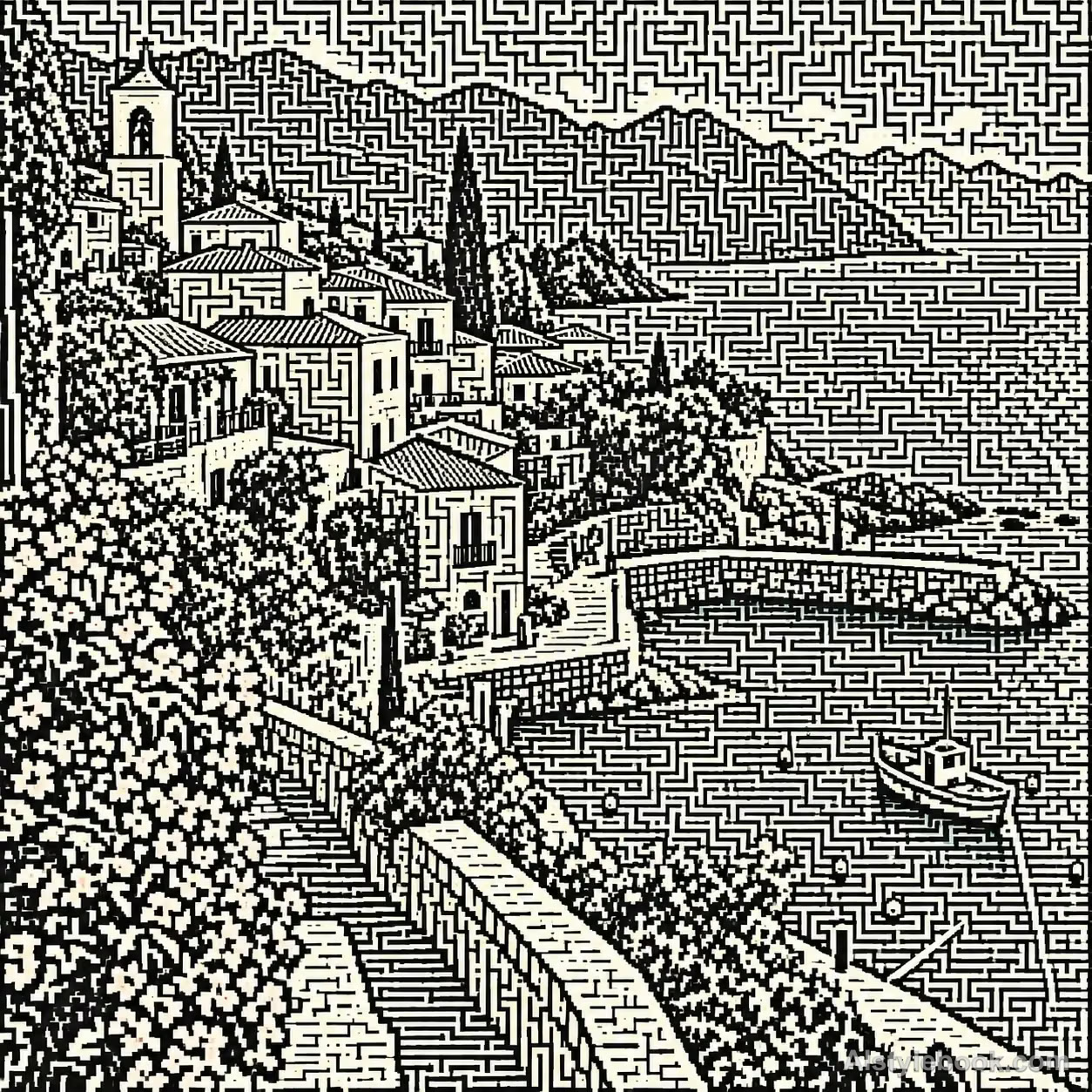
LandscapeStyle effect
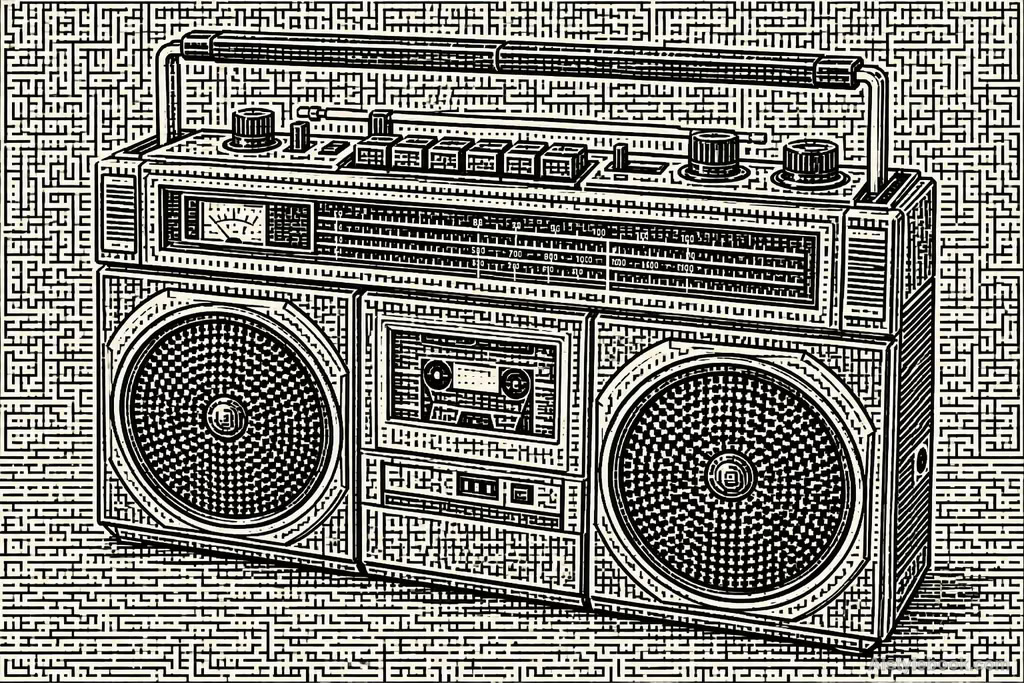
ObjectsStyle effect
The visual language
What is Image-Guided Maze Art?
Black right-angled walls and branching white corridors create a larger image through varying density. Junctions and dead ends remain visible, though the visual maze is not necessarily a verified solvable puzzle.
Image mazes use wall and passage density to create tonal structure; solvability is a separate property.
Wide forehead passages and tight hair turns can form a portrait without guaranteeing one valid route.
How the style changes different subjects
- Portrait
- Changes in line spacing or width reveal facial tones within a continuous line field.
- Landscape
- Line density separates scenery while one coherent system replaces literal texture.
- Objects
- Line spacing models curves and broad gaps supply highlights, often reducing small lettering.
- Subjects
- Choose side-lit portraits, hills, spheres or simple objects with clear tonal structure.
Bring the style to your photos
Reusable style prompt for Image-Guided Maze Art
Translate the image into a black orthogonal maze-like network. Fine walls and white branching corridors enclose every form, with visible T-junctions and short dead ends. Encode original values through wall thickness, corridor width and local network density, absorbing every detail into one right-angle path language. Keep the ivory paper clean. Let major contours emerge from changing network direction to create a rich, connected graphic rhythm.Use the same style prompt for portraits, landscapes and objects.
Create with this styleKeep exploring


