
Photography & Film
Underwater
Style guide
Blue-green scattered light, soft caustics and fading contrast create clear underwater optics.
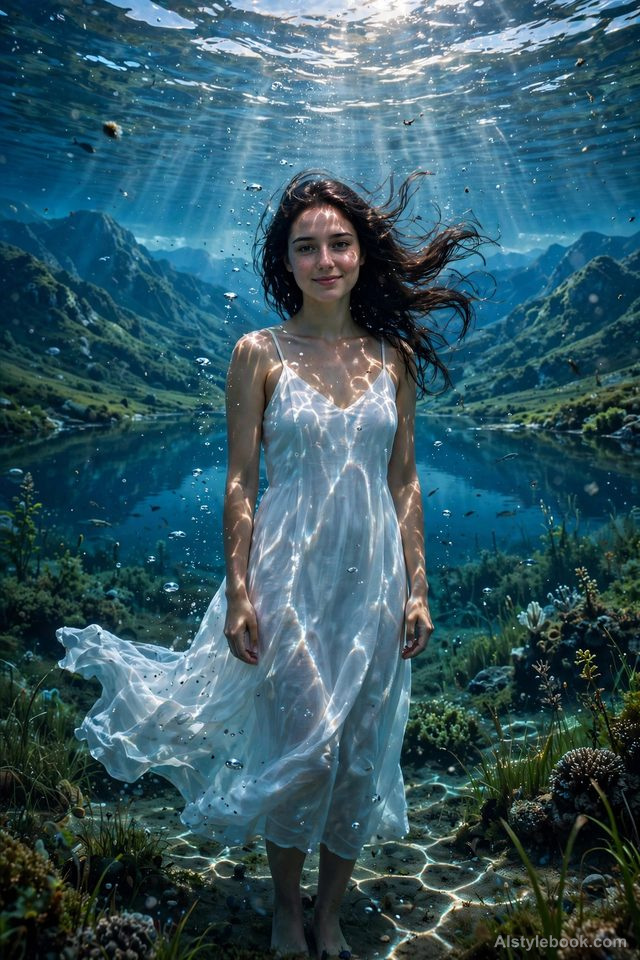
PortraitStyle effect
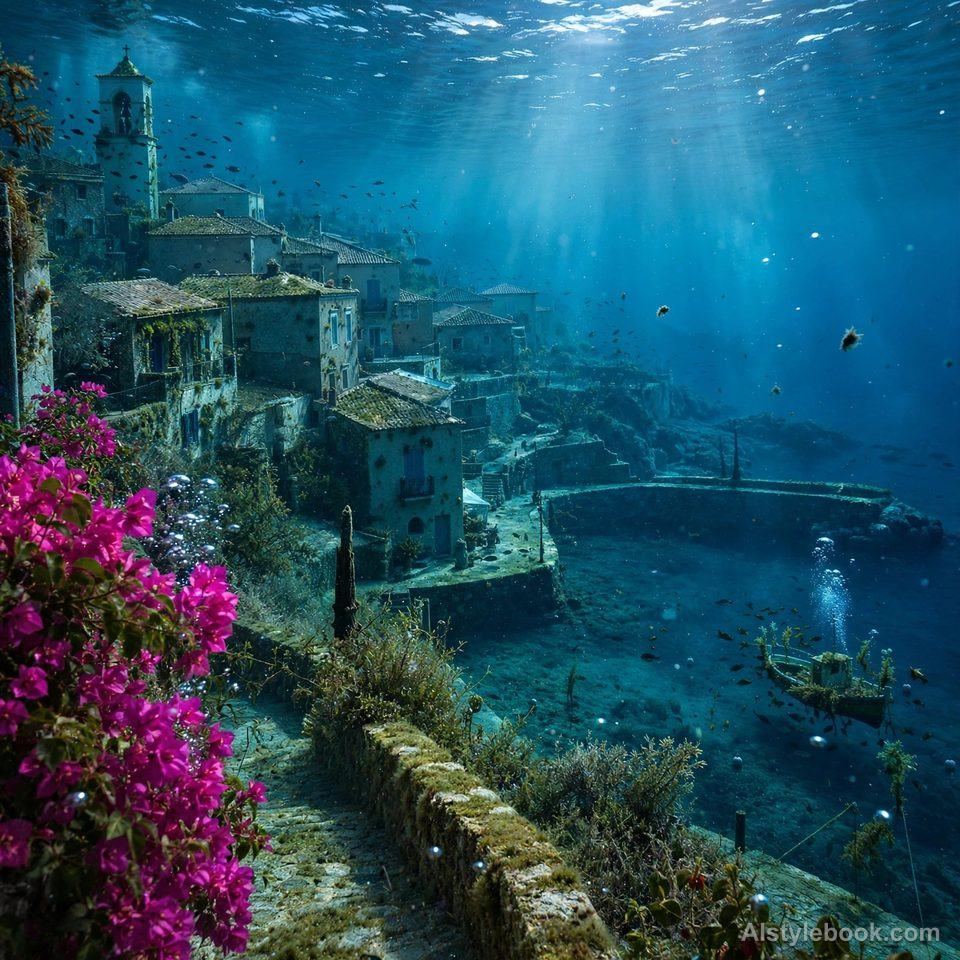
LandscapeStyle effect
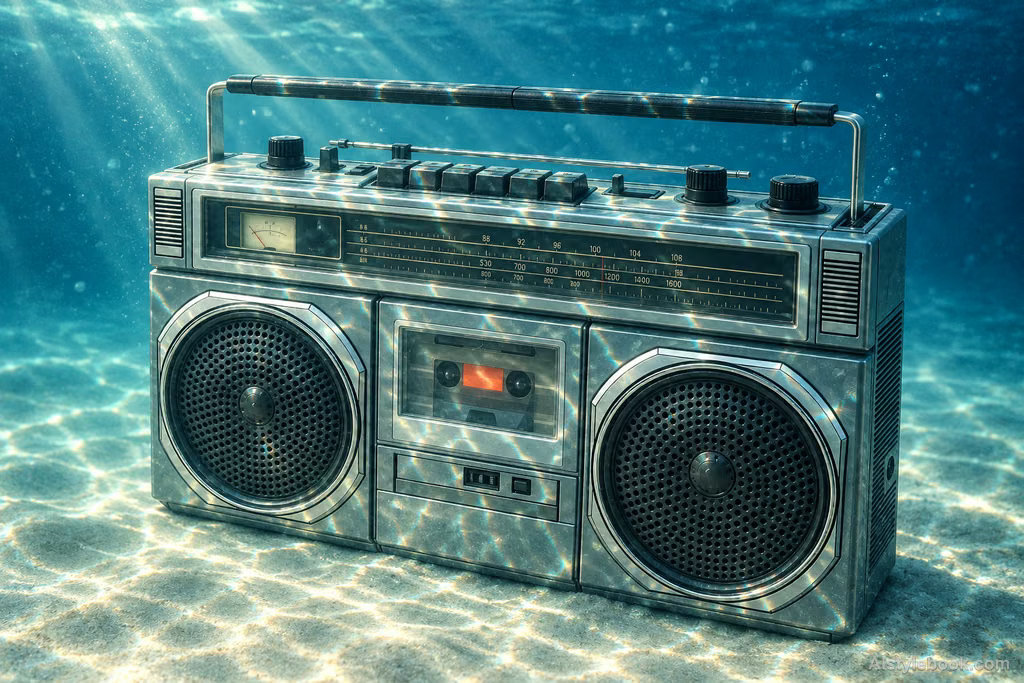
ObjectsStyle effect
The visual language
What is Underwater?
Blue-green scattering and distance-dependent contrast loss suggest a view within water. Continuous ripple caustics and sparse suspended particles describe the depth of the medium.
Water absorbs and scatters light, reducing color and contrast with distance.
Warm detail in nearby coral fading toward blue-green silhouettes can make the intervening water perceptible.
How the style changes different subjects
- Portrait
- Skin and clothing take on the water's color; floating hair, fabric and rippling light emphasize bodily curves.
- Landscape
- Contrast falls with distance while shafts of light and suspended particles give the setting underwater depth.
- Objects
- Moving caustics break up reflections on glass or metal, and refraction interacts with the silhouette.
- Subjects
- Choose open poses, underwater rocks and plants, or clearly shaped objects. Small warm-colored subjects can stand out against blue-green surroundings.
Bring the style to your photos
Reusable style prompt for Underwater
Use the optical behavior of light passing through a transparent medium, creating depth with cool blue-green tones, distance-dependent contrast reduction, and softly scattered beams. Let continuous, delicate ripple caustics cross the subject's surfaces, with a few suspended particles enriching spatial layers. Moderately attenuate warm colors and soften distant detail. Keep refraction consistent with the lighting direction, maintaining clarity rather than murky defocus.Use the same style prompt for portraits, landscapes and objects.
Create with this styleKeep exploring


