
Pixels & Characters
Voxel Art
Style guide
A uniform cubic grid creates stepped contours, while an isometric view and soft light emphasize layered blocks.
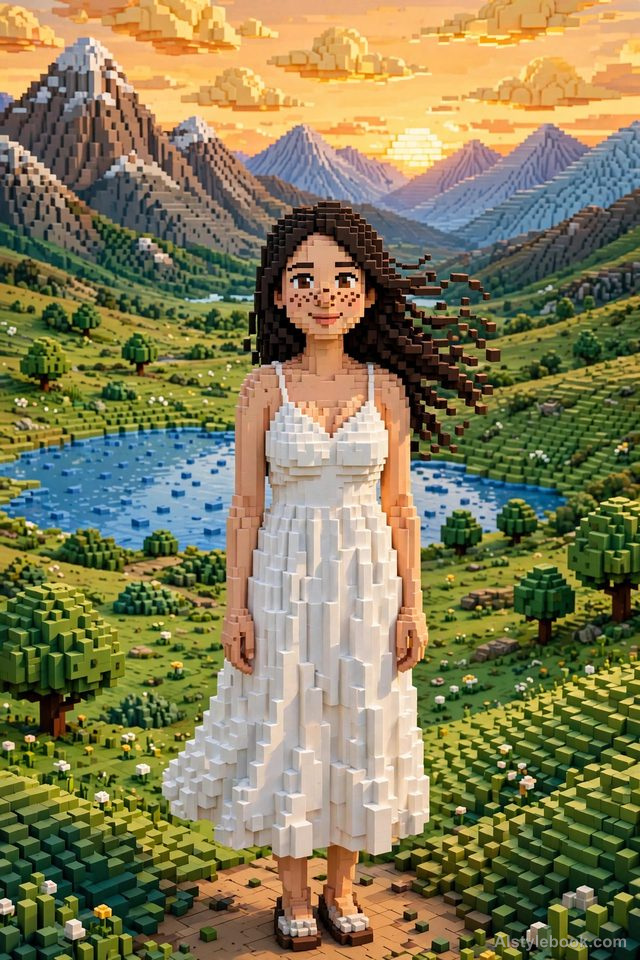
PortraitStyle effect
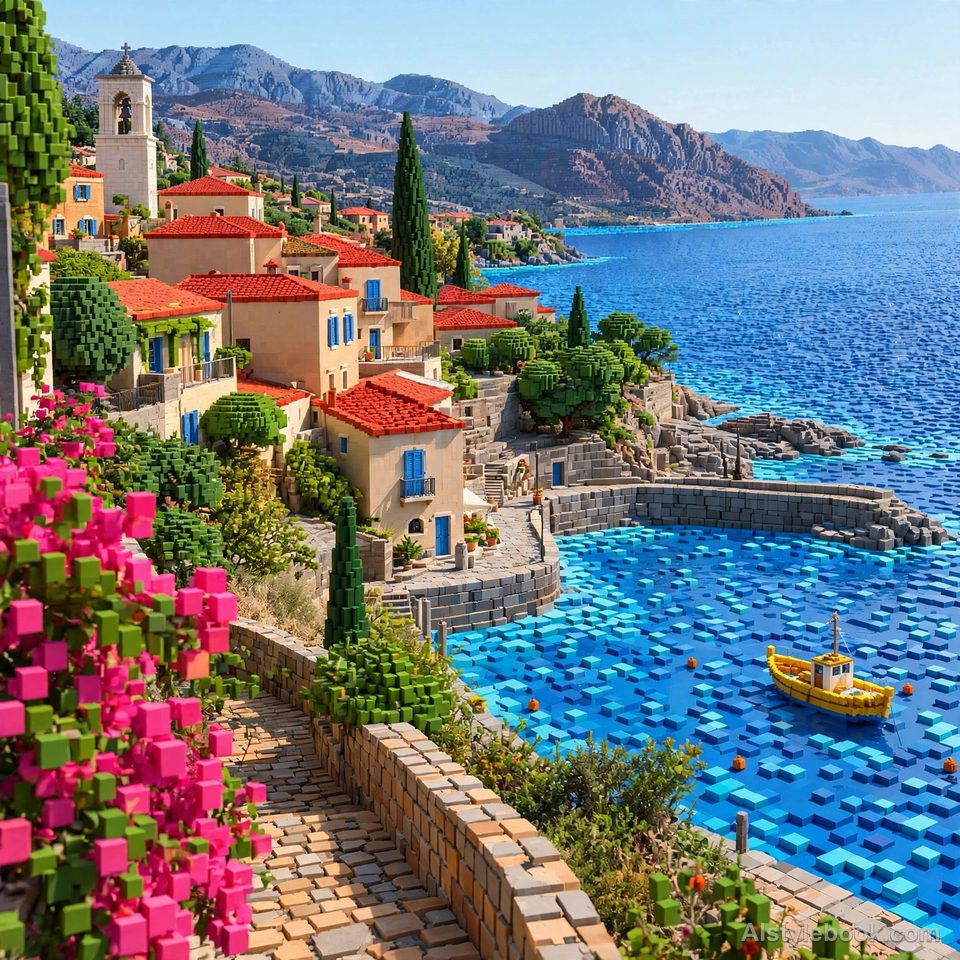
LandscapeStyle effect
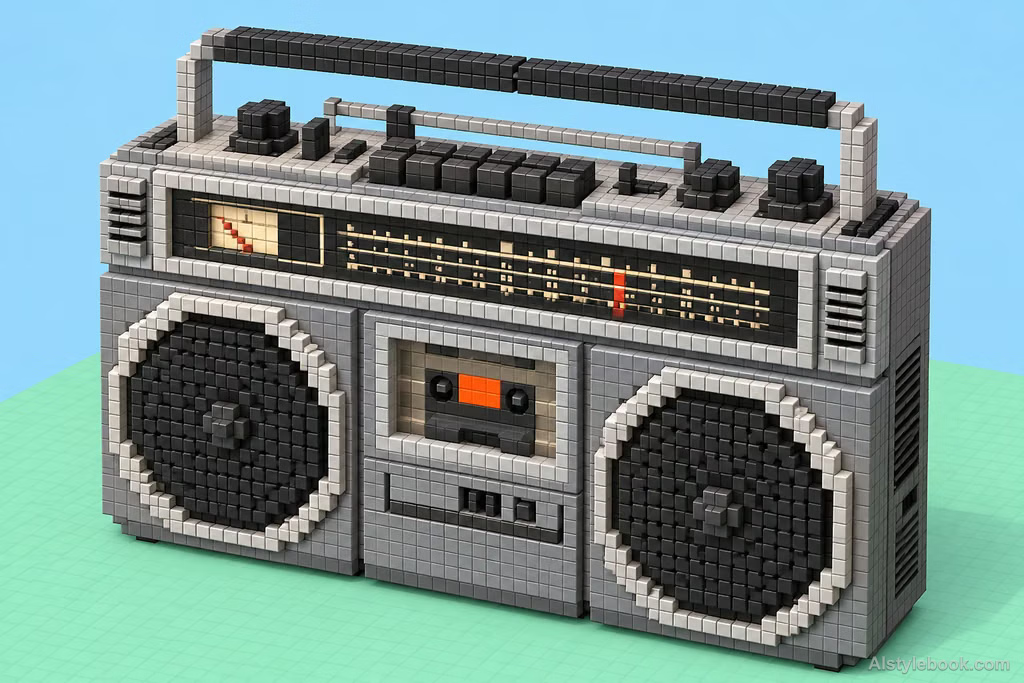
ObjectsStyle effect
The visual language
What is Voxel Art?
Forms are rebuilt from cubic units at one consistent scale, with details expressed through stacked blocks and color changes. Isometric projection keeps matching edges parallel while soft light clarifies the layers.
Voxel art organizes three-dimensional space into discrete cubic units.
Stepped tree canopies, trunks and roofs sharing one unit size can make an entire world feel consistently constructed.
How the style changes different subjects
- Portrait
- Building units simplify features and fingers, making hair and clothing colors essential cues.
- Landscape
- Layered blocks reconstruct scenery through stepped edges and unit shadows.
- Objects
- Curves become assembled tiers whose seams and orientations establish volume.
- Subjects
- Choose buildings, vehicles, animals or single figures with broad forms rather than thin intricate parts.
Bring the style to your photos
Reusable style prompt for Voxel Art
Reconstruct the subject on a uniform-scale cubic grid, creating clearly stepped outer contours. Express detail through block colors, arrangements, and height differences. Use strict orthographic isometric projection with parallel corresponding edges, no vanishing points, and equal scale along all axes. Let soft lighting emphasize stacked blocks and contact shadows. Preserve square surfaces for the finish of a finely crafted three-dimensional pixel model.Use the same style prompt for portraits, landscapes and objects.
Create with this styleKeep exploring


