
Textiles & Embroidery
Woven Tapestry
Style guide
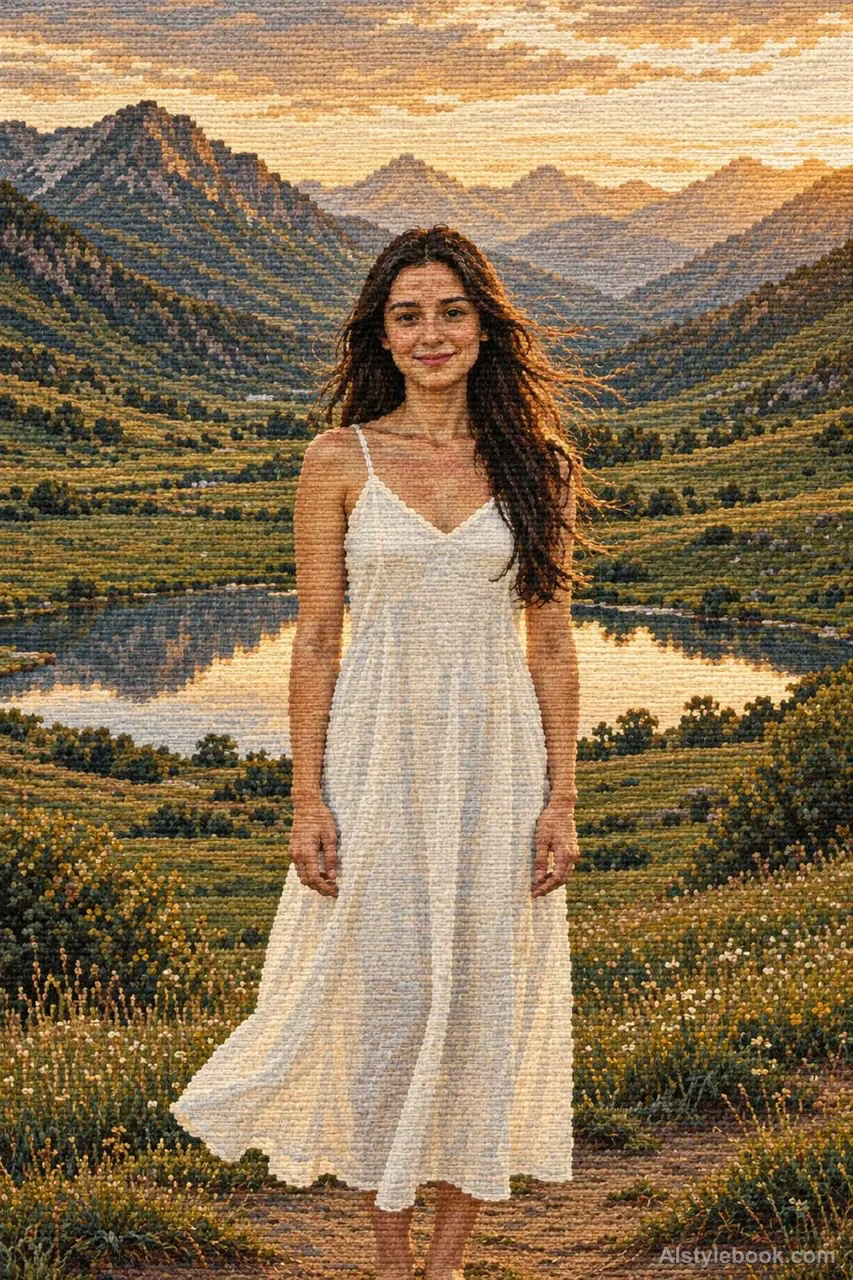
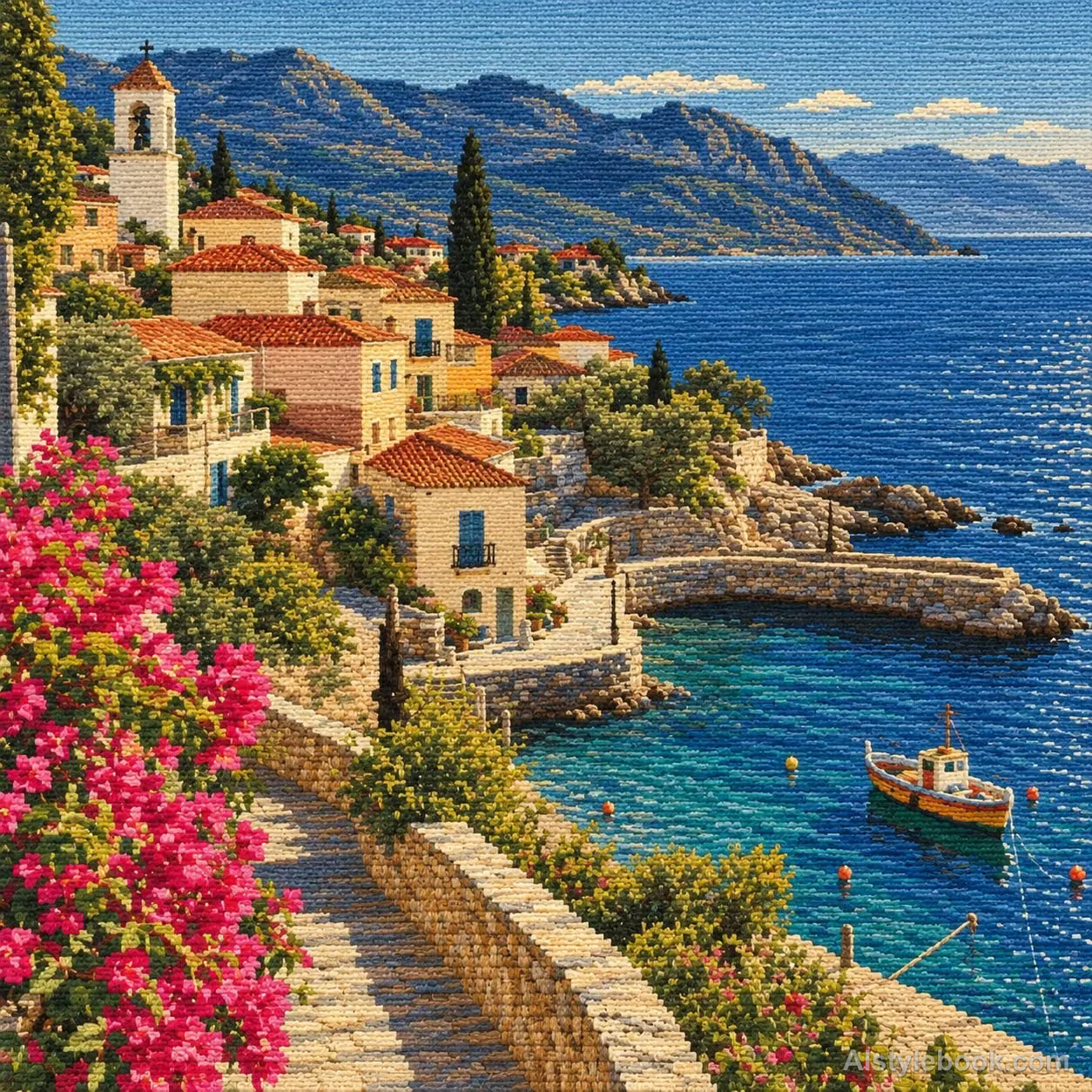
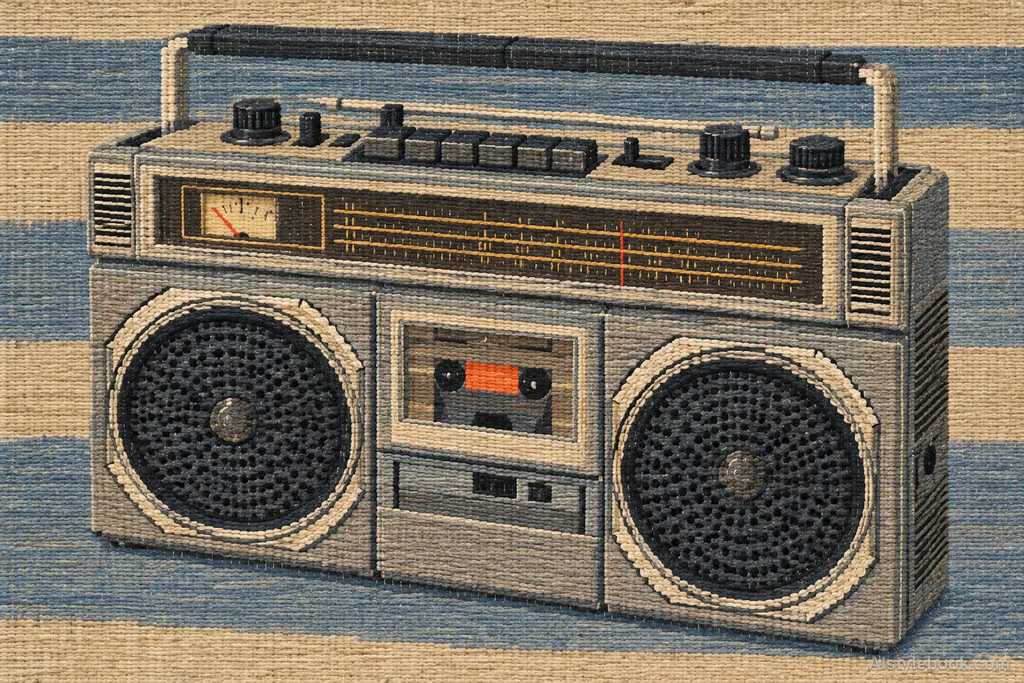
Interwoven wool color fields create stepped contours, while subtle fiber variation gives the tapestry a continuous, softly thick texture.
The visual language
What is Woven Tapestry?
Colored weft passes through warp to form a continuous image, with subtly stepped boundaries following the weave. Small differences in yarn thickness and dye keep broad flat areas softly alive.
Tapestry's image is woven into its structure rather than painted onto cloth.
A simplified face and subtly stepped garment edges can remain recognizable while exposing the woven grid close up.
How the style changes different subjects
- Portrait
- Woven color areas replace skin and clothing, with stepped or softened fiber edges.
- Landscape
- Trees, buildings and sky become a textile surface of rhythmic color masses.
- Objects
- Loops, weave and color differences give hard objects a soft, substantial finish.
- Subjects
- Choose flowers, animals, clothed figures or broad landscapes with clear subject-background color separation.
Craft and history
Historic European wall tapestries combined decoration and storytelling, typically building images with colored weft worked back and forth over selected sections.
Bring the style to your photos
Reusable style prompt for Woven Tapestry
Weave the subject as a continuous wool tapestry with a clearly visible interlaced warp and weft. Let colored yarn form flat regions, with subtly stepped contours and details following the woven grid. Express light and shade through neighboring yarn colors and variations in weave density. Preserve slight differences in fiber thickness, dye, and fuzz for a softly thick, matte material. Image and textile should be formed as one, without appliqued patches, embroidery, or separate pieced edges.Use the same style prompt for portraits, landscapes and objects.
Create with this styleKeep exploring


