
Textiles & Embroidery
Ikat Picture
Style guide
Color boundaries feather and shift vertically within the woven grid, with uneven dyed yarn and pale resist marks softening the contours.
The visual language
What is Ikat Picture?
Pre-dyed yarns align imperfectly during weaving, feathering color boundaries along warp and weft. A visible grid and pale resist marks retain rhythm, making the image seem to vibrate gently within the yarn.
Ikat patterns develop from resist-dyed yarns, so softened boundaries follow the woven directions.
A blue diamond with feathered lengthwise edges can seem to vibrate while the textile grid remains clear.
How the style changes different subjects
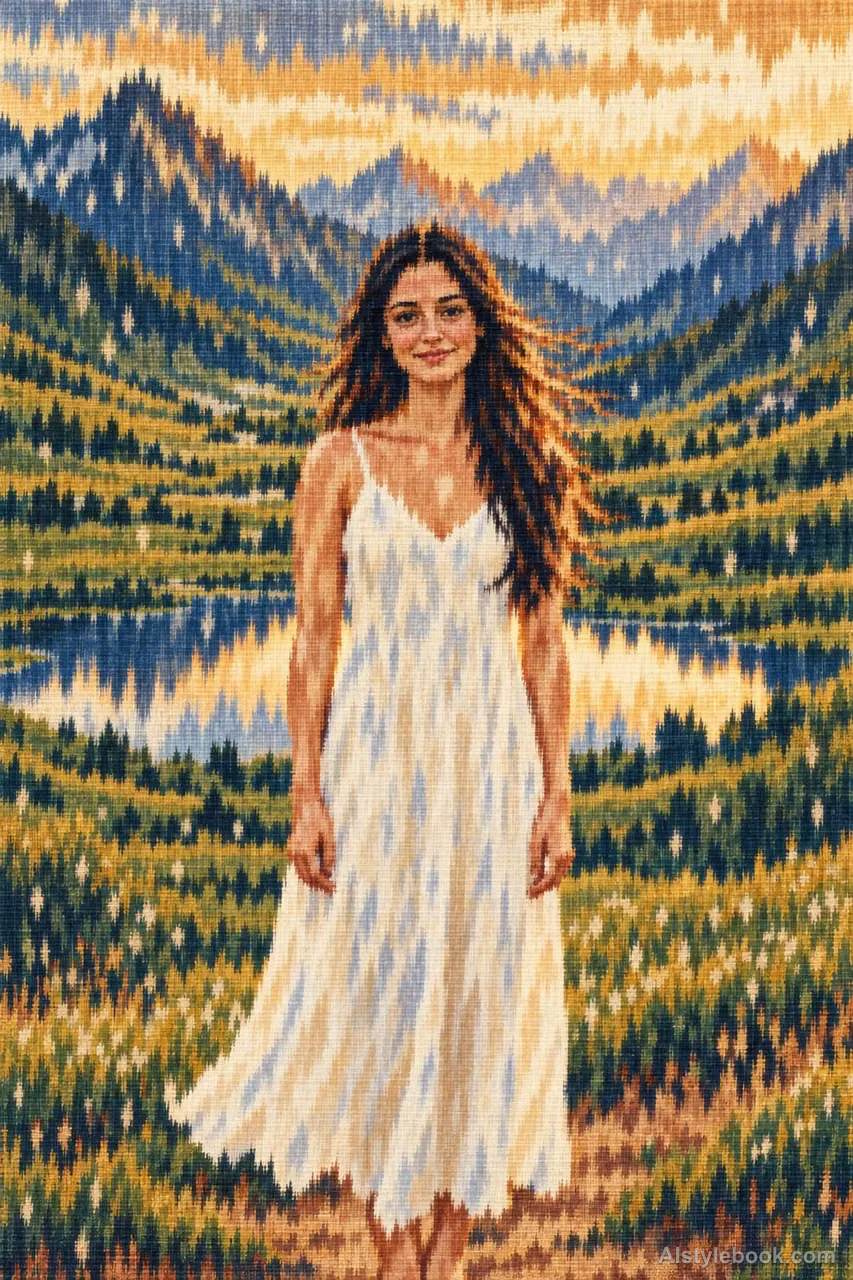
- Portrait
- Woven color areas replace skin and clothing, with stepped or softened fiber edges.
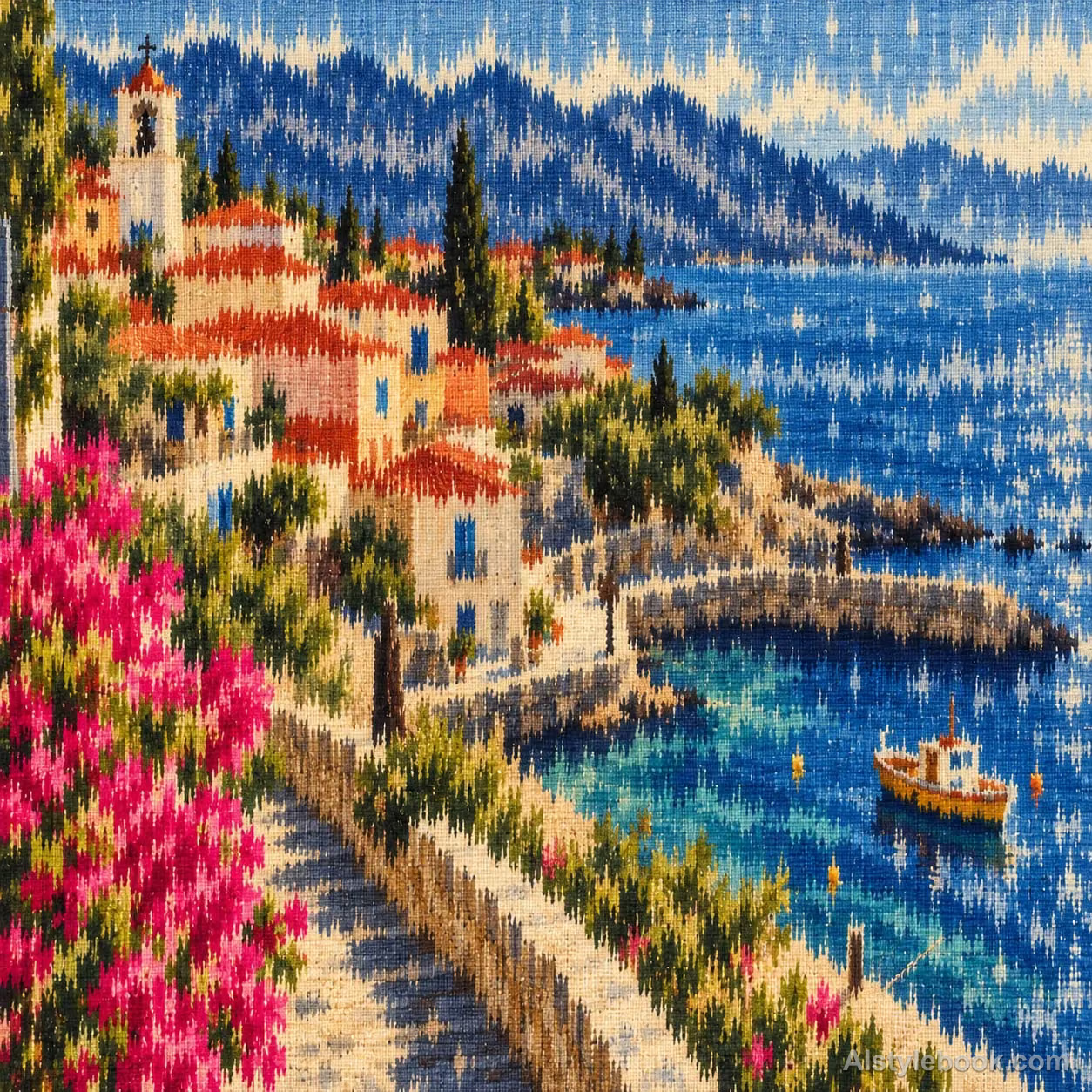
- Landscape
- Trees, buildings and sky become a textile surface of rhythmic color masses.
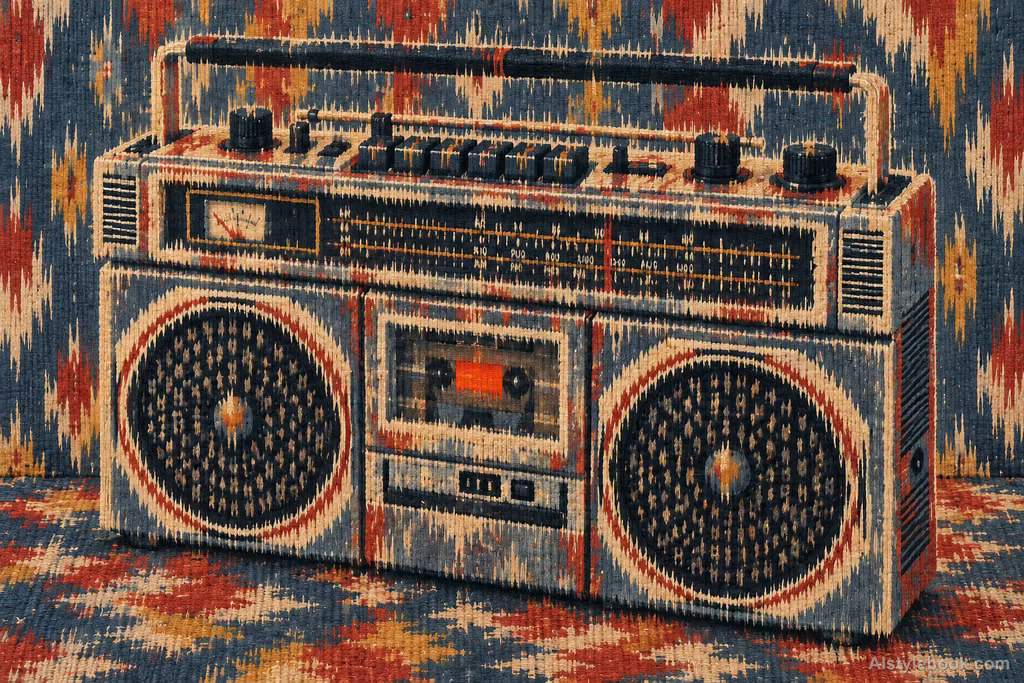
- Objects
- Loops, weave and color differences give hard objects a soft, substantial finish.
- Subjects
- Choose flowers, animals, clothed figures or broad landscapes with clear subject-background color separation.
Resist-dyed yarn and ceremonial textiles
Ikat patterns are created by binding and resist-dyeing yarn before weaving. Across Indonesian traditions, these textiles serve clothing, ceremonies, funerary uses and expressions of status, with designs ranging from geometry to human and animal figures.
Bring the style to your photos
Reusable style prompt for Ikat Picture
Weave the image as an ikat-style warp-and-weft textile. Assemble forms from predyed vertical warp segments interlaced with fine horizontal weft. Give every color boundary characteristic vertical feathering and misregistration, with staggered dye lengths and tiny pale resist flecks between threads. Keep the yarn grid visible but fine. Reconstruct original values and colors through closely fitted yarn segments, combining fiber absorption and blurred dye edges into soft woven contours.Use the same style prompt for portraits, landscapes and objects.
Create with this styleKeep exploring


