
Painting & Drawing
Yamato-e
Style guide
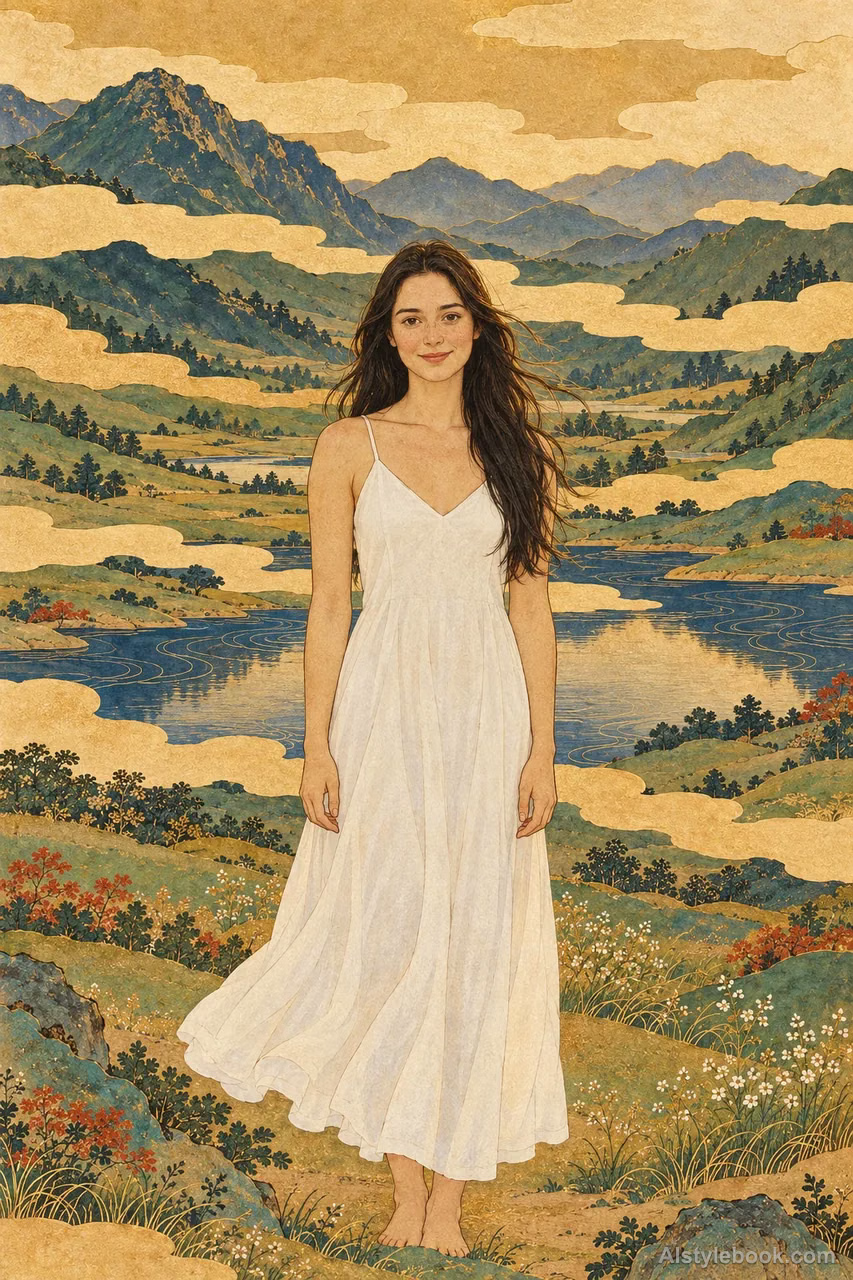
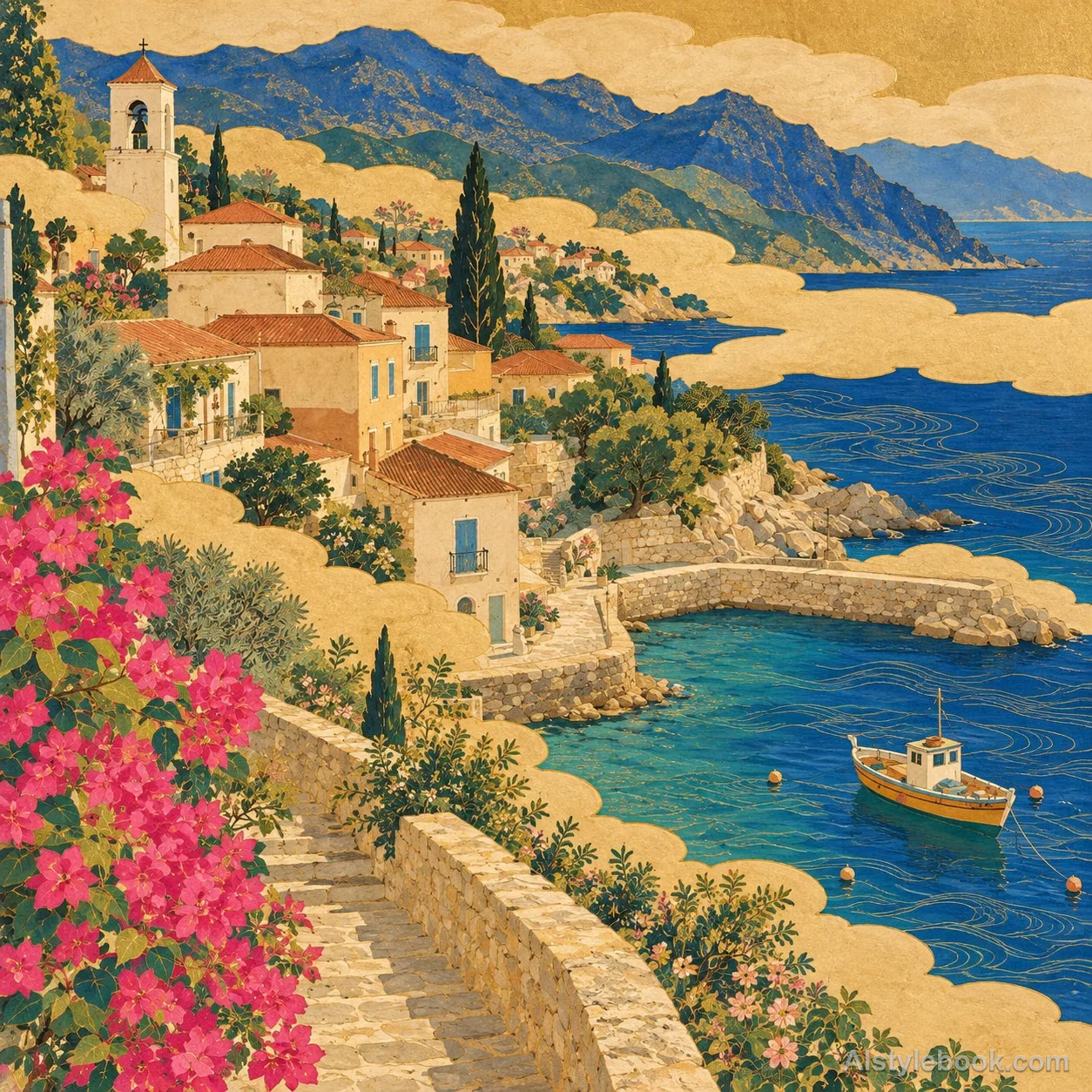
Fine ink lines and clear mineral colors build elevated banded space, with pale winding reserves creating an elegant rhythm.

The visual language
What is Yamato-e?
Fine ink contours hold clear mineral colors within overlapping raised bands. Pale winding reserves pass between forms, giving the unfolding narrative a light, readable rhythm.
Yamato-e encompasses varied traditions; this treatment emphasizes layered scenery and unfolding narrative space.
A river linking houses and mountains can guide the eye through successive groups of figures.
How the style changes different subjects
- Portrait
- Pose and garment patterns become clearer while volumetric shadows recede, emphasizing relationships between figures.
- Landscape
- Buildings, gardens and terrain unfold in layered color planes that can be read section by section.
- Objects
- Fine contours and even color emphasize small ornament and orderly object placement.
- Subjects
- Choose gardens, groups of people, distinctive clothing or arranged objects with clear narrative relationships and spatial layers.
Yamato-e subjects
Yamato-e flourished in Japan’s Heian period; the term initially distinguished Japanese subjects from themes imported from China.
Bring the style to your photos
Reusable style prompt for Yamato-e
Repaint the image in a Yamato-e-inspired language. Define simple contours with fine ink lines and fill them with vivid, steady opaque mineral colors. Arrange existing space into elevated, overlapping bands. Let pale sinuous reserves pass through existing openings, simplifying selected textures into elegant short lines and delicate ripples. Keep details restrained and color fields clear, preserving recognizability through a warm ground and orderly overlaps.Use the same style prompt for portraits, landscapes and objects.
Create with this styleKeep exploring


