
Textiles & Embroidery
Cross-Stitch
Style guide
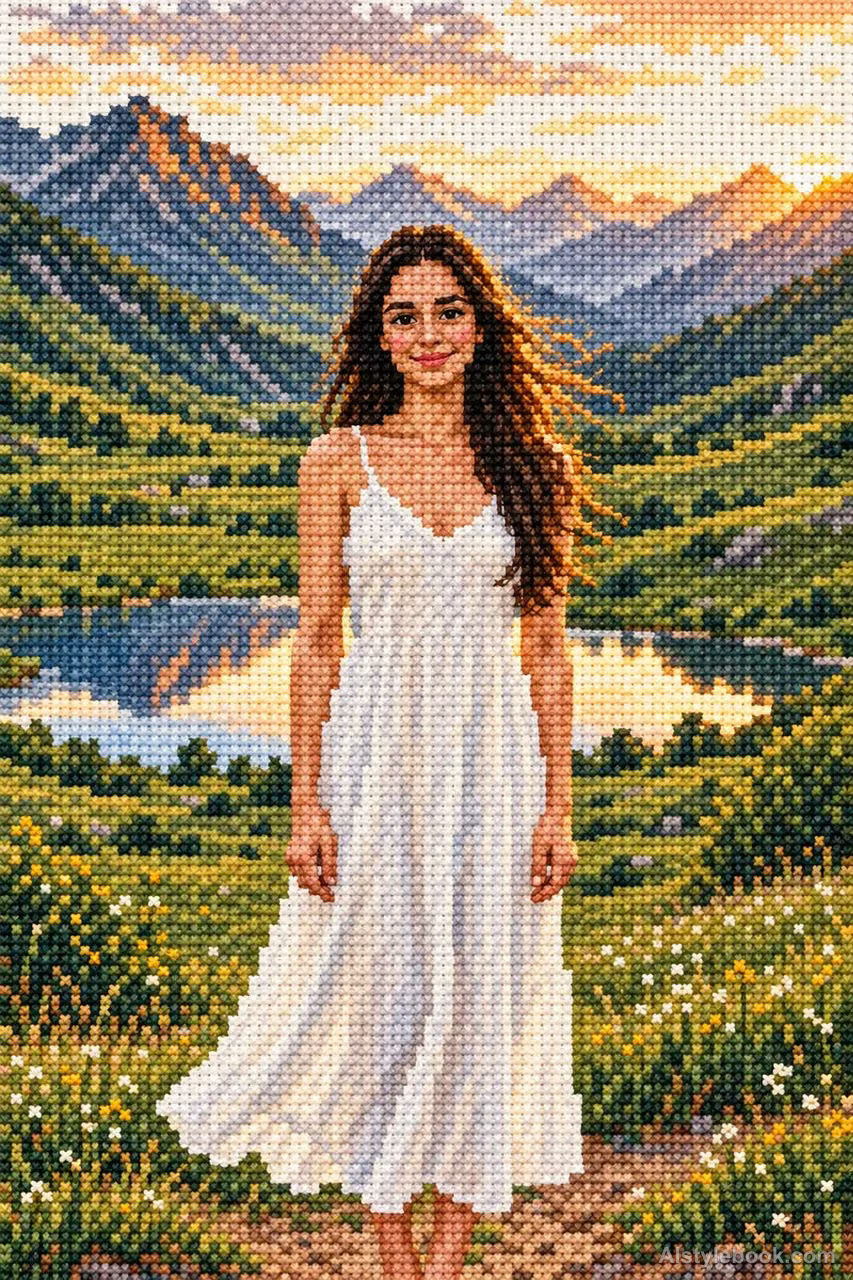
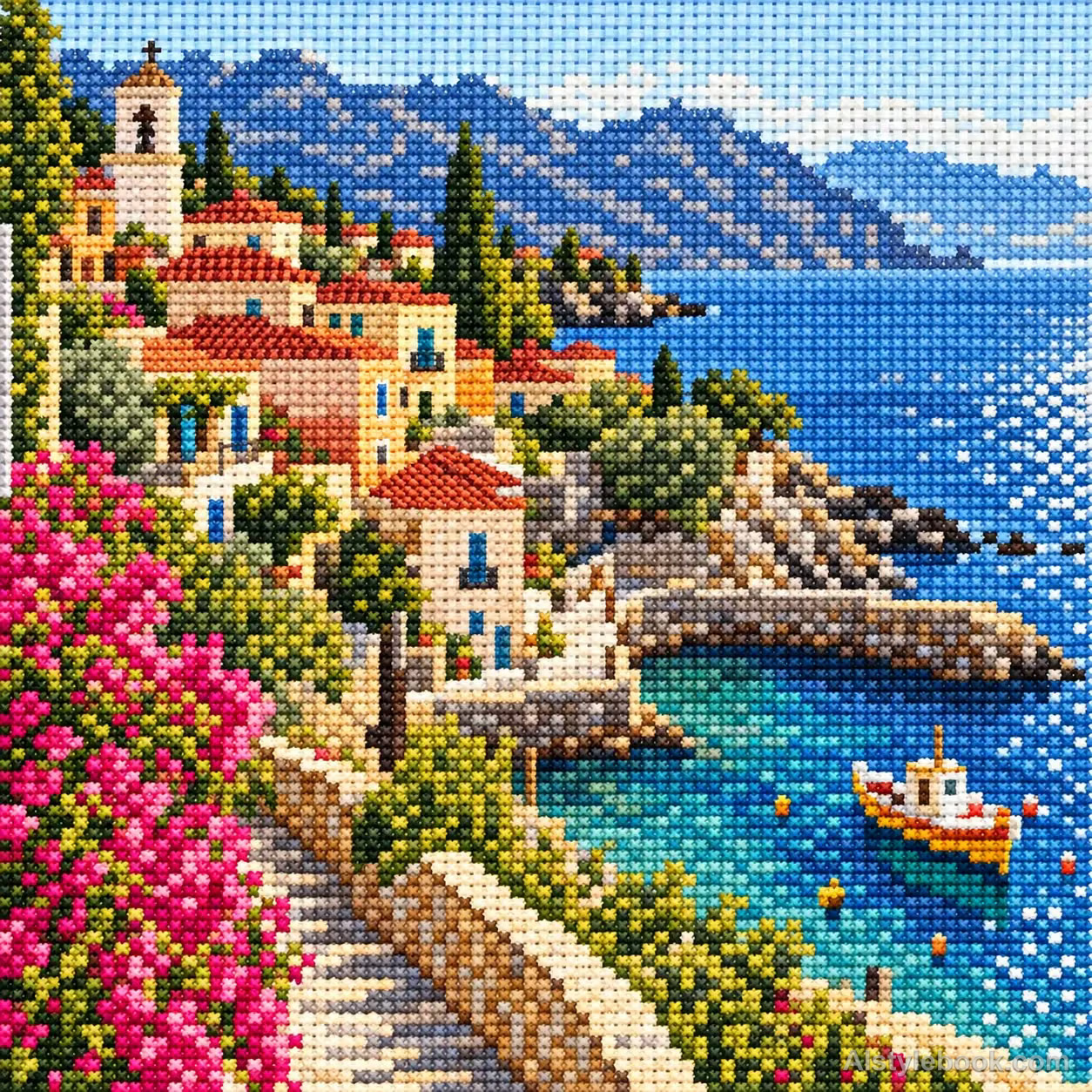
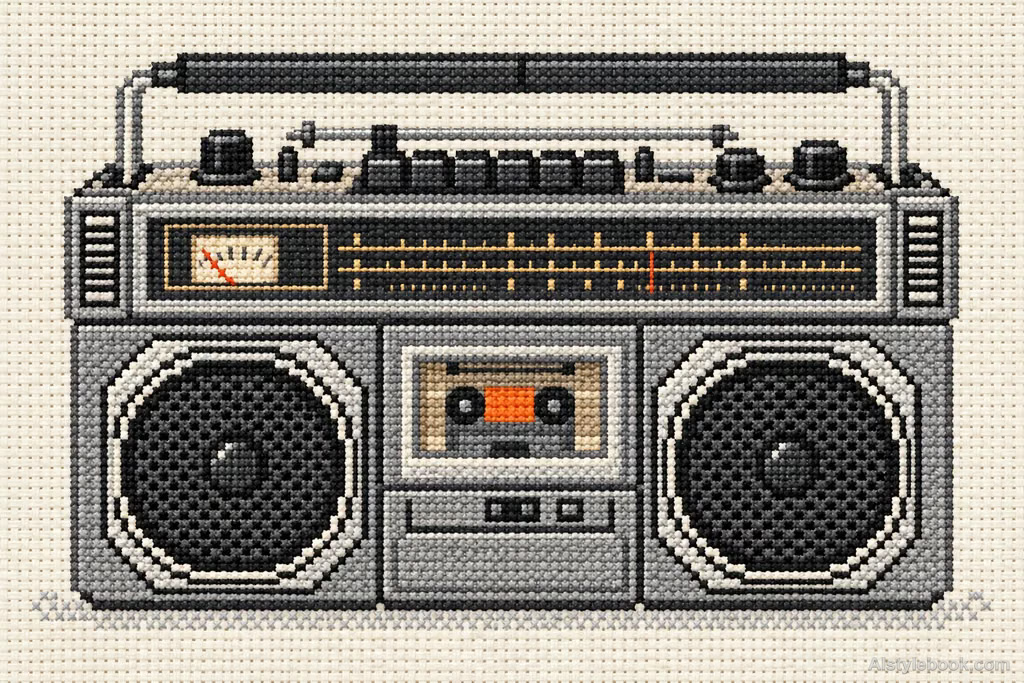
Regular cotton cross-stitches cover gridded embroidery cloth; visible holes and twisted strands form clear stepped color contours.
The visual language
What is Cross-Stitch?
Two crossing cotton stitches occupy each grid cell, forming rows of soft pixels with consistent orientation. Contours step along the grid, while fabric holes and twisted floss restore a tactile quality to the color transitions.
Cross-stitch builds each color unit from crossed stitches within a fixed grid.
A blue bird can resemble pixel art at a distance while revealing twisted cotton and fabric holes nearby.
How the style changes different subjects
- Portrait
- Grid-based stitches turn features and hair into stepped shapes with limited skin tones.
- Landscape
- Ridges, buildings and canopies resemble soft pixels; distant details may merge.
- Objects
- Curves step along the grid and a few pale stitches indicate highlights.
- Subjects
- Choose frontal portraits, flowers, pets or simple objects without tiny text or slender parts.
Craft and history
Crossed diagonal stitches appeared widely in samplers and can also render subtle pictorial shading.
Bring the style to your photos
Reusable style prompt for Cross-Stitch
Reconstruct the subject on visible Aida cloth, with one clear cotton-floss cross-stitch per square cell and consistent stitch orientation. Let twisted thread strands stand slightly proud of the cloth, revealing holes and fibers. Contours should step along the grid. Compress colors into a limited, harmonious thread palette, using color blocks and subtle yarn differences for light and shade. Preserve genuine fabric and thread thickness rather than smooth satin embroidery or photographic printing.Use the same style prompt for portraits, landscapes and objects.
Create with this styleKeep exploring


