
Painting & Drawing
Chinese Ink Wash
Style guide
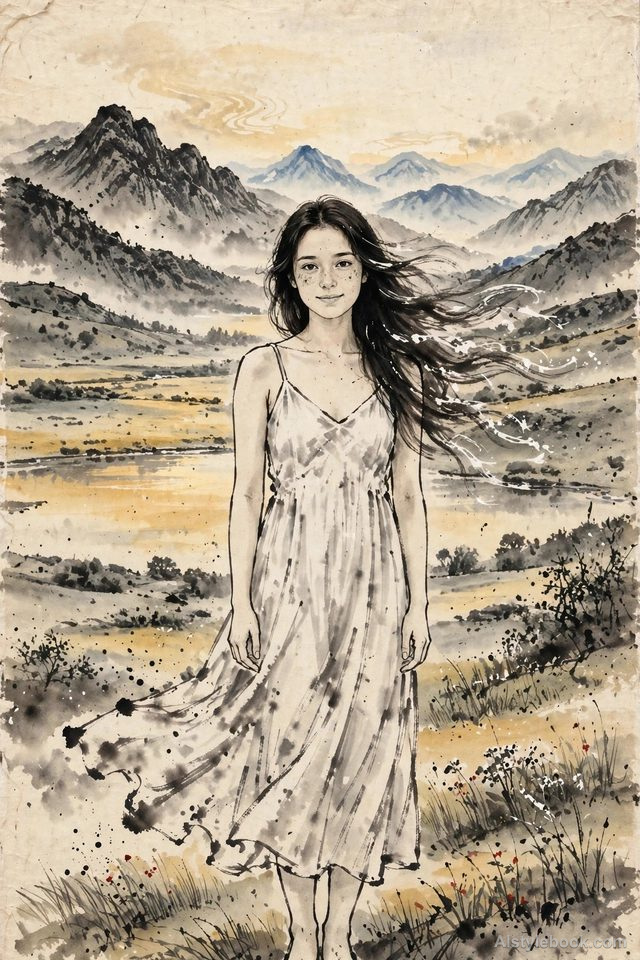
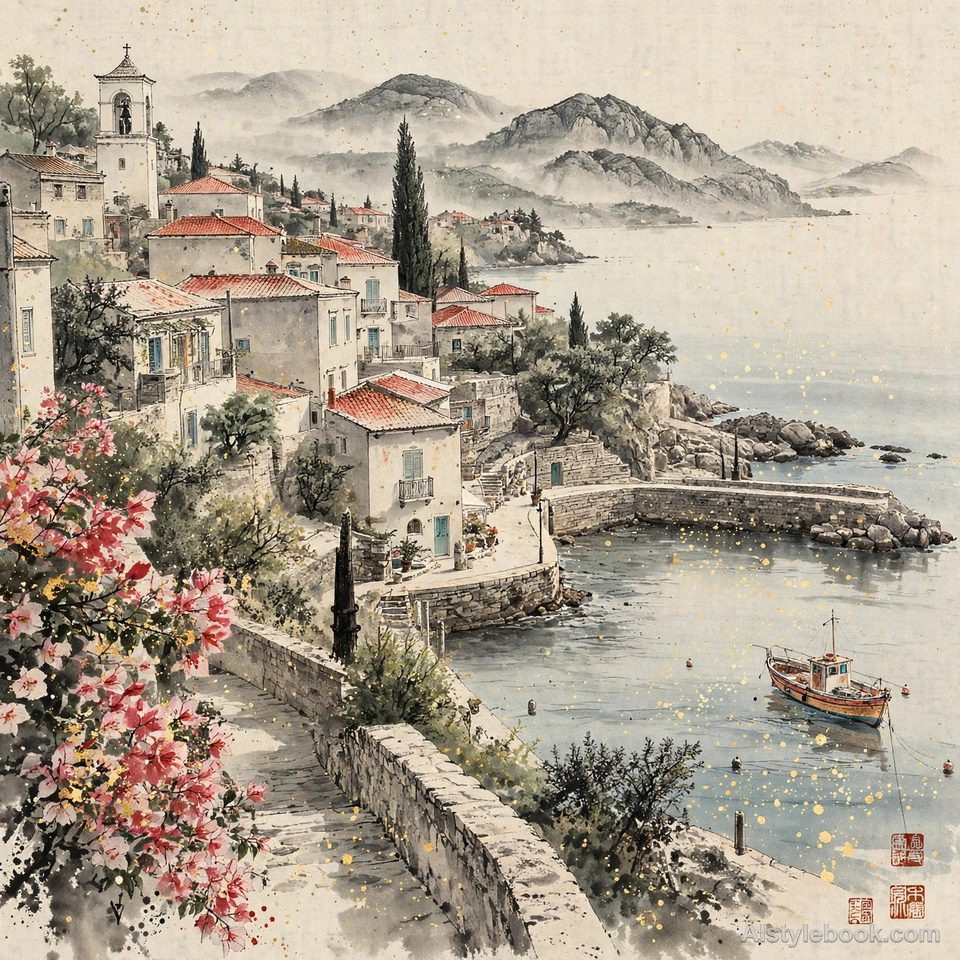
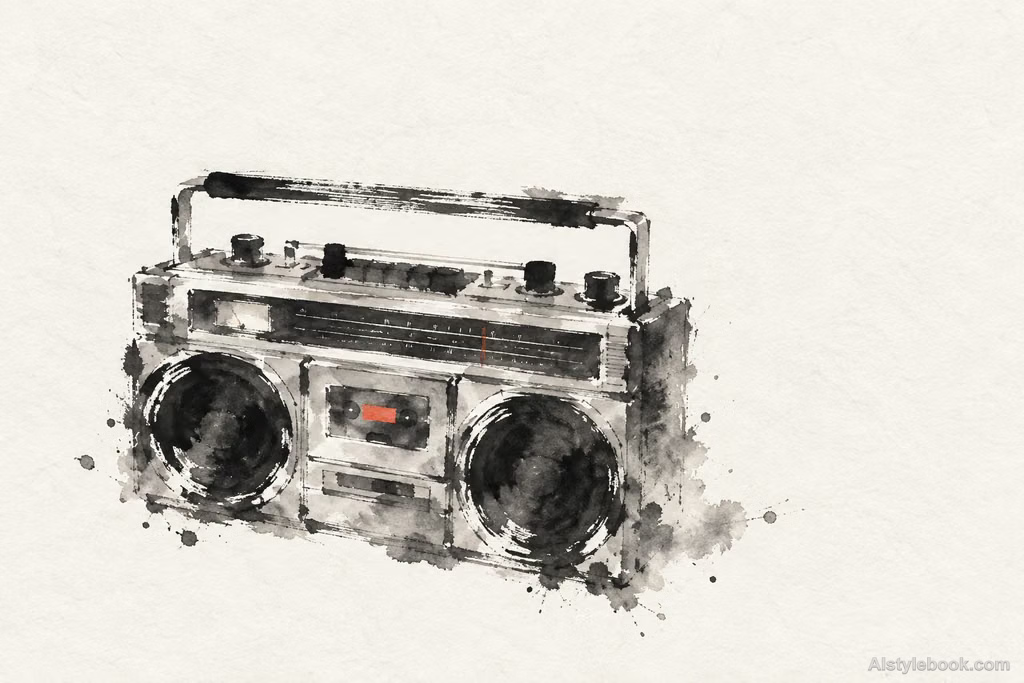
A concentrated ink form disperses naturally into xuan-paper space, with alternating dark and light, dry and wet marks giving a concise contemporary Eastern poster character.
The visual language
What is Chinese Ink Wash?
Dark and pale ink gathers at the center, then disperses into open xuan paper through dry strokes and wet spreading. Asymmetric balance links sparse color to broad areas of unmarked paper.
Ink wash organizes marks together with unpainted space, which can suggest water or distance.
A dark bank and faint distant ridge can turn the paper between them into an open river.
How the style changes different subjects
- Portrait
- Varied ink lines condense features and folds; fading edges place expression in a few decisive gestures.
- Landscape
- Ink density separates rocks, trees and mist, while blank paper suggests water and air.
- Objects
- A few strokes capture the silhouette, reducing reflections and material detail in favor of gesture.
- Subjects
- Choose mountains, bamboo, rocks, tea vessels or simply posed figures with open space around them.
Ink painting and calligraphy
Chinese scholar-amateur painting valued ink on paper and calligraphic brushwork, using subjects such as bamboo, old trees and rocks to express personal convictions and engage with earlier art.
Bring the style to your photos
Reusable style prompt for Chinese Ink Wash
Distill the subject into a concentrated, minimal ink-wash form. Express structure and movement with accumulated ink, wet spreading strokes, dry-brush streaks, and natural bleeding. Let marks gather at the center and gradually disperse into warm-white xuan paper, with delicate fibers visible. Work mainly in black and gray, using a little clear pale color to emphasize the visual focus. Establish an open, resonant composition through asymmetrical balance and expansive negative space.Use the same style prompt for portraits, landscapes and objects.
Create with this styleKeep exploring


