
Painting & Drawing
Fauvism
Style guide
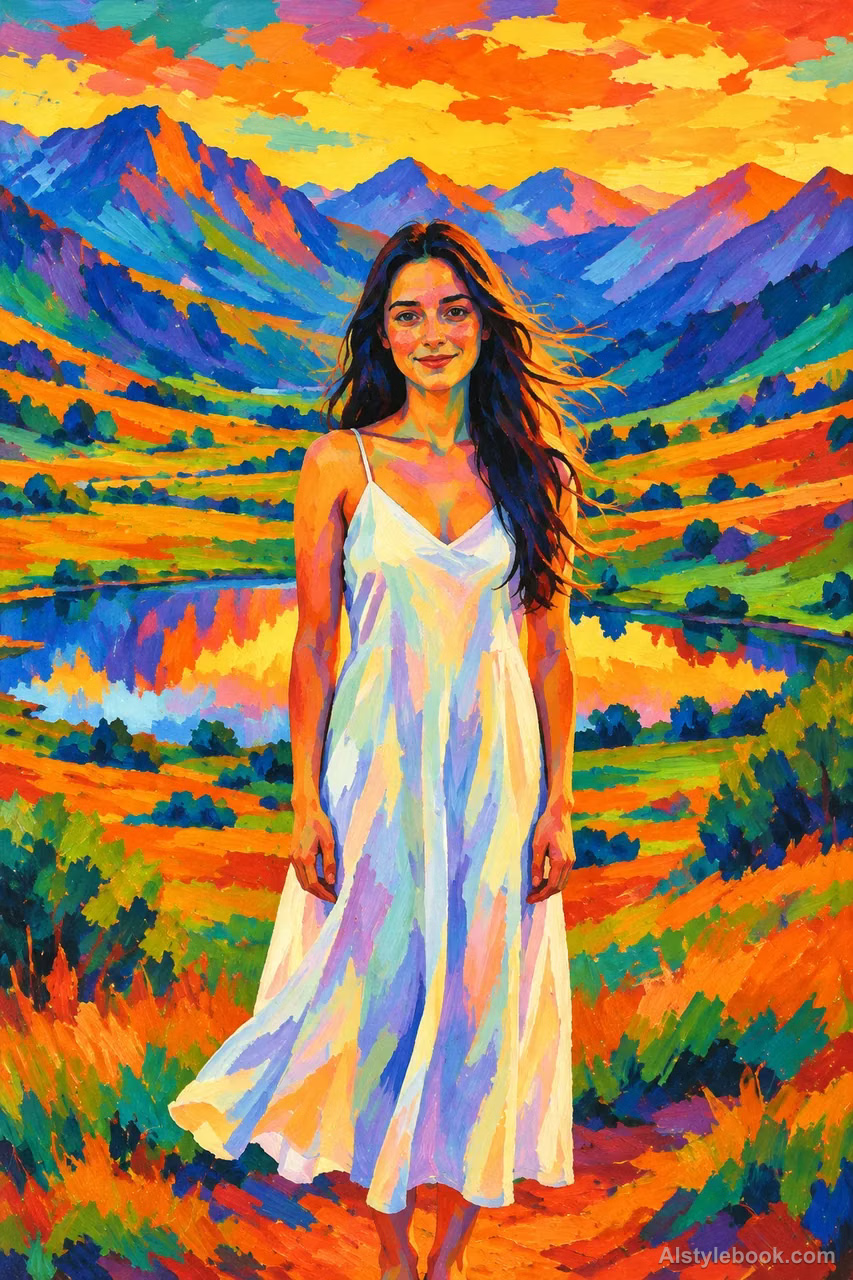
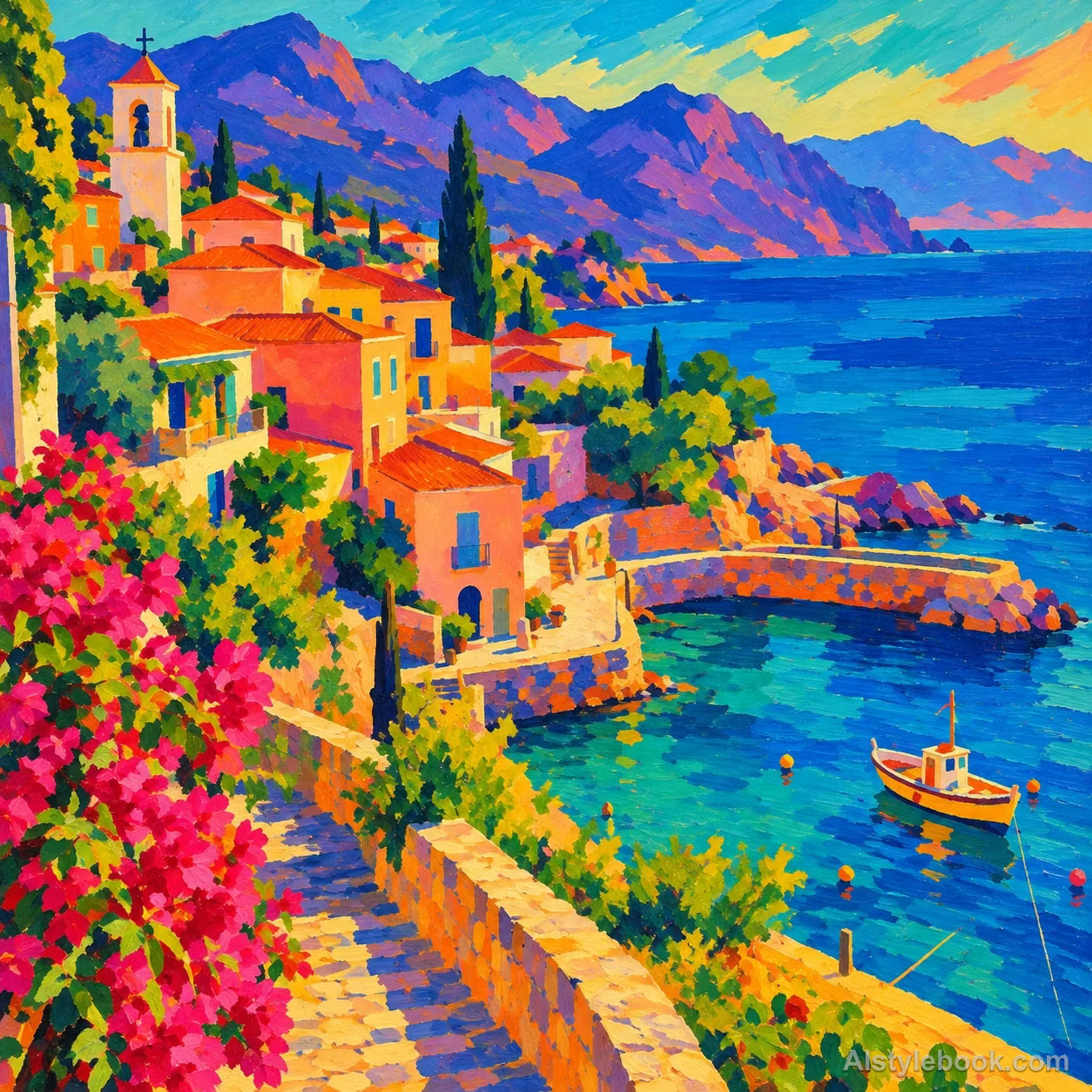
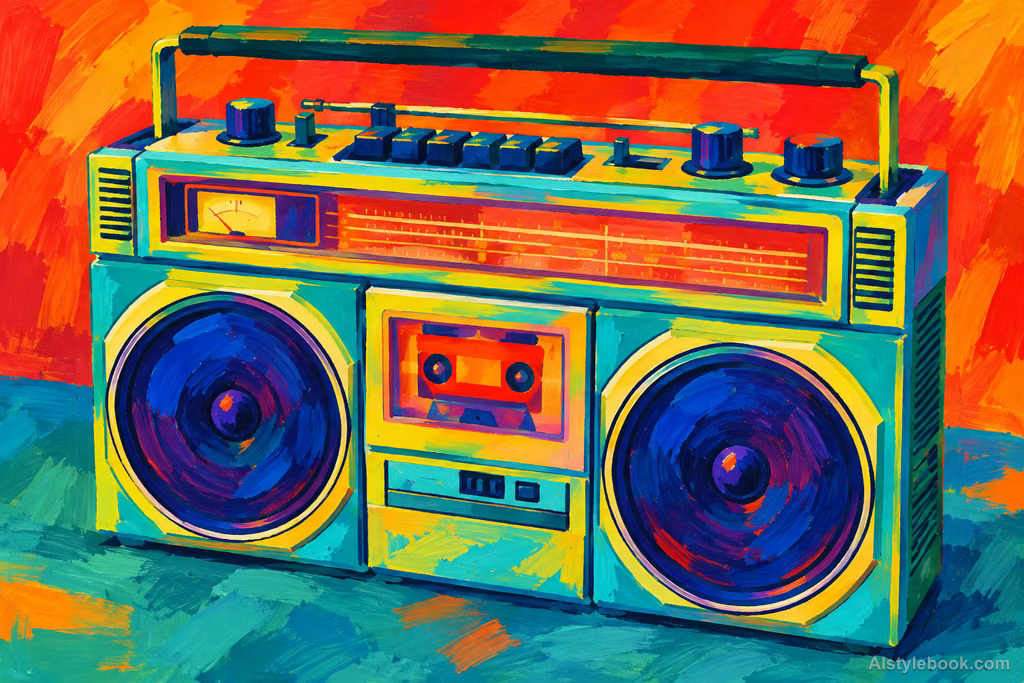
Non-naturalistic vivid colors and broad flat strokes compress space, with warm and cool color masses directly clashing in an exuberant, forceful atmosphere.
The visual language
What is Fauvism?
Vivid warm and cool colors depart from local color, while broad strokes compress depth into colliding planes. Color relationships establish both space and emotional force.
Fauvist color can depart from local appearance while retaining a clear structural role.
Blue-violet trunks against orange ground can build a woodland through color relationships rather than realistic shading.
How the style changes different subjects
- Portrait
- Unnatural color, warm-cool contrasts and emphatic strokes intensify expression and bodily gesture.
- Landscape
- Terrain and plants become clashing color planes, with spatial depth subordinated to color tension.
- Objects
- Literal color and material accuracy recede as contours and shadows become expressive masses.
- Subjects
- Choose expressive figures, bold landscapes, flowers or still-life groups where altered color and proportion can carry emotion.
Fauvist color
Early twentieth-century Fauvism used strong color and broad strokes beyond naturalistic representation; Matisse and Derain were major participants.
Artists & practitioners
Creators to know
Henri Matisse
A central Fauvist painter known for bold color planes and broad strokes.
André Derain
Used intense non-naturalistic color in the development of Fauvism.
Bring the style to your photos
Reusable style prompt for Fauvism
Reshape the subject with bold, non-naturalistic color planes, vigorous broad flat brushstrokes, and simplified expressive forms. Let warm-cool color clashes organize the image rather than realistic light sources. Compress spatial depth moderately, allowing contours to flow with brush gestures while color blocks remain clearly related. Keep pigment visibly brushed without heavy buildup. Retain recognizable key structures, replacing fine photographic modeling with lively, uninhibited color tension.Use the same style prompt for portraits, landscapes and objects.
Create with this styleKeep exploring


