
Photography & Film
Cyanotype Print
Style guide
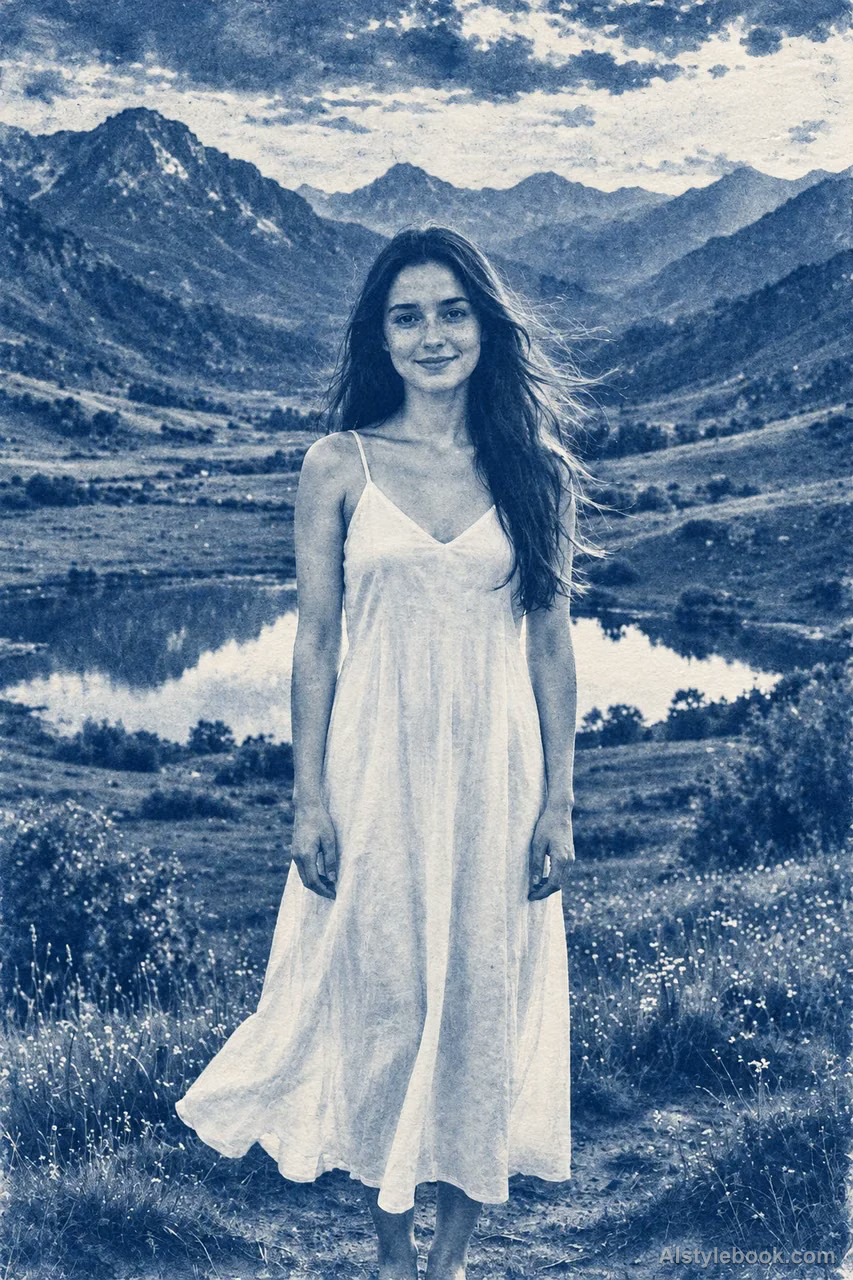
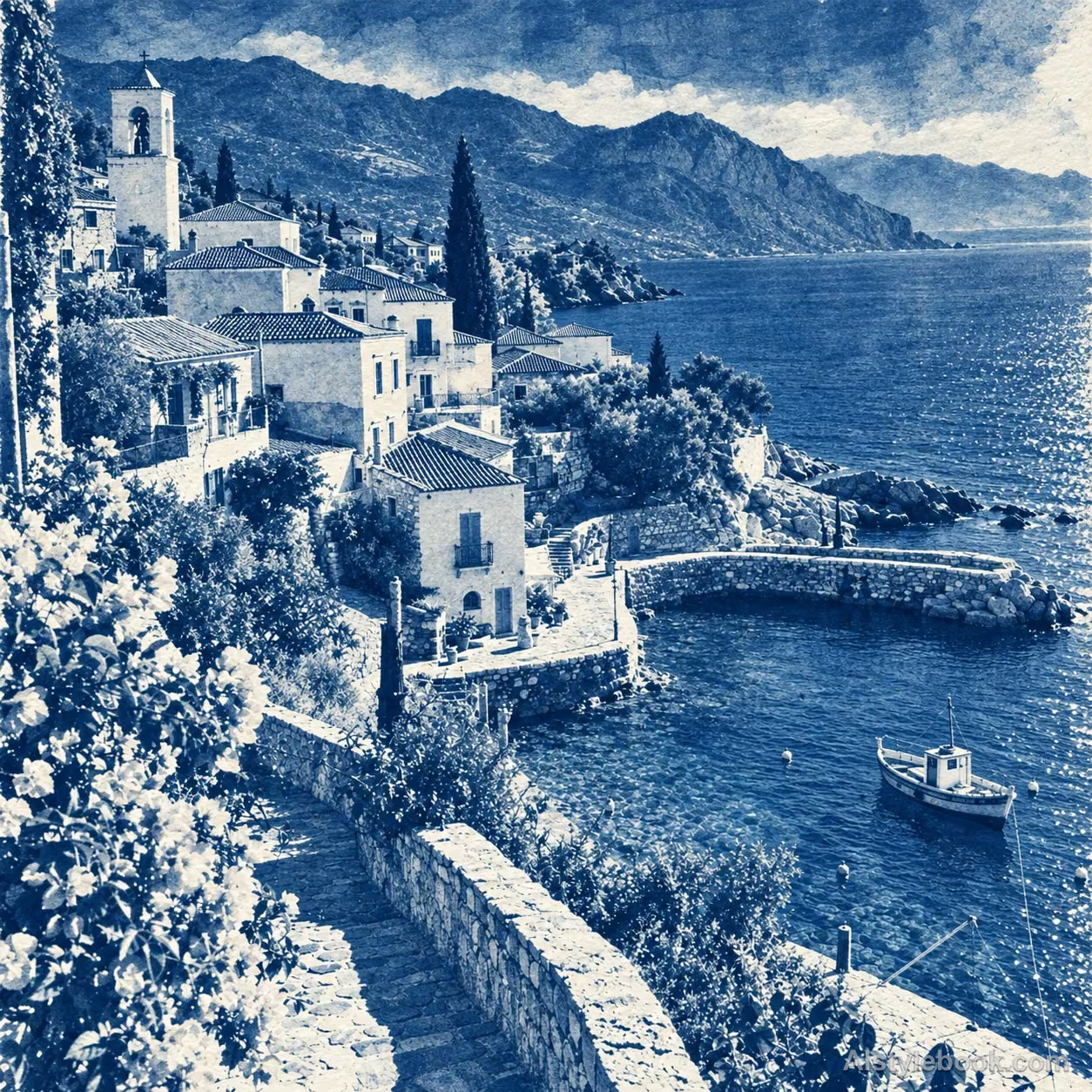
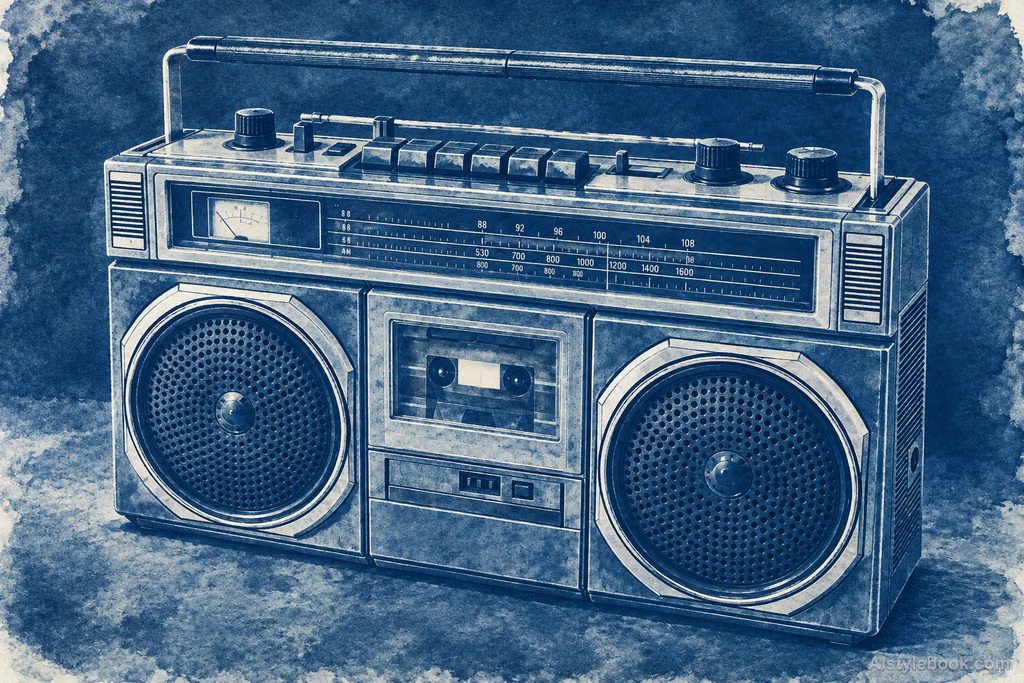
Continuous Prussian-blue tones sink into fibrous paper, with paper-white highlights, fine grain and visible coating marks.
The visual language
What is Cyanotype Print?
Prussian blue passes through tonal layers into clear paper white on fibrous paper. Coating marks, edge variation and fine grain suggest a physical light-sensitive contact print.
Cyanotype produces Prussian-blue images through a light-sensitive iron process.
A fern's pale central stem and lighter blue fringes can suggest different degrees of contact and transmission against a deep ground.
How the style changes different subjects
- Portrait
- Exposure-like silhouettes and tonal layers replace skin color, emphasizing edges and translucency.
- Landscape
- Light and dark occlusion areas flatten branches and buildings into contact-print-like imagery.
- Objects
- Transparent and opaque regions separate, making thin edges and overlap more important than original color.
- Subjects
- Choose leaves, stems, glass vessels or profiles with clear silhouettes and translucent details.
Background
The V&A records John Herschel’s invention of cyanotype in 1842 and Anna Atkins’s later use of it to record plants. The relationship between delicate plant contours and a Prussian-blue ground remains an important visual reference.
Artists & practitioners
Creators to know
Anna Atkins
Used cyanotype to record plants, joining careful observation with contact printing.
Bring the style to your photos
Reusable style prompt for Cyanotype Print
Translate the image into a cyanotype contact-print effect. Build a complete continuous tonal range with Prussian-blue iron-salt shadows and genuine paper-white highlights. Let hand-coated emulsion vary subtly within the picture, with gentle capillary spreading at boundaries and granular exposure texture in darks. Matte fibrous paper participates in the values, allowing original contours to emerge naturally between deep blue and white with clear light and a handmade surface.Use the same style prompt for portraits, landscapes and objects.
Create with this styleKeep exploring


