
Photography & Film
Photogram Interpretation
Style guide
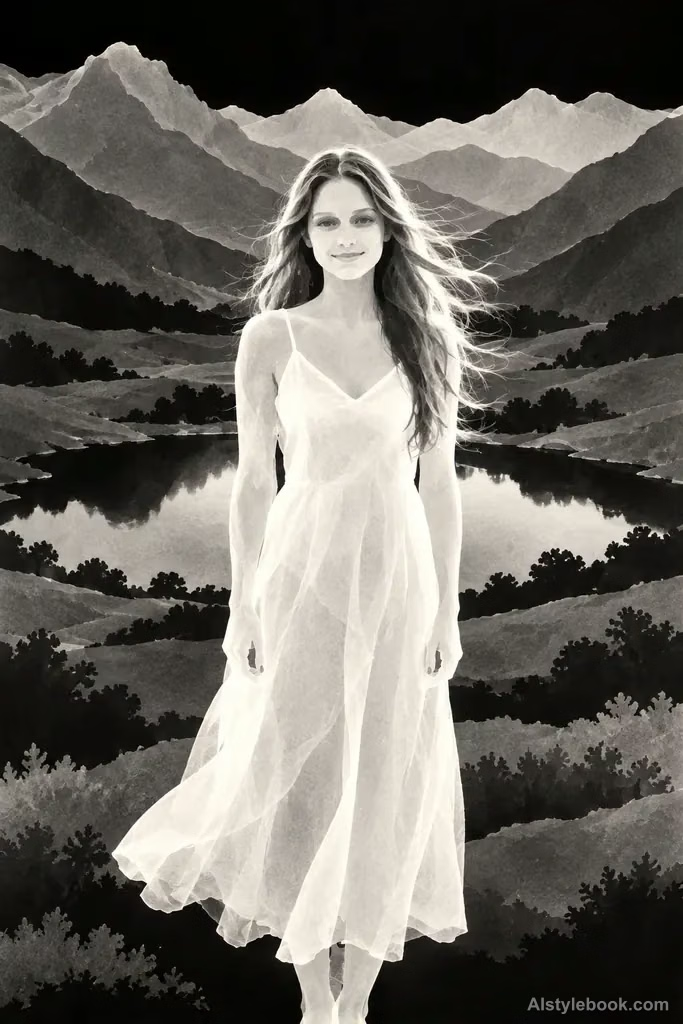
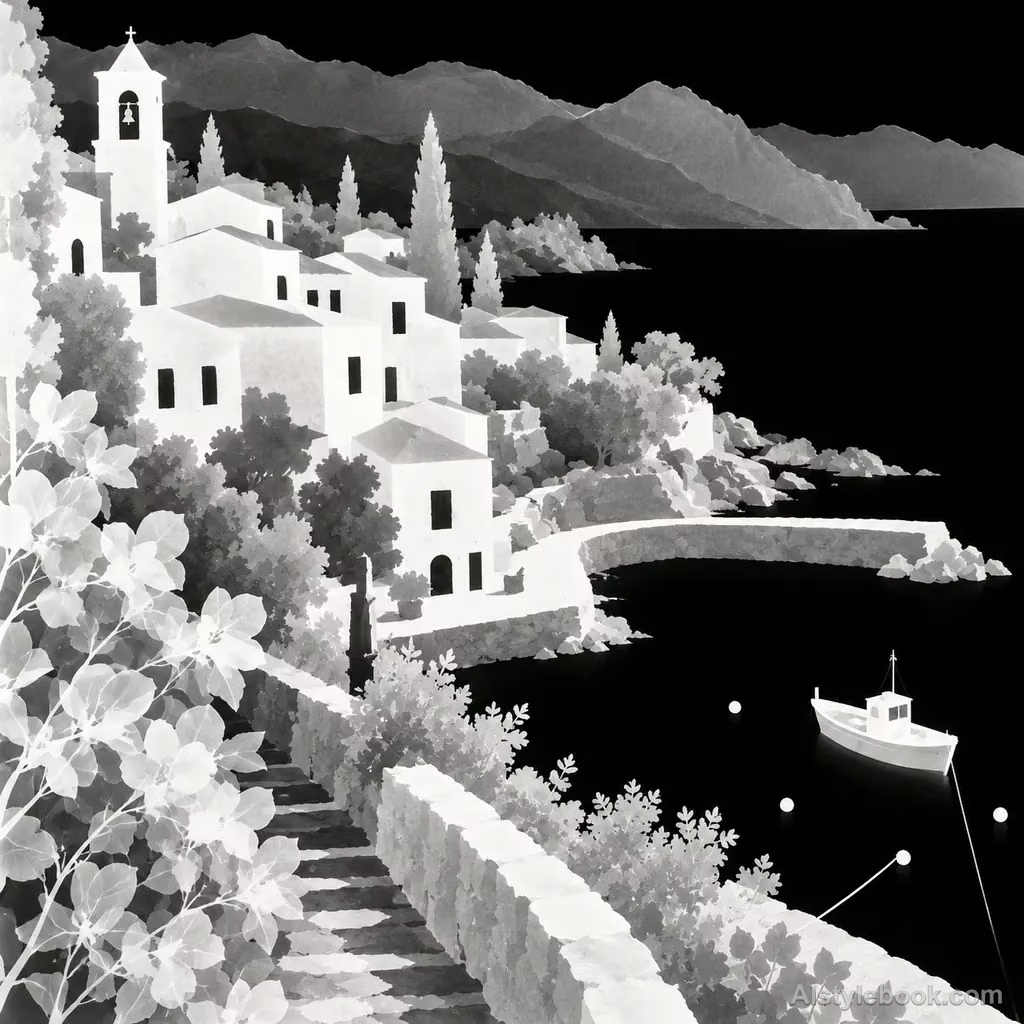
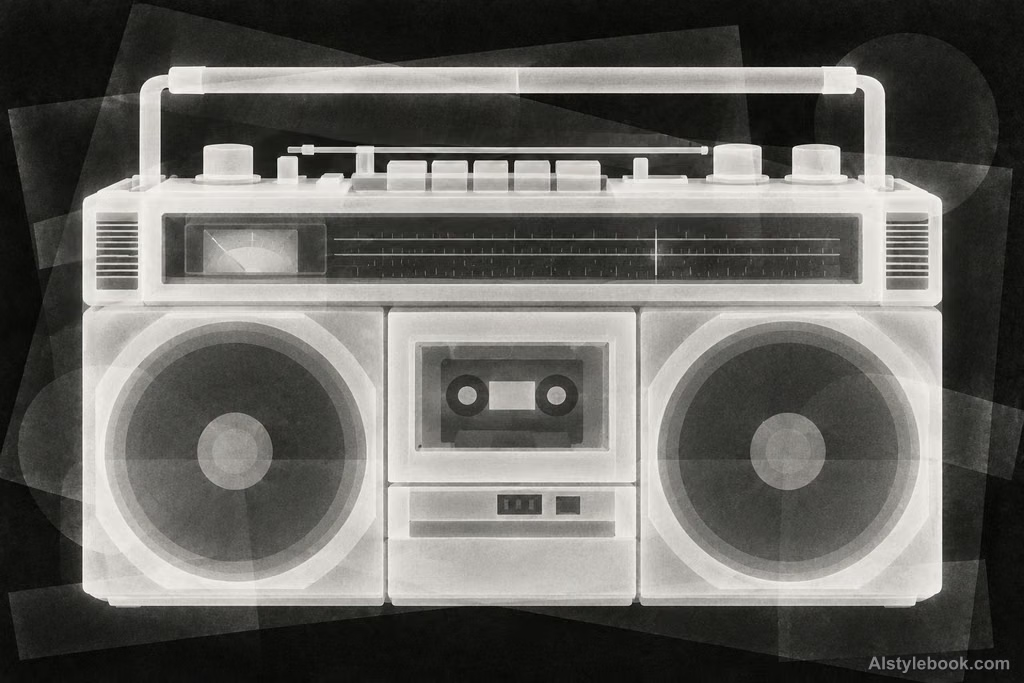
White silhouettes, transparent gray layers and soft exposure halos overlap on black photographic paper as a contact photogram.
The visual language
What is Photogram Interpretation?
White occluding shapes, translucent gray layers and black paper overlap, with depth arising from transmission and contact distance. Thin structures carry slight exposure halos within a simple flat contact-print arrangement.
A photogram records how objects affect a light-sensitive surface.
A sharp pale key, translucent gray leaf and softer raised twig can reveal differences in opacity and contact distance.
How the style changes different subjects
- Portrait
- Exposure-like silhouettes and tonal layers replace skin color, emphasizing edges and translucency.
- Landscape
- Light and dark occlusion areas flatten branches and buildings into contact-print-like imagery.
- Objects
- Transparent and opaque regions separate, making thin edges and overlap more important than original color.
- Subjects
- Choose leaves, stems, glass vessels or profiles with clear silhouettes and translucent details.
Background
MoMA’s 1923 Rayograph forms a spiral by laying unspooled film on light-sensitive paper. It demonstrates how objects, light and a sensitized surface can directly produce an image without lens-based image formation.
Artists & practitioners
Creators to know
Man Ray
Called his cameraless photogram works rayographs.
Bring the style to your photos
Reusable style prompt for Photogram Interpretation
Translate the image into contact-photogram language on black photographic paper. Rebuild existing shapes using opaque white silhouettes, translucent gray layers and overlapping shadows. Retain soft exposure halos at contours and fine luminous traces for thin structures. Derive depth from occlusion, transmission and changing contact distance. Keep the black-white-gray palette simple so defining features remain clear within flat, layered exposures.Use the same style prompt for portraits, landscapes and objects.
Create with this styleKeep exploring


