
Pixels & Characters
Early-Console Affine-Texture 3D
Style guide
Low-vertex forms, skewed low-resolution textures and ordered dithering create an early-console real-time 3D appearance.
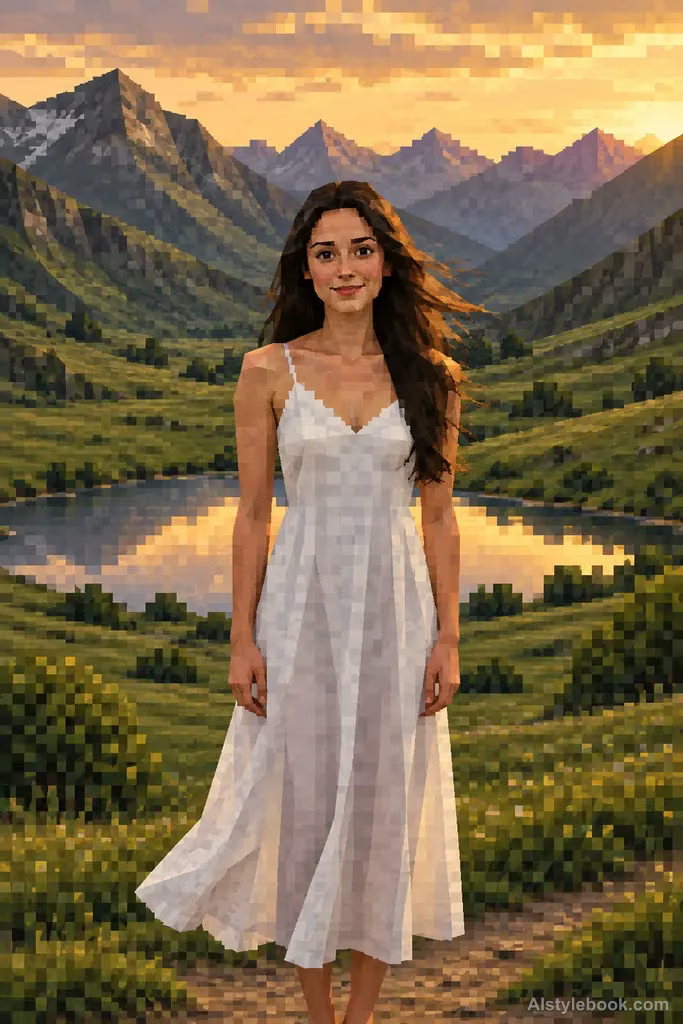
PortraitStyle effect

LandscapeStyle effect
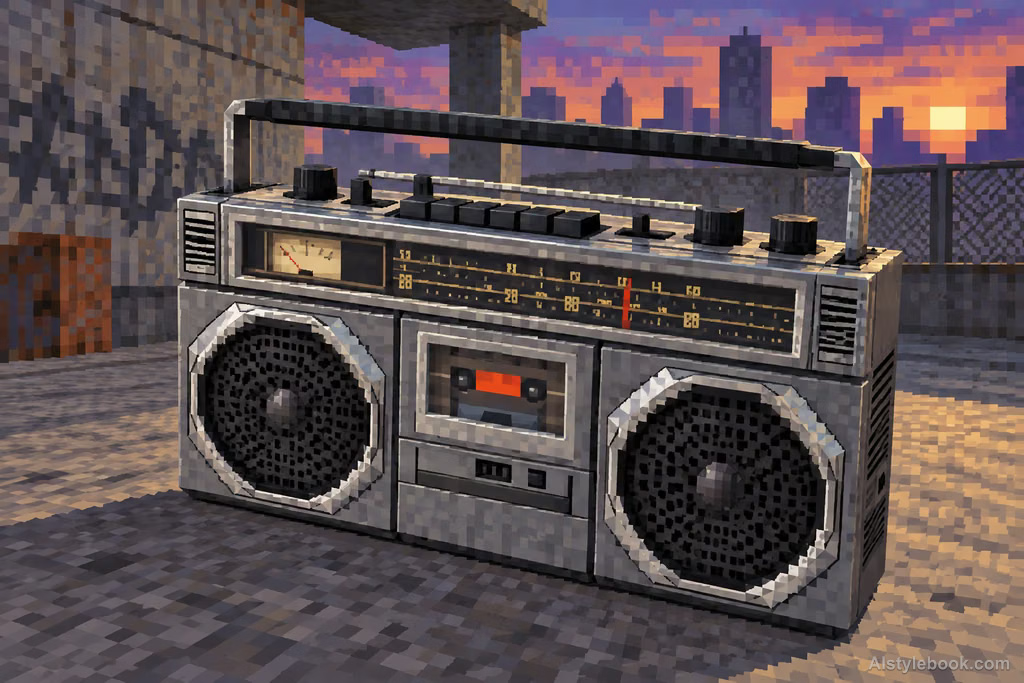
ObjectsStyle effect
The visual language
What is Early-Console Affine-Texture 3D?
Low-vertex forms retain angular outlines while low-resolution textures skew across oblique triangles. Nearest-neighbor pixels, dithered shadows and stretched mapping evoke early real-time 3D.
Early-console 3D combines coarse meshes, small textures and mapping limitations.
A wall texture skewing across triangles beside angular outlines can suggest an early real-time game environment.
How the style changes different subjects
- Portrait
- A small number of polygonal planes simplify features and body into angular forms.
- Landscape
- Facets replace terrain, buildings and plants, with surface direction establishing depth.
- Objects
- Curves split into planes whose changing colors replace smooth reflections.
- Subjects
- Choose mountains, buildings, vehicles or clear poses with strong silhouettes that tolerate fewer facets.
Bring the style to your photos
Reusable style prompt for Early-Console Affine-Texture 3D
Redraw the image as early-console real-time 3D. Use low vertex counts, angular silhouettes and crisp nearest-neighbor low-resolution textures. Represent affine swimming with skewed texture triangles on oblique surfaces; build shadows from coarse ordered dithering and discrete tonal steps. Retain the original color atmosphere and recognizable structure, combining hand-painted pixel textures, stretched mapping and an unmistakably primitive real-time rendering style.Use the same style prompt for portraits, landscapes and objects.
Create with this styleKeep exploring


