
Light & Image Effects
Fluted Glass Refraction
Style guide
Regular vertical glass reeds split the image into narrow bands with alternating compression and displacement.
The visual language
What is Fluted Glass Refraction?
Fluted-glass refraction places the image behind a continuous ribbed pane. Each vertical reed compresses, stretches or slightly shifts details behind it, creating a repeated directional rhythm. The original subjects keep their materials; the optical medium changes how they are seen.
Fluted glass redirects background detail through repeated cylindrical ridges.
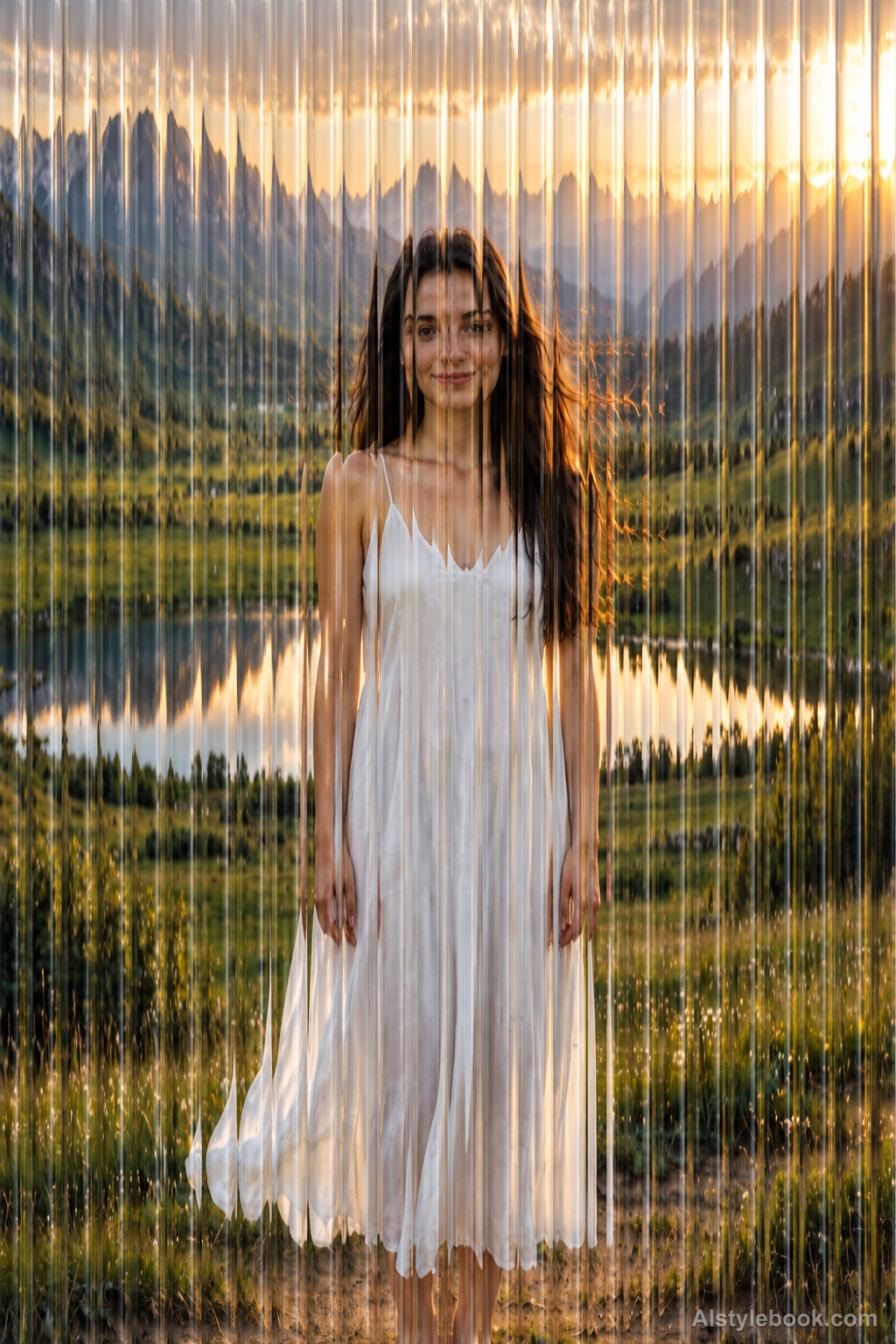
A face gently segmented by vertical ribs, while clothing retains its own material, can preserve the separation between subject and glass.
How the style changes different subjects
- Portrait
- Vertical glass ribs shift features and hair in sections while preserving the overall pose.
- Landscape
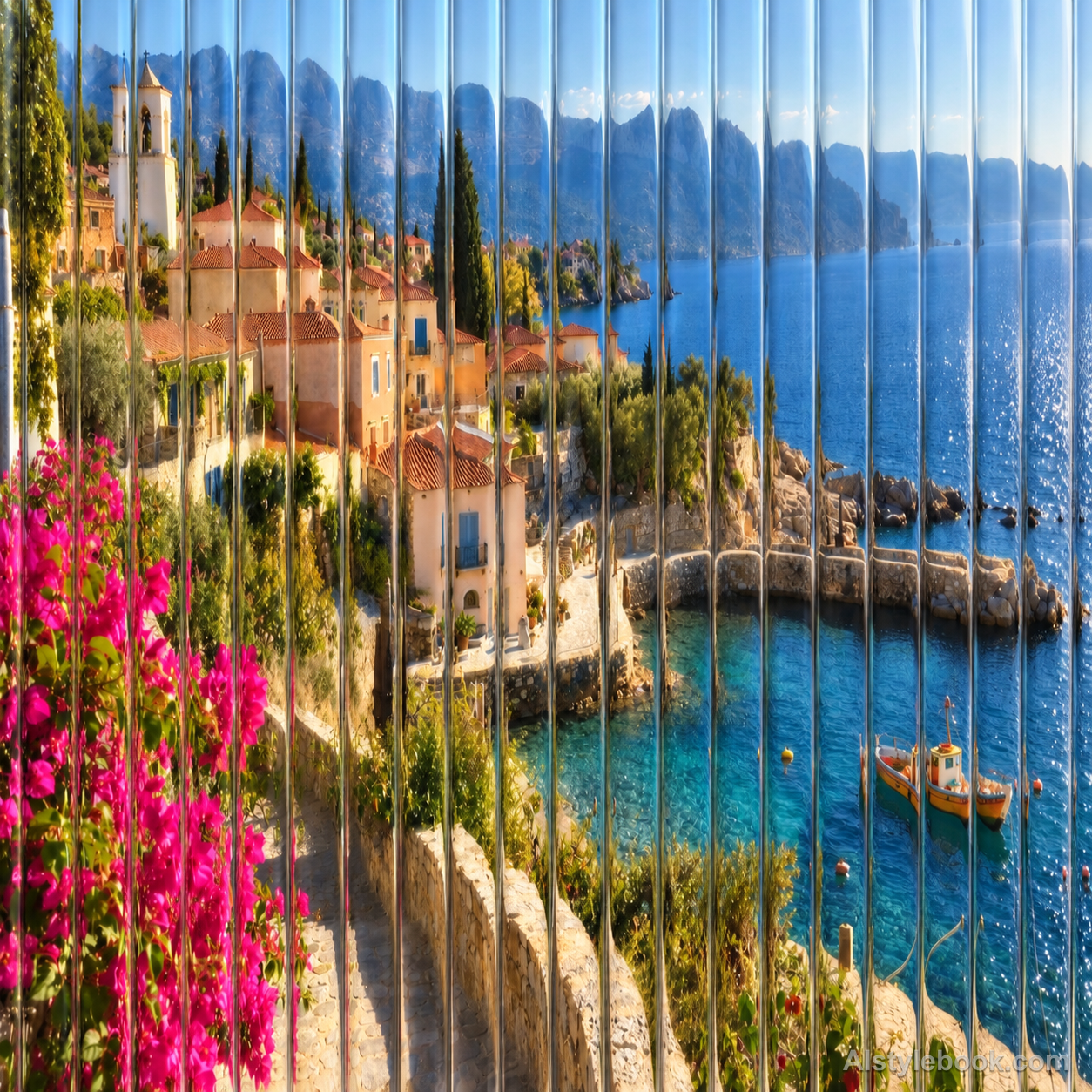
- Repeated vertical refraction compresses building lines and plants into an ordered rhythm.
- Objects
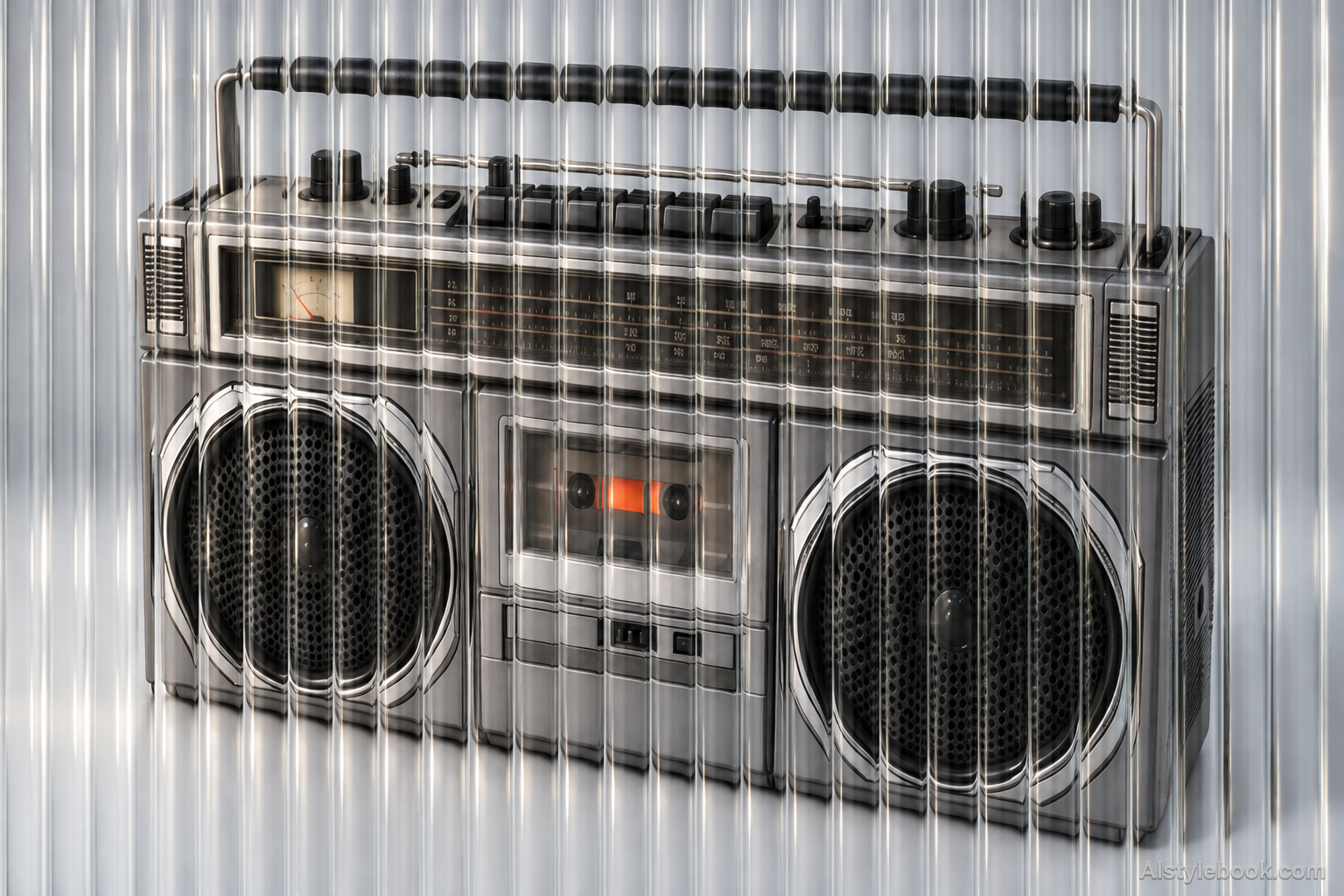
- Ribs displace object edges and reflections while the underlying material remains recognizable.
- Subjects
- Choose bold portraits, buildings, stems or single objects with features large enough to survive strip division.
Bring the style to your photos
Reusable style prompt for Fluted Glass Refraction
Present the source scene as viewed through one continuous pane of clear vertically fluted glass. Keep evenly spaced vertical rounded ribs across the full frame, causing coherent lateral compression, slight repeated offsets and narrow elongated highlights in the image behind the pane. Preserve source colors and large silhouettes while allowing details to be sliced into rhythmic refracted bands. Show believable transparent glass thickness and restrained reflection. Keep the subject behind the glass rather than turning it into glass, with no cracks, random tiles or uniform blur.Use the same style prompt for portraits, landscapes and objects.
Create with this styleKeep exploring


