
Light & Image Effects
Frosted Glass Diffusion
Style guide
A finely frosted surface scatters detail into soft color regions while nearby contours remain legible.

PortraitStyle effect

LandscapeStyle effect
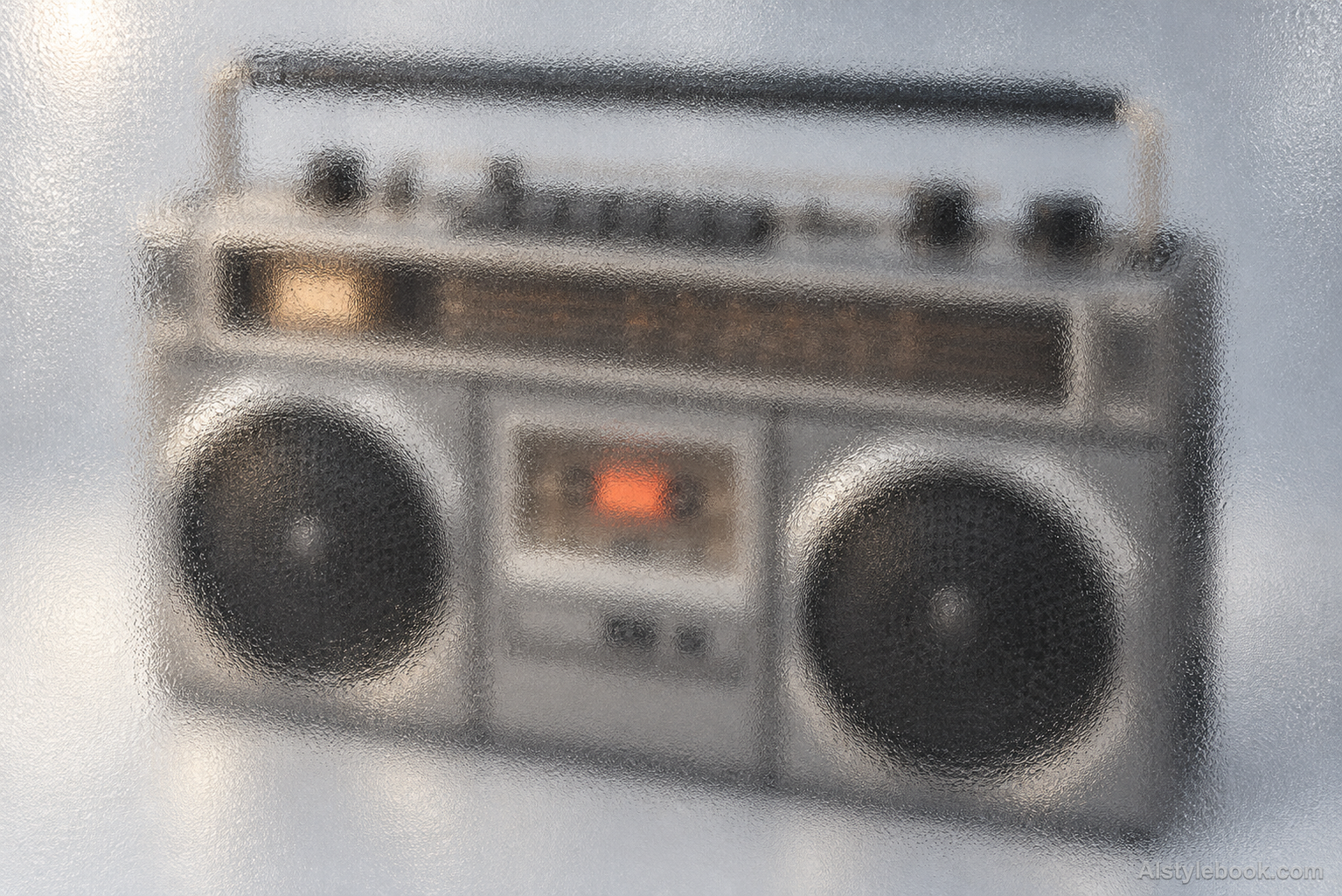
ObjectsStyle effect
The visual language
What is Frosted Glass Diffusion?
Frosted diffusion scatters detail through microscopic surface roughness. Colors soften together while only larger contours stay clear. Fine surface grain and gentle reflections distinguish it from simply blurring a photograph: the original subjects remain behind the glass.
Frosted glass scatters transmitted light while retaining its own surface reflections.
A diffuse red flower behind a faint pale reflective patch can look different from simply blurring the original photograph.
How the style changes different subjects
- Portrait
- Frosted grain softens features, leaving pose and broad colors as the main cues.
- Landscape
- Diffuse edges reduce scenery to major tones while making the glass surface visible.
- Objects
- Small text, texture and components soften behind a translucent pane.
- Subjects
- Choose silhouettes, flowers, bold-color figures or single objects that do not depend on tiny details.
Bring the style to your photos
Reusable style prompt for Frosted Glass Diffusion
View the entire original image through a continuous finely frosted glass pane. Scatter small details into softly diffused colors while retaining the source composition, broad contours and believable near-surface silhouettes. Add subtle irregular micrograin and gently translucent highlights that belong to the glass surface. Keep diffusion consistent in scale, with modest local changes in clarity rather than a featureless digital blur. Preserve the subjects as ordinary materials behind the pane, without converting them to solid glass, adding decorative frames, heavy scratches or sharp translucent cutouts.Use the same style prompt for portraits, landscapes and objects.
Create with this styleKeep exploring


