
Materials & Craft
Murrine Cane-Section World
Style guide
Cane sections with embedded concentric color rings correspond to longitudinal bands; fused bundles and slices reveal transparent depth.
The visual language
What is Murrine Cane-Section World?
Concentric patterns inside colored glass canes repeat across cut faces, while longitudinal stripes reveal the bundled construction. Sections and fused sidewalls correspond, combining transparent depth with patterned repetition.
Murrine embeds patterns within glass canes before their sections are cut.
Flowerlike ends and lengthwise color bands should correspond, making the same internal pattern readable from two directions.
How the style changes different subjects
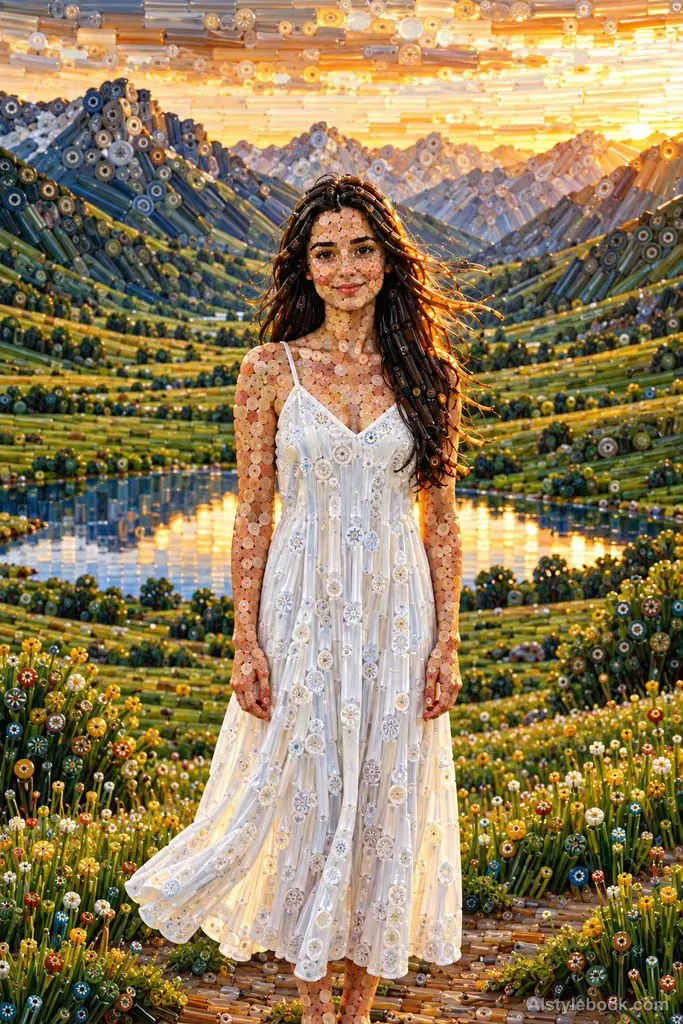
- Portrait
- Patterned glass cross-sections turn skin into repeated color rings and simplify features.
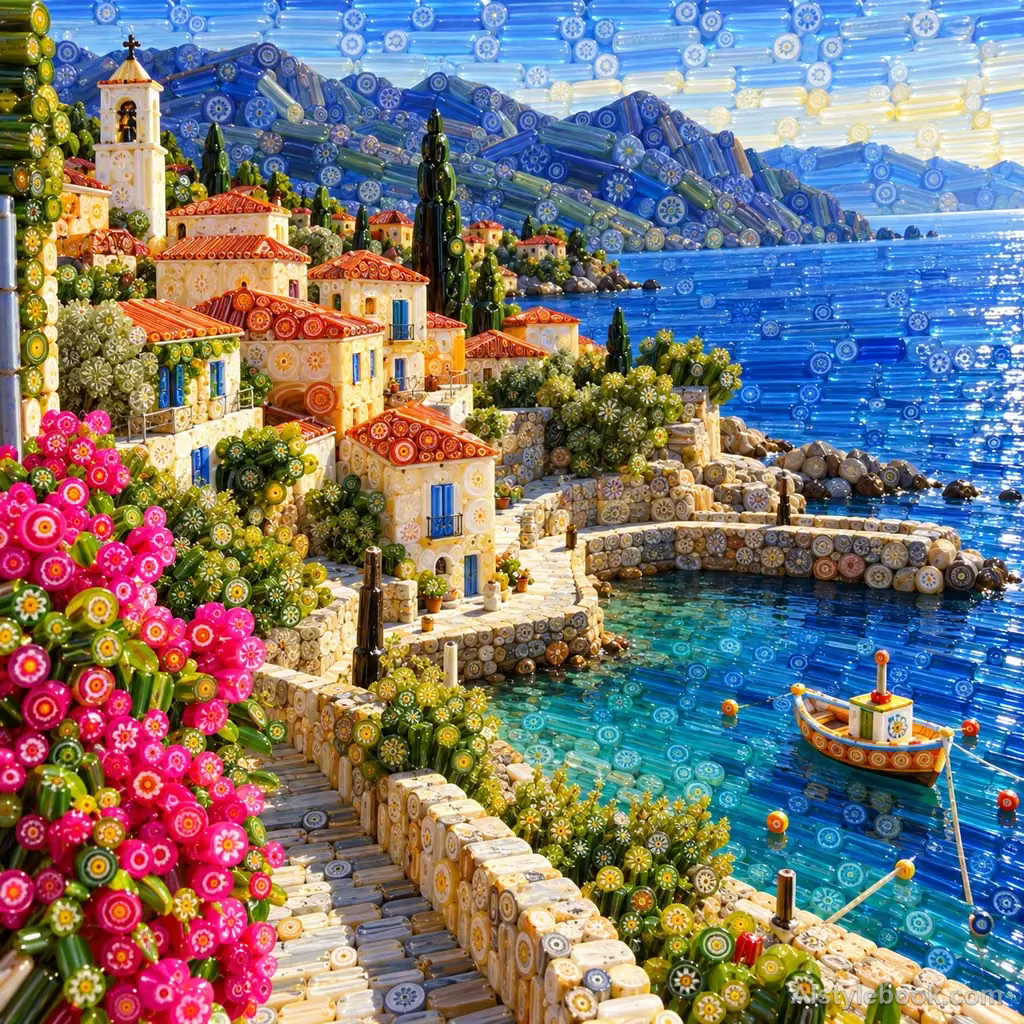
- Landscape
- Fused glass bundles describe scenery through patterned ends and striped sides.
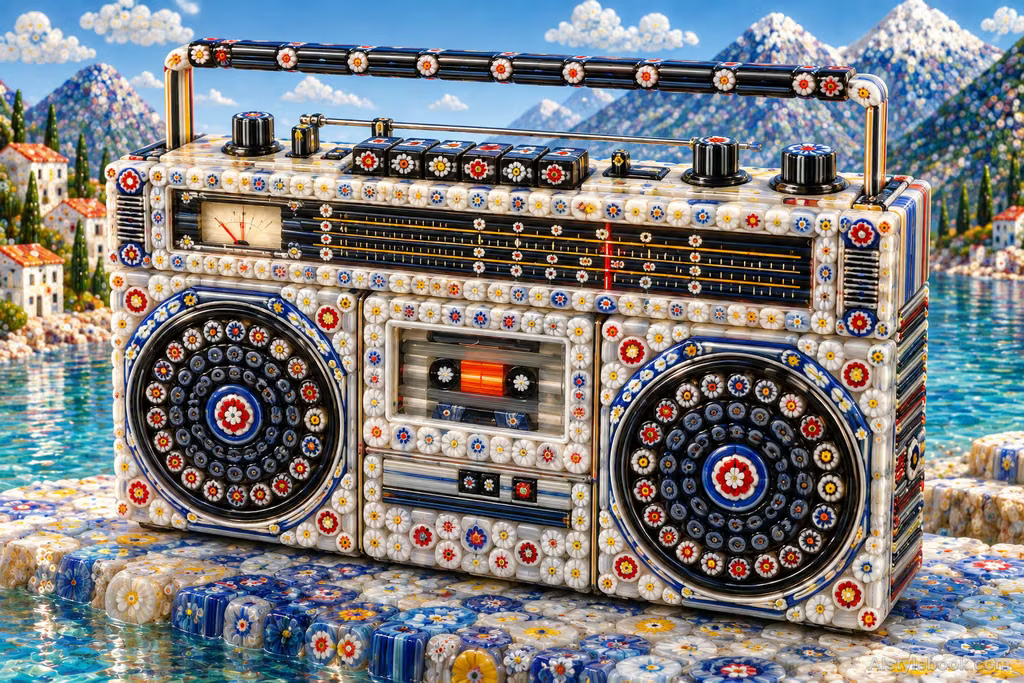
- Objects
- Rod direction reveals thickness through colorful sections and translucent sidewalls.
- Subjects
- Choose flowers, rounded animals, vessels or curved sculptures with visible end and side surfaces.
Early examples of patterned cane sections
Ninth-century finds from Samarra include tiles made by slicing multicolored glass rods and fusing them into repeated concentric patterns, probably for walls. They provide an early example of extending internal cane patterns across a decorative surface through repeated sections.
Bring the style to your photos
Reusable style prompt for Murrine Cane-Section World
Reconstruct existing forms from fused colored-glass canes and cut sections. Prominent ends reveal embedded concentric color rings and tiny geometric flower cores, while the same internal colors continue as longitudinal stripes along the sides. Make this end-to-side correspondence unmistakable. Fuse short angled bundles and sliced slabs, using transparent depth, fine seams and localized transmitted light to model volume with consistent glass structure throughout.Use the same style prompt for portraits, landscapes and objects.
Create with this styleKeep exploring


