
3D & Miniatures
Octane Render
Style guide
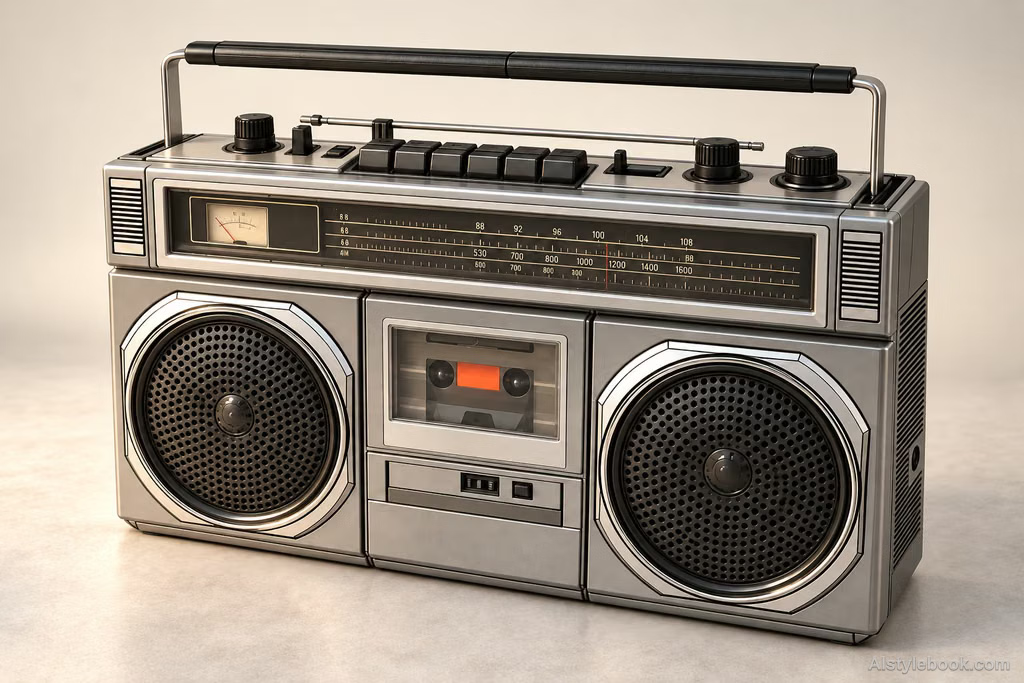
Physically accurate reflections and soft global illumination reveal fine materials with clear volume and clean light.


The visual language
What is Octane Render?
Inter-surface light bounce and contact shadows establish believable 3D volume. Roughness, transmission and small surface variations remain distinct rather than giving every material the same smooth finish.
Convincing rendering gives different materials distinct responses to the same light.
A transparent cup, reflective spoon and softly highlighted ceramic plate should not share an identical surface appearance.
How the style changes different subjects
- Portrait
- Distinct skin, hair and fabric shading plus contact shadows make the figure feel rendered.
- Landscape
- Roughness, transmission and environmental reflections clarify surfaces and volume throughout the scene.
- Objects
- Material-specific highlights and reflections give objects a carefully lit three-dimensional finish.
- Subjects
- Choose varied-material figures, interiors, buildings or products with a clear light source.
Background
OctaneRender is a rendering-software name. OTOY explains its image formation through path tracing and spectral calculation; the visual emphasis here is clean illumination and convincing materials, without implying actual use of that software.
Bring the style to your photos
Reusable style prompt for Octane Render
Use high-quality path-traced rendering, shaping the subject through accurate geometric volume, global illumination, and soft contact shadows. Give different materials believable roughness, fine surface variation, translucency, and reflective strength, with natural subsurface scattering where appropriate. Keep lighting clean and restrained, and reflections physically plausible. Details should remain clear without excessive smoothness. Avoid giving every surface the same plastic material.Use the same style prompt for portraits, landscapes and objects.
Create with this styleKeep exploring


