
Painting & Drawing
Pointillism
Style guide
Small dots of pure color create optical mixing through complementary relationships, with stable contours and a bright, gently shimmering surface.
The visual language
What is Pointillism?
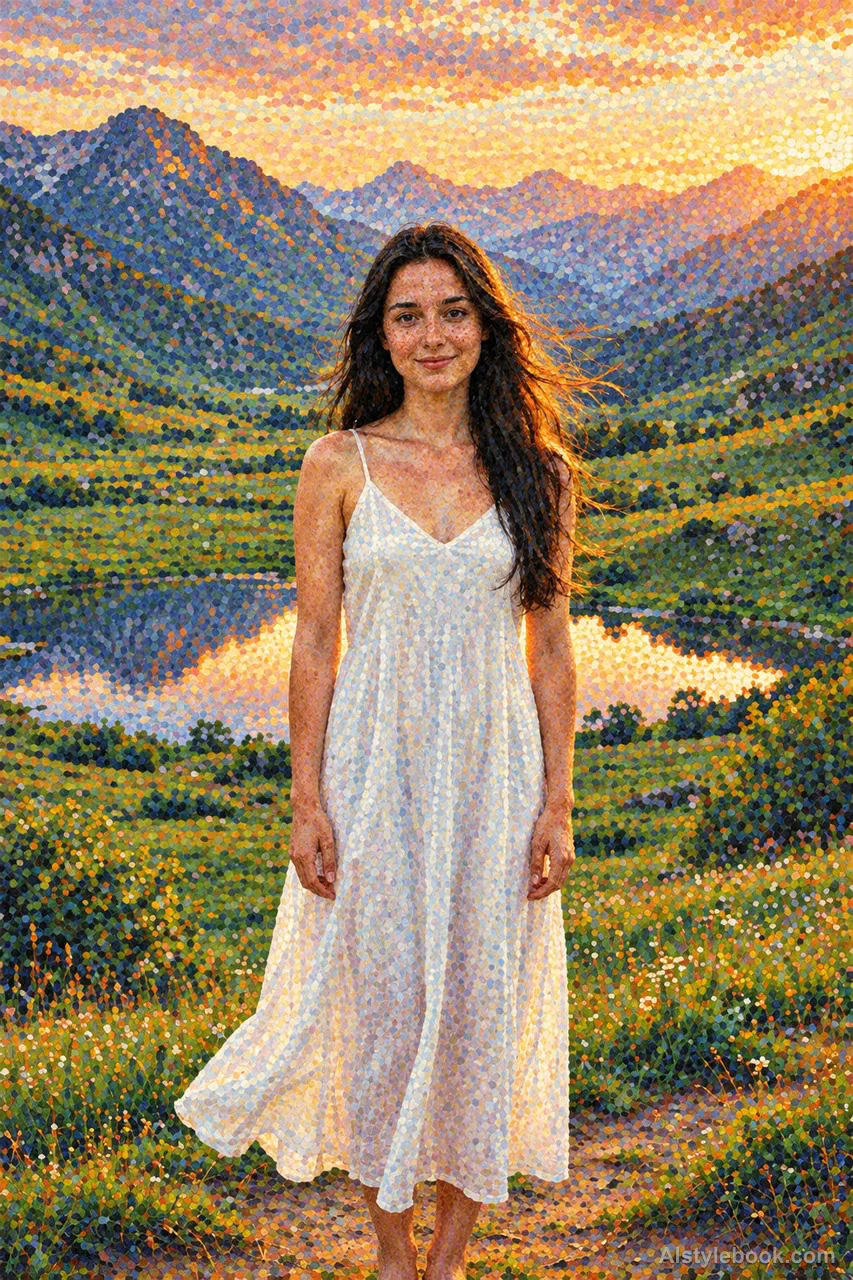
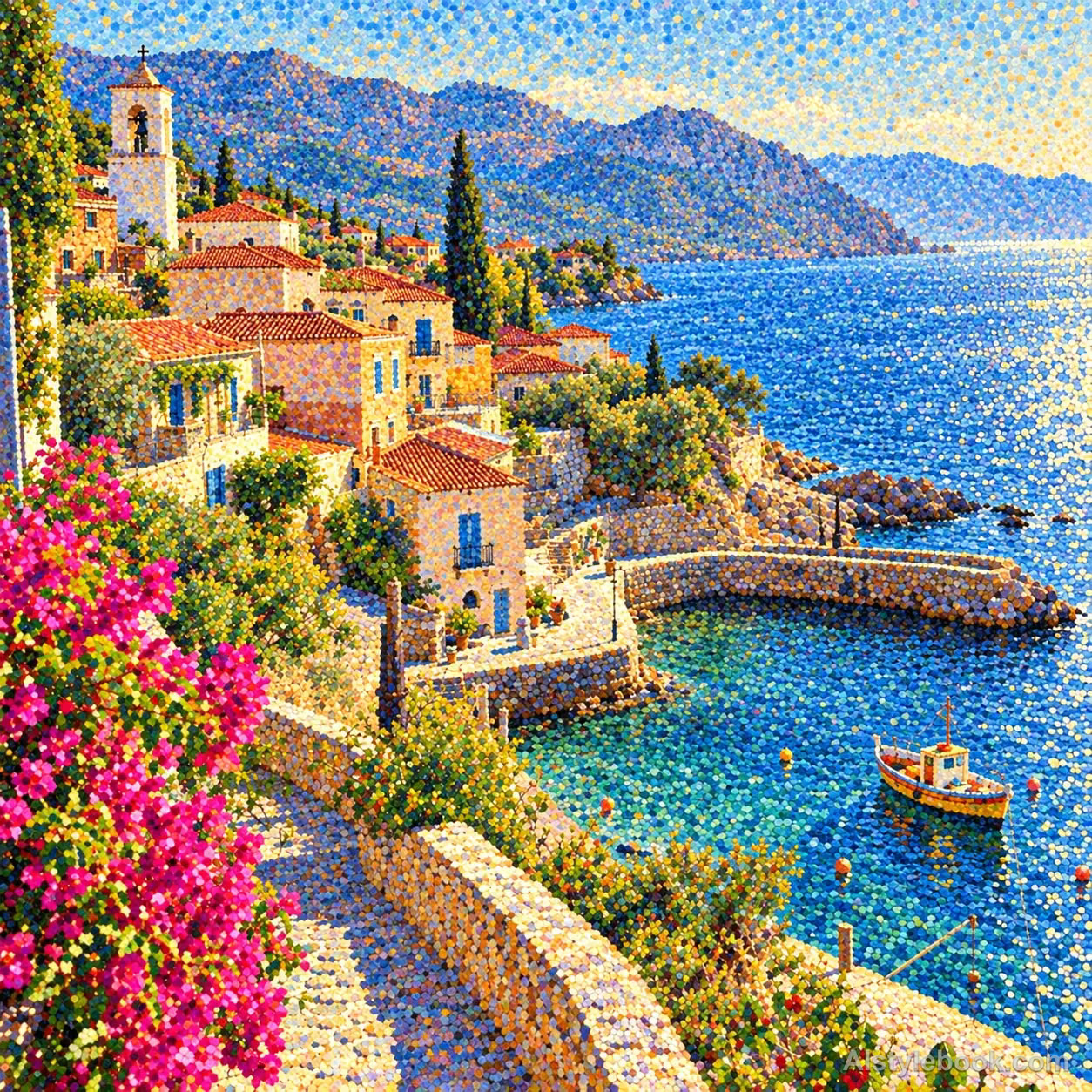
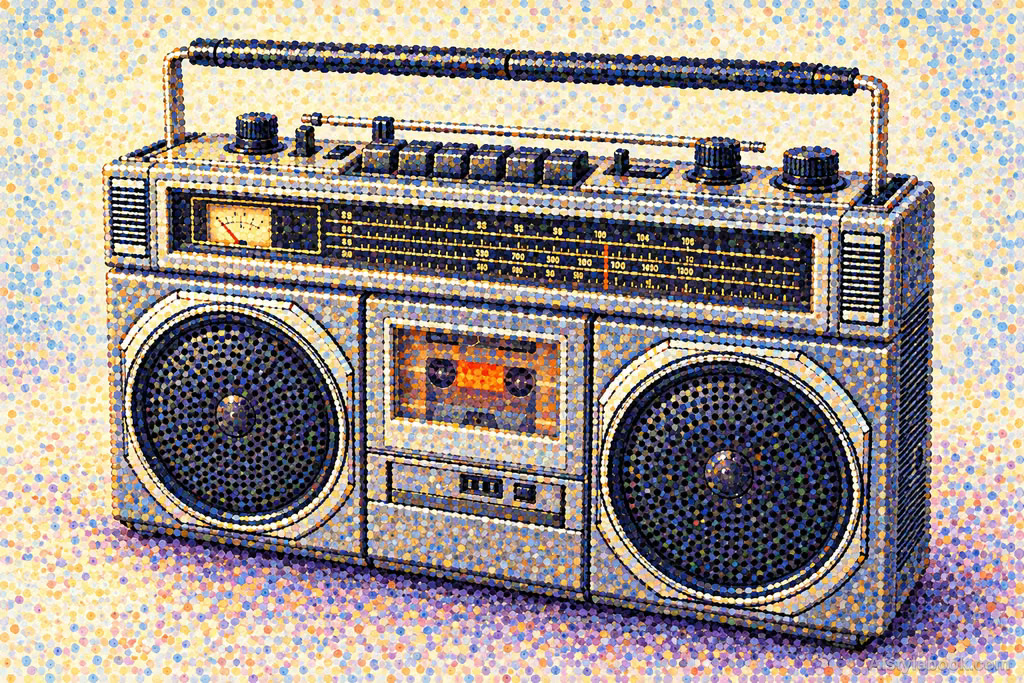
Separate colored dots sit side by side rather than fully mixing, creating a flickering optical blend at viewing distance. Stable contours keep the tiny marks organized into clear scenes.
Pointillism depends on neighboring colors and viewing distance, unlike a simple monochrome screen.
Blue, green and orange marks can merge into a vibrating lawn shadow when viewed from farther away.
How the style changes different subjects
- Portrait
- Dot spacing builds skin tones or grayscale; fragmented marks resolve into a face at viewing distance.
- Landscape
- Canopies, sky and ground become dot fields whose broad tonal structure outweighs fine detail.
- Objects
- Changing dot density describes curves, with clear edges and reserved highlights.
- Subjects
- Choose side-lit portraits, trees, flowers, fruit or simple still lifes large enough to retain recognizable features.
Pointillism and Neo-Impressionism
Neo-Impressionists including Seurat and Signac investigated color and vision; separated small color marks were an important part of that practice.
Artists & practitioners
Creators to know
Georges Seurat
Explored Neo-Impressionism through small color marks and ordered composition.
Paul Signac
Extended divided-color practice through investigations of color harmony.
Bring the style to your photos
Reusable style prompt for Pointillism
Construct the image from separate small dots of pure pigment, allowing complementary colors to mix optically at a viewing distance. Let dot spacing vary slightly and naturally, modeling tones through density and color temperature. Keep contours stable and bright surfaces luminous with subtle visual shimmer. Preserve rich but harmonious local color, simplifying details to the scale of the dots. Avoid continuous strokes, mechanical pixel grids, and completely blended digital gradients.Use the same style prompt for portraits, landscapes and objects.
Create with this styleKeep exploring


