
Painting & Drawing
Impressionist Painting Style
Style guide
Short broken strokes interweave warm and cool light colors, with colored shadows and soft edges creating a light, airy atmosphere.
The visual language
What is Impressionist Painting Style?
Short broken strokes leave warm and cool colors alongside one another, with blue-violet or reflected colors retained in shadow. Edges respond to air and light, suggesting a scene seen in one moment.
Impressionist shadows can carry reflected color and edges can dissolve into changing light.
Warm sunlit walls beside blue-violet shade let separate strokes suggest a shared atmosphere.
How the style changes different subjects
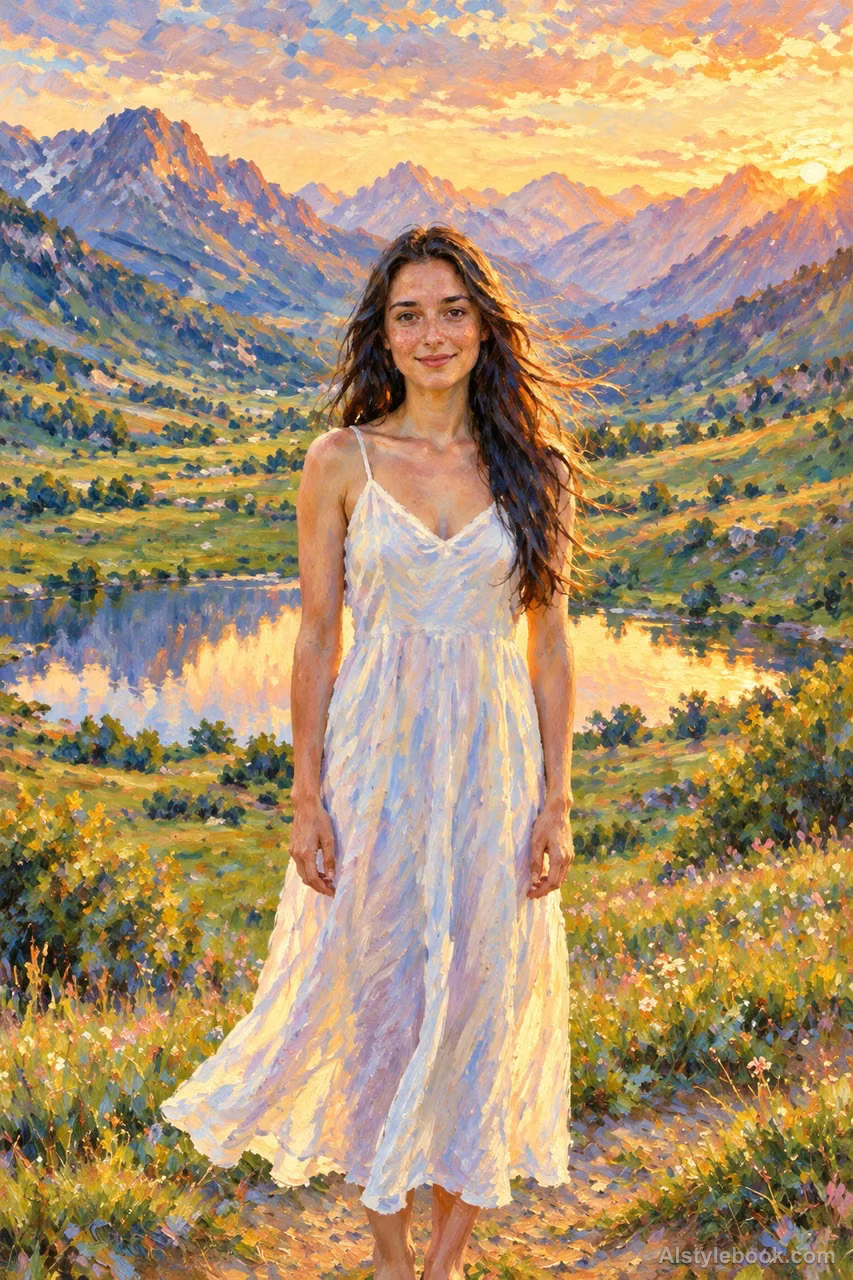
- Portrait
- Broken color strokes soften features, placing pose and surrounding light ahead of precise outlines.
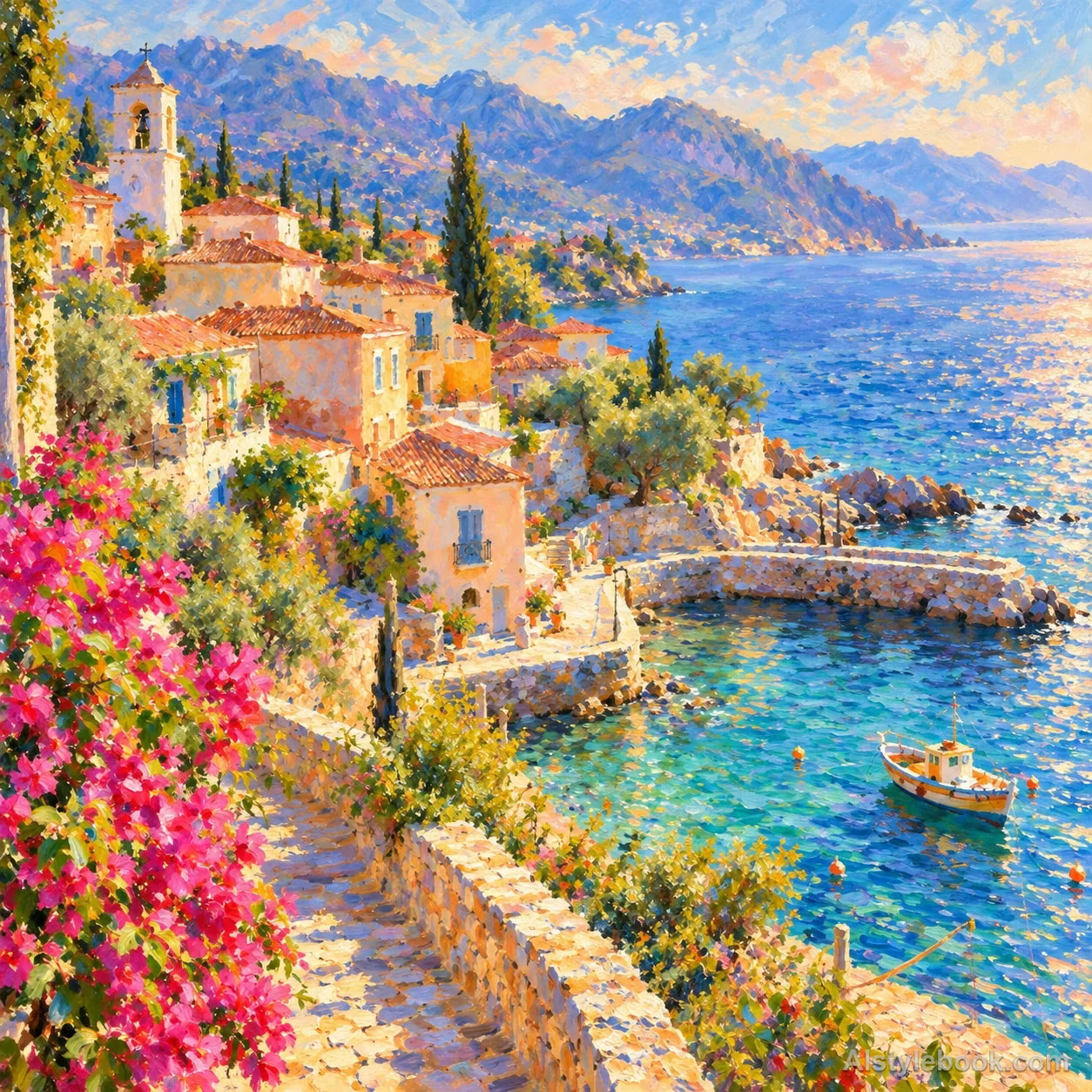
- Landscape
- Warm and cool marks interweave through foliage, water and sky, emphasizing atmosphere and time of day.
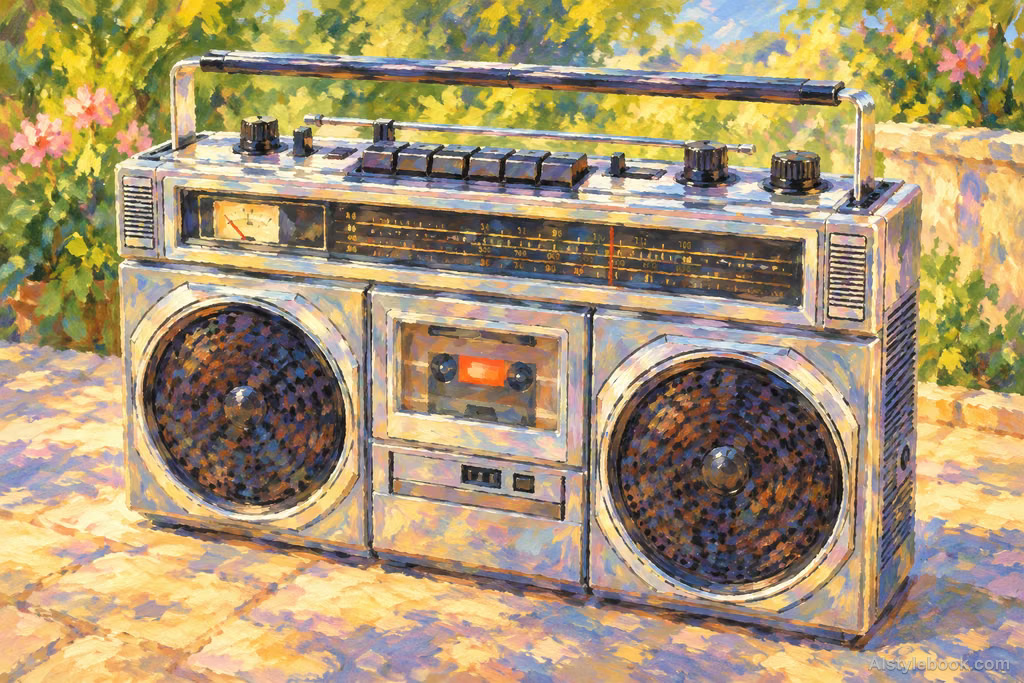
- Objects
- Edges soften into the light and reflections become color strokes tied to the surrounding illumination.
- Subjects
- Choose outdoor figures, gardens, riversides or window-lit still lifes with varied natural light.
Light and modern life
Impressionist painters differed in method but shared an interest in modern life and the fleeting effects of light and color.
Bring the style to your photos
Reusable style prompt for Impressionist Painting Style
Repaint the image as an impressionist oil study of fleeting light. Interweave short brushstrokes in varied directions, leaving small sparkling gaps of undercolor. Build light and shade through optical mixtures of complementary warm and cool colors, with blue-violet or blue-green shadows and luminous warm highlights. Let edges soften into the atmosphere while preserving clear overall color masses and the original lighting direction.Use the same style prompt for portraits, landscapes and objects.
Create with this styleKeep exploring


