
Light & Image Effects
Radial Kaleidoscope
Style guide
Mirrored wedges of the image meet around one center to form a sharply defined radial pattern.
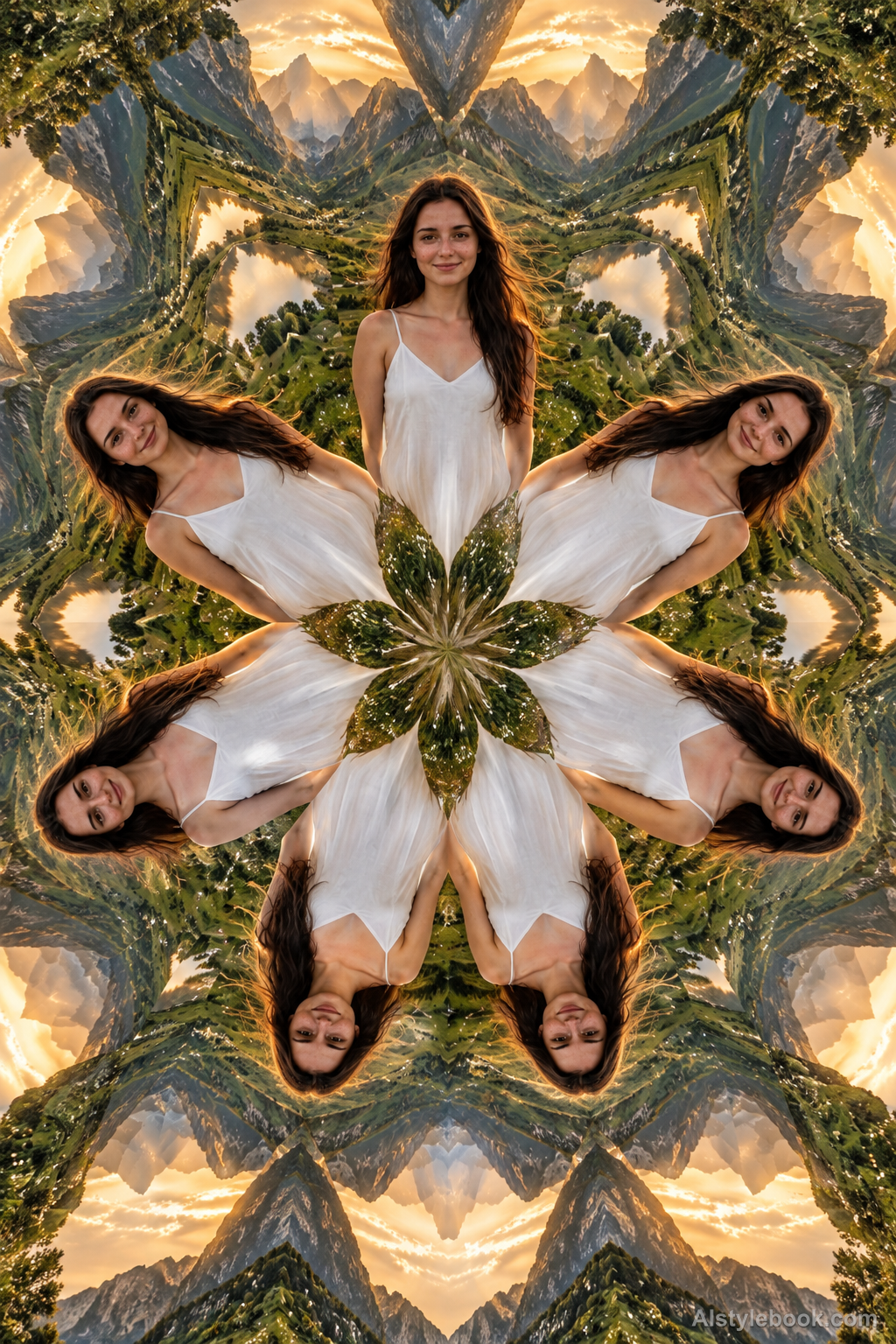
PortraitStyle effect
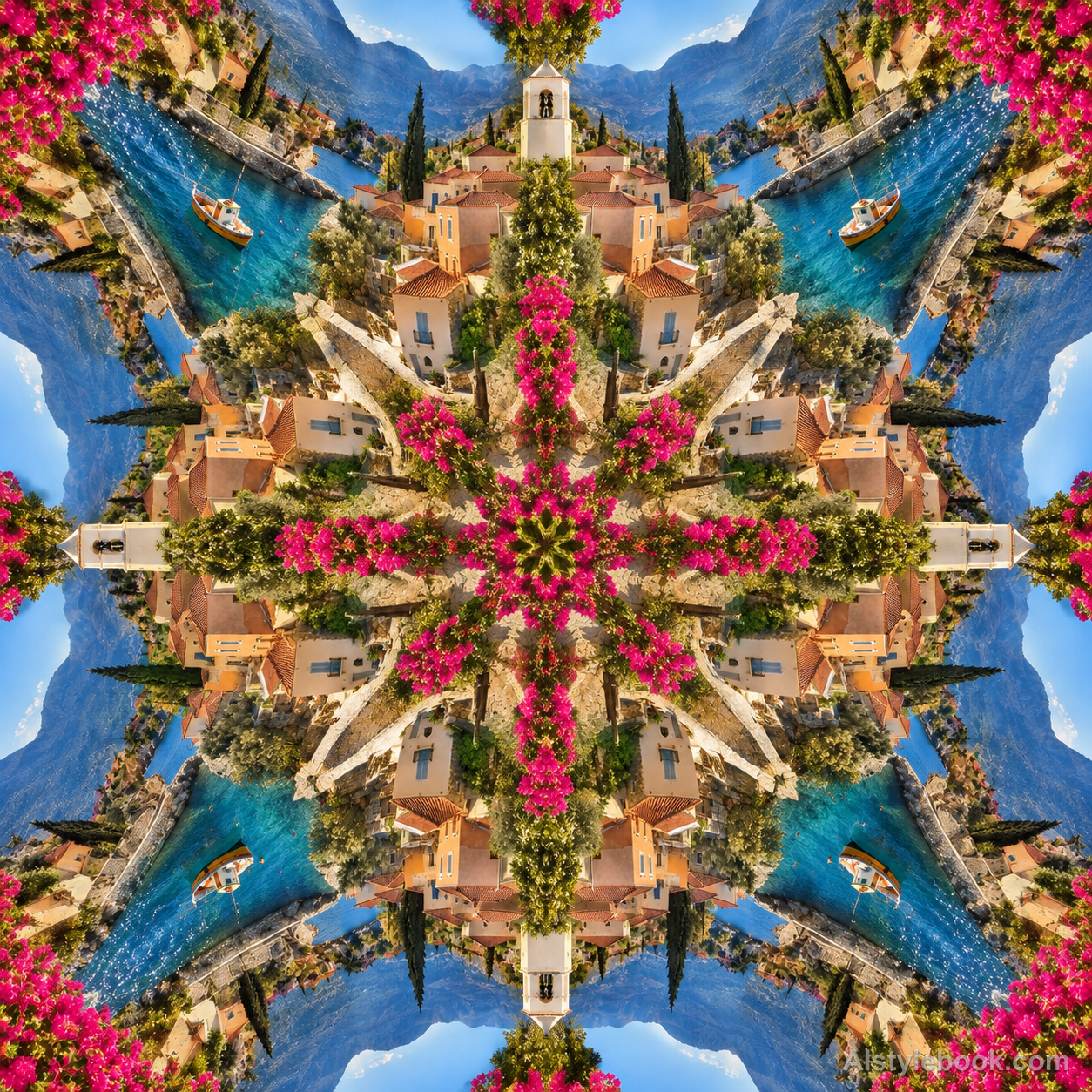
LandscapeStyle effect
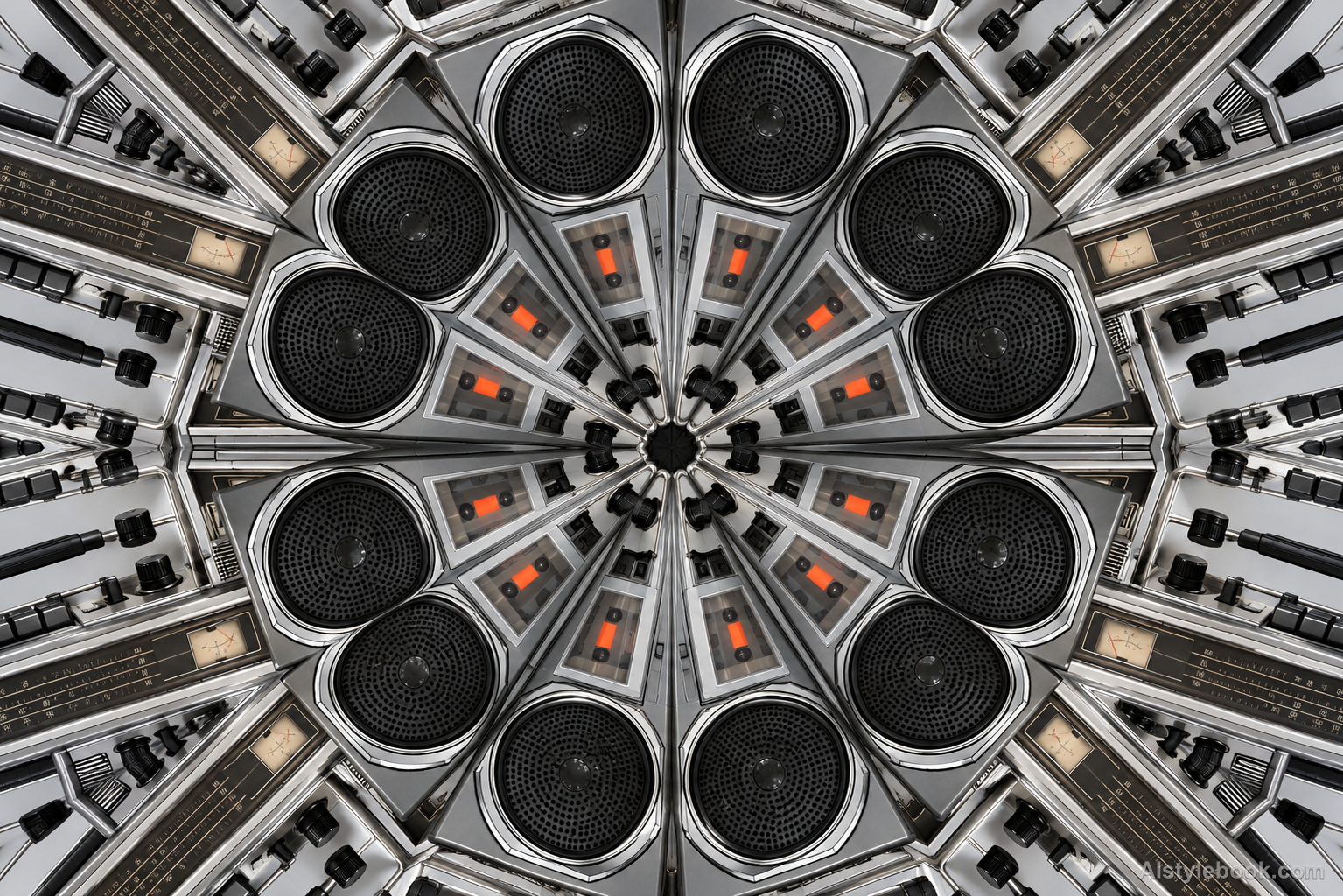
ObjectsStyle effect
The visual language
What is Radial Kaleidoscope?
A radial kaleidoscope places image fragments in neighboring wedges and alternates mirrored rotations around one center. Repeated details produce precise radial symmetry rather than a simple image rotation or blur.
Kaleidoscopes repeat a sector through rotation and reflection, requiring aligned neighboring boundaries.
Window fragments meeting in six directions can turn a familiar scene into a coherent radial pattern.
How the style changes different subjects
- Portrait
- Repeated, rotated or recursively scaled fragments shift attention from the intact face to rhythm.
- Landscape
- Scenic edges converge into mirrored patterns or nested tunnel-like depth.
- Objects
- Repeated objects become units of radial or recursive composition.
- Subjects
- Choose flowers, architectural details, geometric objects or clear portraits whose colors and contours make repetition readable.
Bring the style to your photos
Reusable style prompt for Radial Kaleidoscope
Construct a radial kaleidoscope from the image: select recognizable image fragments within wedge-shaped sectors, then repeat them around a single central point with alternating mirrored orientation. Use eight to twelve clean sectors with seamless radial joins, preserving detailed color and texture inside each wedge. Symmetry must come from reflection and rotation, not circular blur or stretching into a polar-coordinate ring. Fill one continuous frame with the resulting intricate image-derived pattern.Use the same style prompt for portraits, landscapes and objects.
Create with this styleKeep exploring


