
Painting & Drawing
Romantic Sublime
Style guide
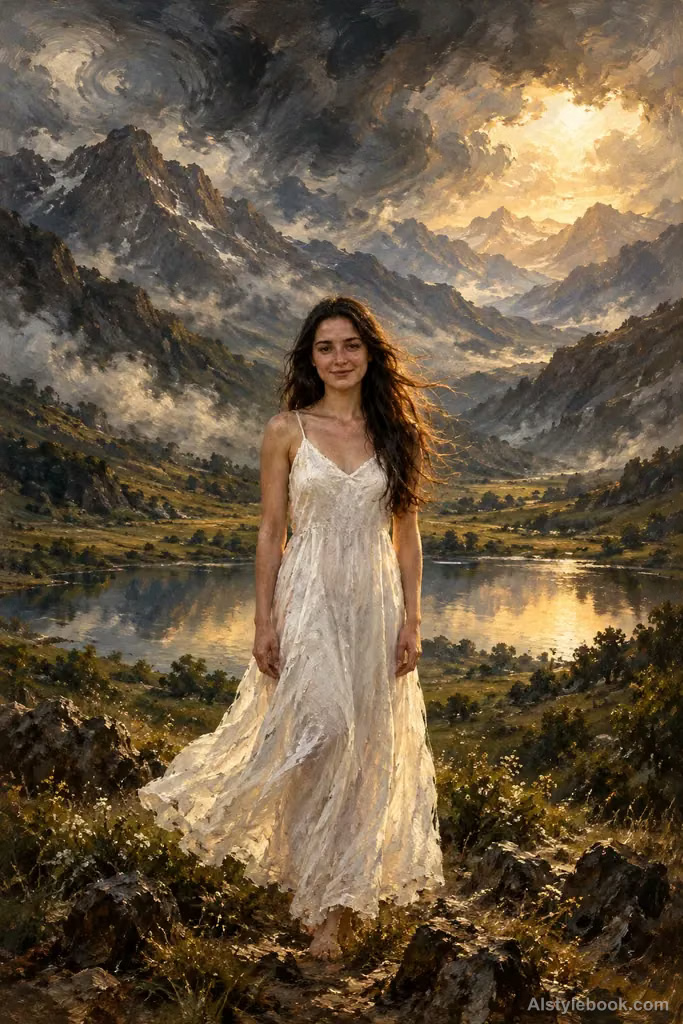
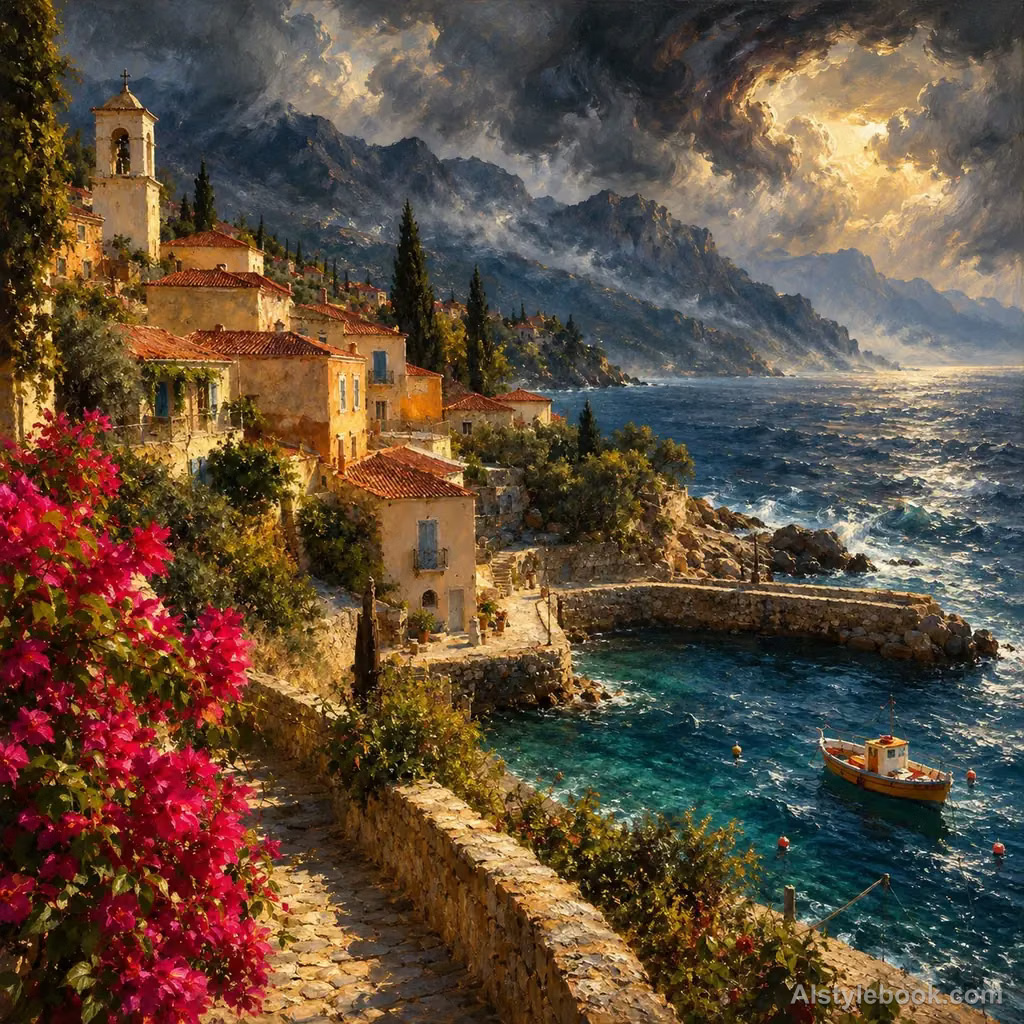
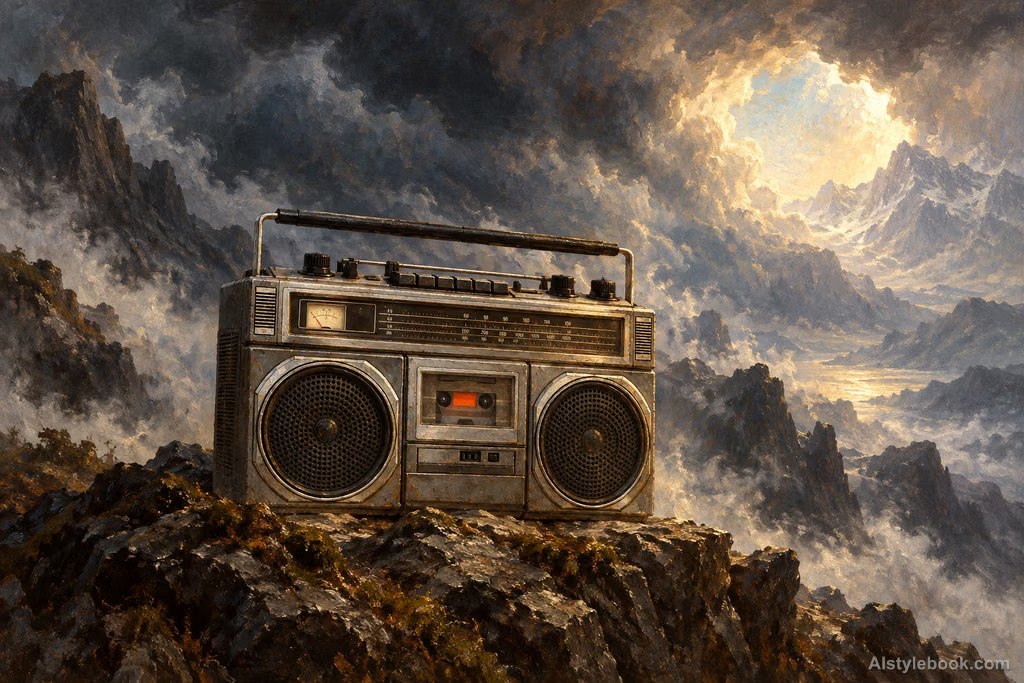
Deep glazing, turbulent broken marks and broad diagonal tonal masses echo one another to create a solemn, powerful space.
The visual language
What is Romantic Sublime?
Large diagonal tonal masses drive space into the distance, alternating smoky glazing with turbulent broken strokes. Small light areas gather within broad darkness, using scale contrast for solemn force.
The Romantic sublime uses scale and atmosphere to suggest nature's overwhelming power.
A tiny figure beneath towering cloud and waterfall can make a landscape feel awe-inspiring rather than merely picturesque.
How the style changes different subjects
- Portrait
- Figures serve as scale references within vast surroundings, with pose more important than facial detail.
- Landscape
- Mountains, waves and storms gain grandeur through small lights set against broad dark masses.
- Objects
- Strong atmosphere surrounds objects, emphasizing silhouette and mass over fine ornament.
- Subjects
- Choose mountains, seas, storms, ruins or small figures in expansive settings where scale can dominate.
Romanticism and the sublime
Romanticism developed in early nineteenth-century France and Britain with an emphasis on imagination and emotion. Storms, shipwrecks and immense natural scale drew on earlier ideas of the sublime, bringing awe and unease into landscape.
Bring the style to your photos
Reusable style prompt for Romantic Sublime
Organize the existing forms in the oil-painting language of the Romantic sublime. Build emotional tension with sweeping diagonal tonal masses, deep smoky translucent glazes and turbulent broken brush edges. Weighty dark passages respond to distant luminous haze, with small areas of light gathering within broad color layers. Reinforce scale contrasts and spatial depth along existing structures, keeping contours readable within the movement and creating a solemn, powerful atmosphere.Use the same style prompt for portraits, landscapes and objects.
Create with this styleKeep exploring


