
Painting & Drawing
Symbolist Poetic Painting
Style guide
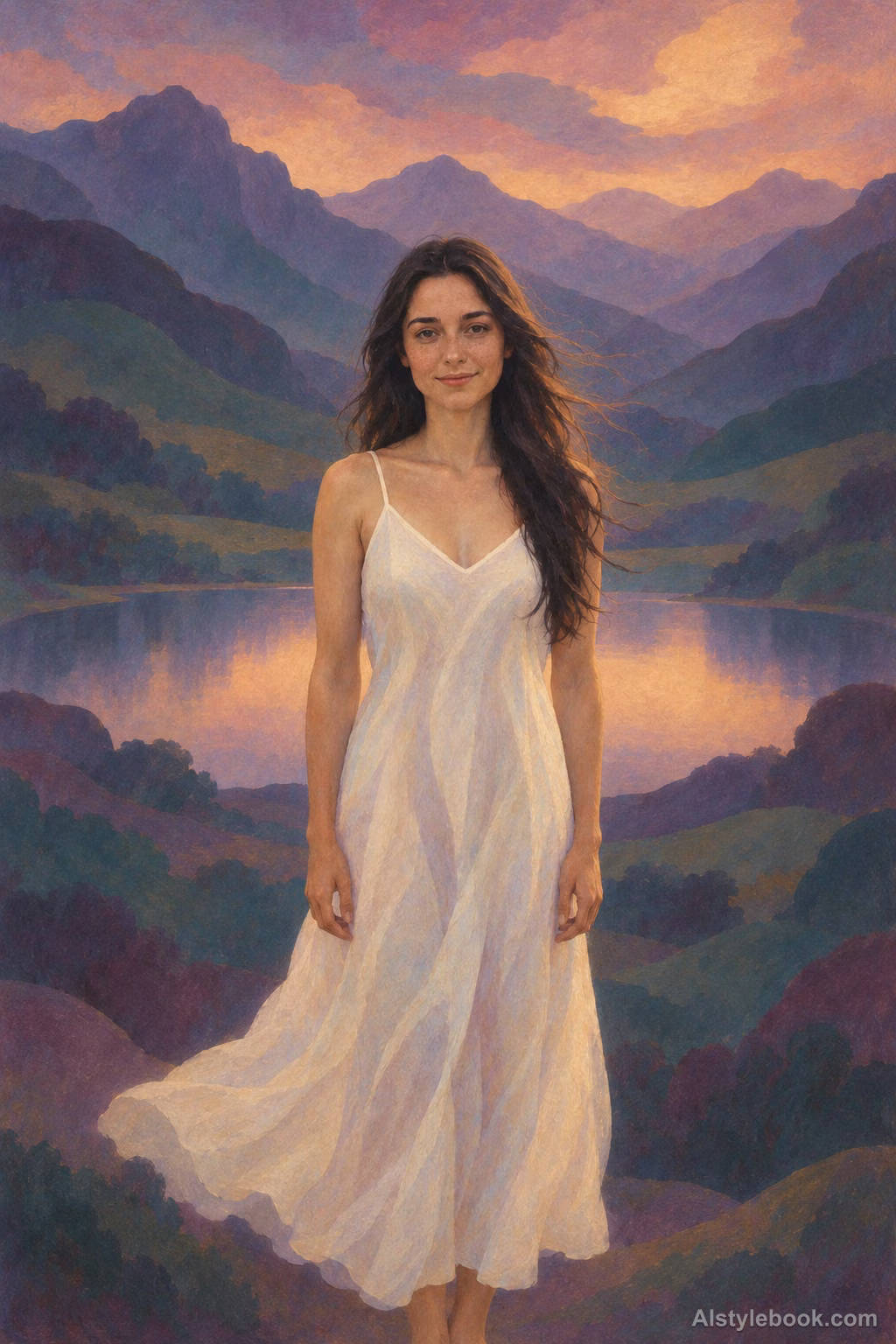
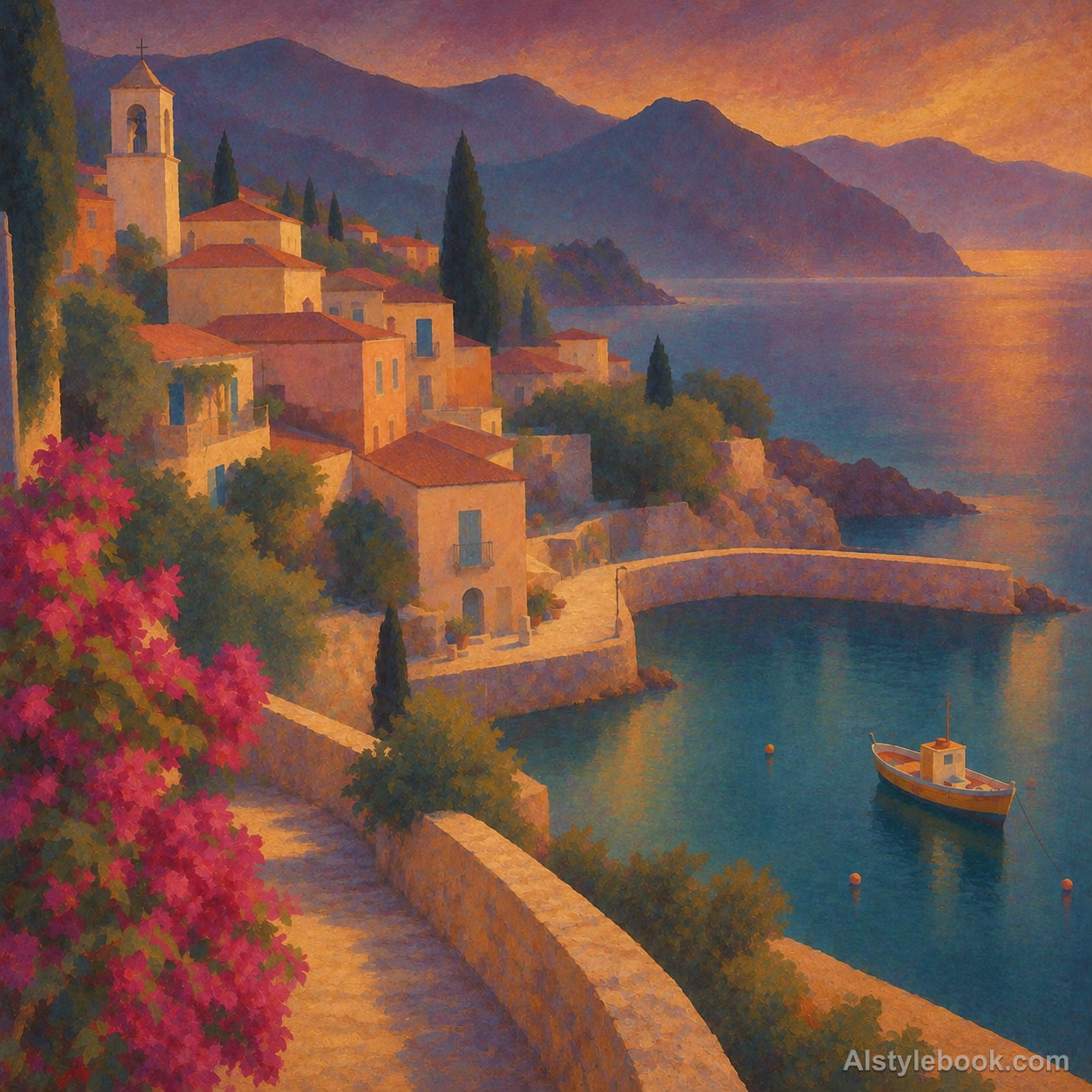
Soft interlocking nearly flat color fields, misty scumbling and emotional violet, green and warm colors create quiet poetry.

The visual language
What is Symbolist Poetic Painting?
Soft interlocking fields reduce depth, with misty scumbling making contours echo one another. Violet, green and warm ochre follow emotional relationships and suggest a still inner landscape.
Symbolism uses atmosphere and imagery to suggest ideas without requiring a fixed code for every object.
Still water, a solitary tree and violet sky may evoke waiting or dreamlike time.
How the style changes different subjects
- Portrait
- Quiet expressions and mood-driven color place the figure within an inward-looking scene.
- Landscape
- Flattened depth, misty color fields and echoed contours link natural forms like a dream.
- Objects
- An object's symbolic role grows stronger as literal color and lighting give way to mood.
- Subjects
- Choose still figures, moonlit scenery, flowers or personally meaningful objects with simple relationships.
Ideas and emotions
Symbolist painters sought to express emotions and ideas rather than only represent the natural world objectively.
Bring the style to your photos
Reusable style prompt for Symbolist Poetic Painting
Reorganize the existing forms as Symbolist poetic painting, compressing depth into soft, interlocking, nearly flat color fields. Muted violet, dark plum and teal shadows answer softly luminous ochre and rose, with color chosen for emotion rather than realistic illumination. Echo the main contours through broad surrounding shapes. Use velvety matte paint and mist-like scumbling to create stillness and introspection from the relationships of existing shapes and colors.Use the same style prompt for portraits, landscapes and objects.
Create with this styleKeep exploring


