
3D & Miniatures
Translucent Wax Forms
Style guide
Milky cores, satin wax bloom and warm transmitting thin edges create rounded pigmented-beeswax sculptural volume.

PortraitStyle effect

LandscapeStyle effect
ObjectsStyle effect
The visual language
What is Translucent Wax Forms?
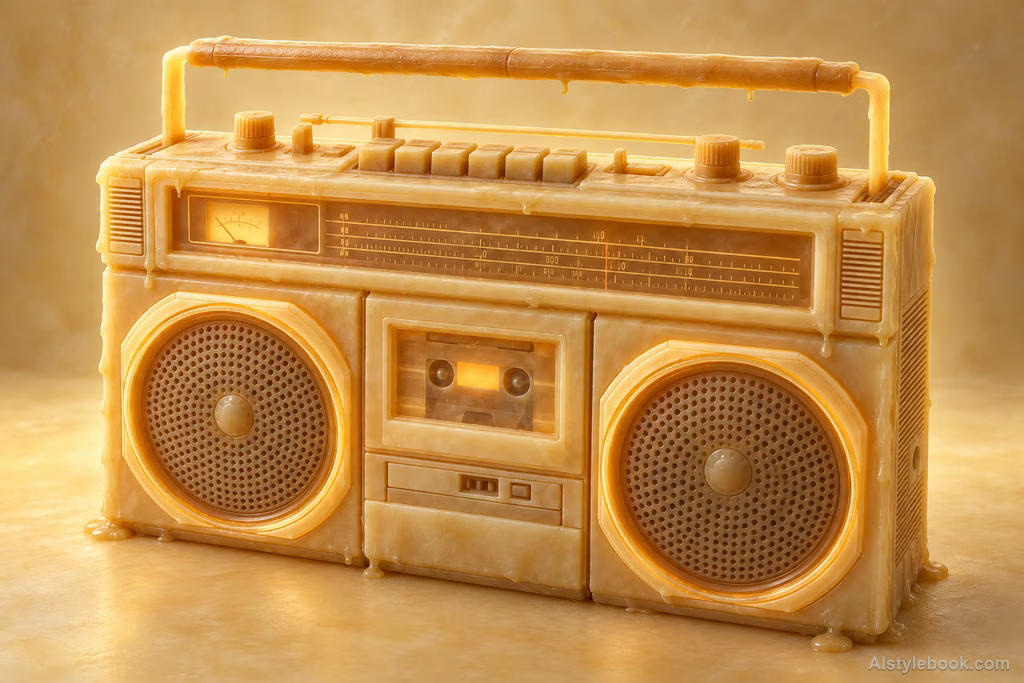
Thick areas form milky cores while thin edges transmit warm light, preserving the weight of rounded wax sculpture. Satin bloom, set droplets and small tool marks keep the material soft without a plastic finish.
Wax combines subsurface scattering with opaque-looking thicker regions and translucent edges.
A backlit warm leaf rim beside a milky base can suggest softness without losing material weight.
How the style changes different subjects
- Portrait
- Translucent material replaces skin and clothing, with brighter thin edges and denser thick areas.
- Landscape
- Translucent masses change scenic depth through transmitted light and occlusion.
- Objects
- Thickness controls color and brightness as internal scattering softens reflections.
- Subjects
- Choose flowers, rounded animals, sculptures or simple vessels with clear thin edges, thick centers and backgrounds.
Bring the style to your photos
Reusable style prompt for Translucent Wax Forms
Sculpt every form from pigmented beeswax with gentle hand-finishing. Thick areas have milky opaque cores and matte satin bloom, while thin rims transmit warm light. Keep contours rounded and retain a few solidified wax droplets and tooling marks. Translate the original palette into soft creamy wax colors, establishing a coherent sculptural space through differences in thickness, transmission and subtle shaping traces.Use the same style prompt for portraits, landscapes and objects.
Create with this styleKeep exploring


