
Pixels & Characters
Voronoi Crystallization
Style guide
Irregular flat polygons reduce the image to a Voronoi mosaic of individually uniform sampled colors.

PortraitStyle effect
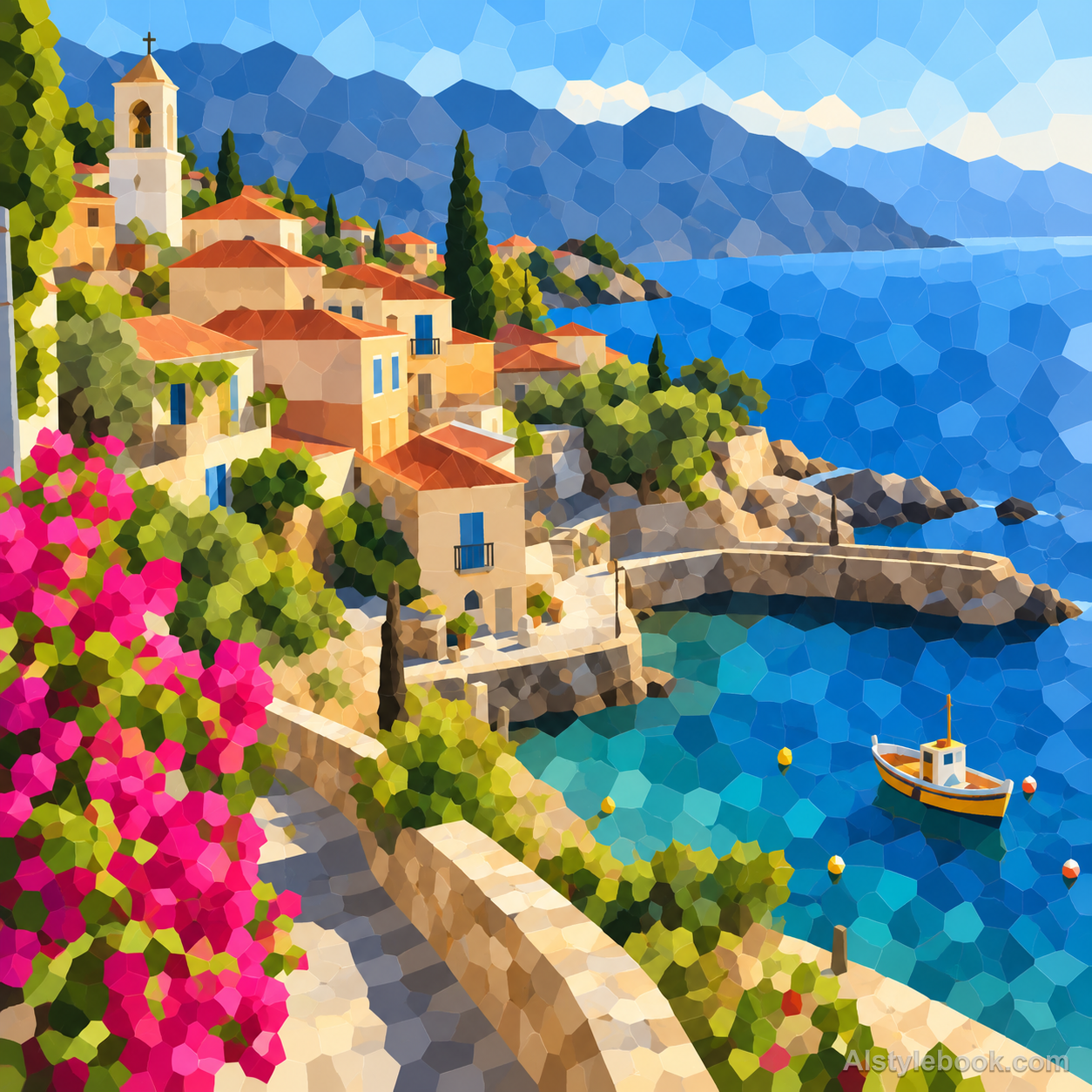
LandscapeStyle effect
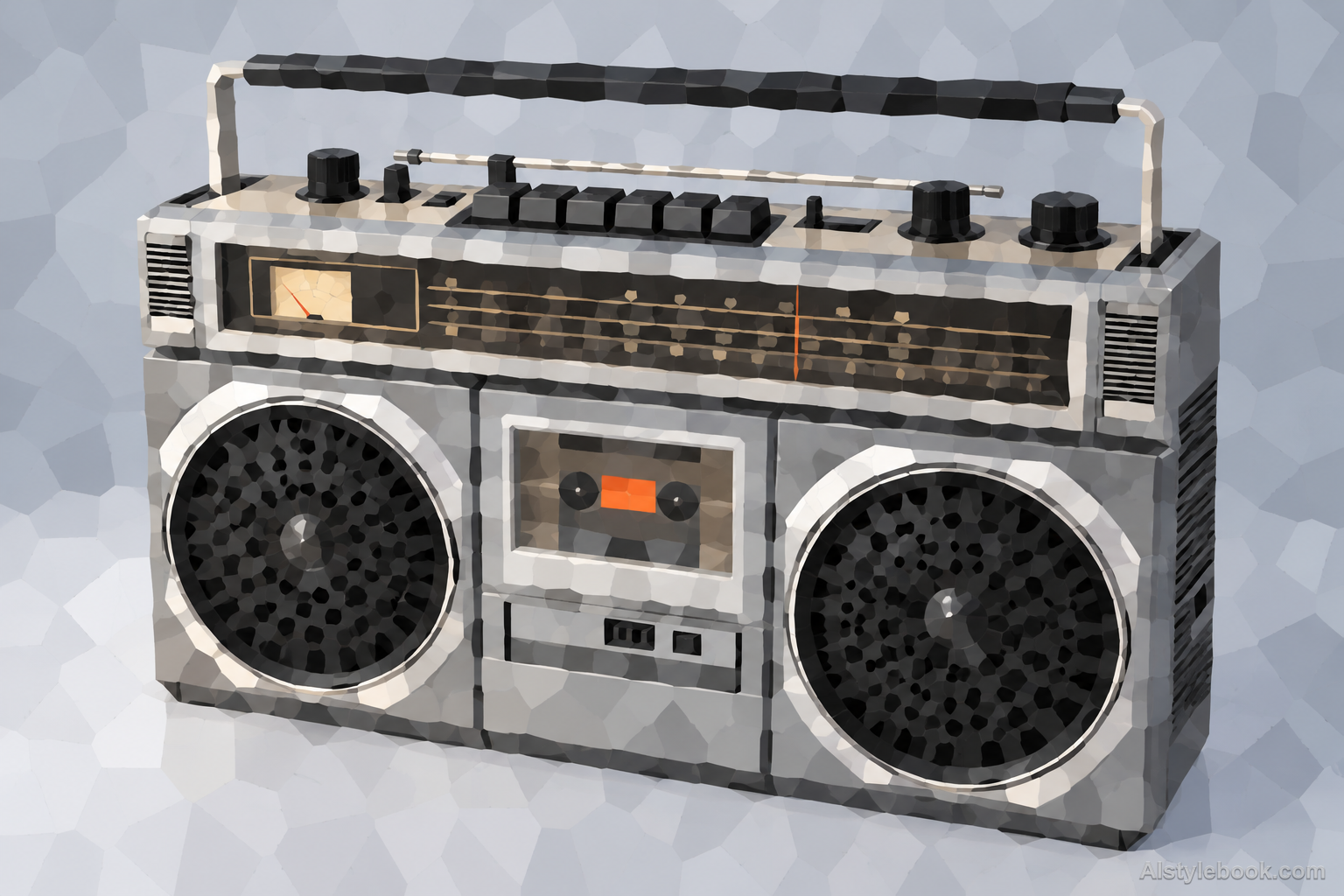
ObjectsStyle effect
The visual language
What is Voronoi Crystallization?
Voronoi crystallization covers the image with tightly fitted irregular polygons, each holding one sampled color. Smaller cells clarify important boundaries while larger cells simplify quieter regions into an organized flat abstraction.
Voronoi color cells partition a plane around nearby centers, using color rather than wall depth to describe form.
Small face cells beside larger background ones can make a photograph seem crystallized into flat pieces.
How the style changes different subjects
- Portrait
- Sampled color cells rebuild face and clothing, emphasizing hair and tonal regions over small features.
- Landscape
- Adjacent cells preserve scenery through color differences and area size.
- Objects
- Color units simplify curves and reflections, favoring shape over literal material.
- Subjects
- Choose broad-color portraits, buildings, flowers, fruit or clear objects large enough to remain readable.
Bring the style to your photos
Reusable style prompt for Voronoi Crystallization
Simplify the image into a flat Voronoi crystallization mosaic made from tightly fitting irregular convex polygon cells. Assign each cell one uniform color sampled from the corresponding image area. Use smaller cells around important contours and somewhat larger cells in quiet areas, keeping silhouettes and tonal organization readable. Make cell boundaries clean and planar. Do not add raised crystal clusters, beveled facets, grout, outlines, holes or three-dimensional mineral surfaces.Use the same style prompt for portraits, landscapes and objects.
Create with this styleKeep exploring


