
Photography & Film
Wet Collodion Plate
Style guide
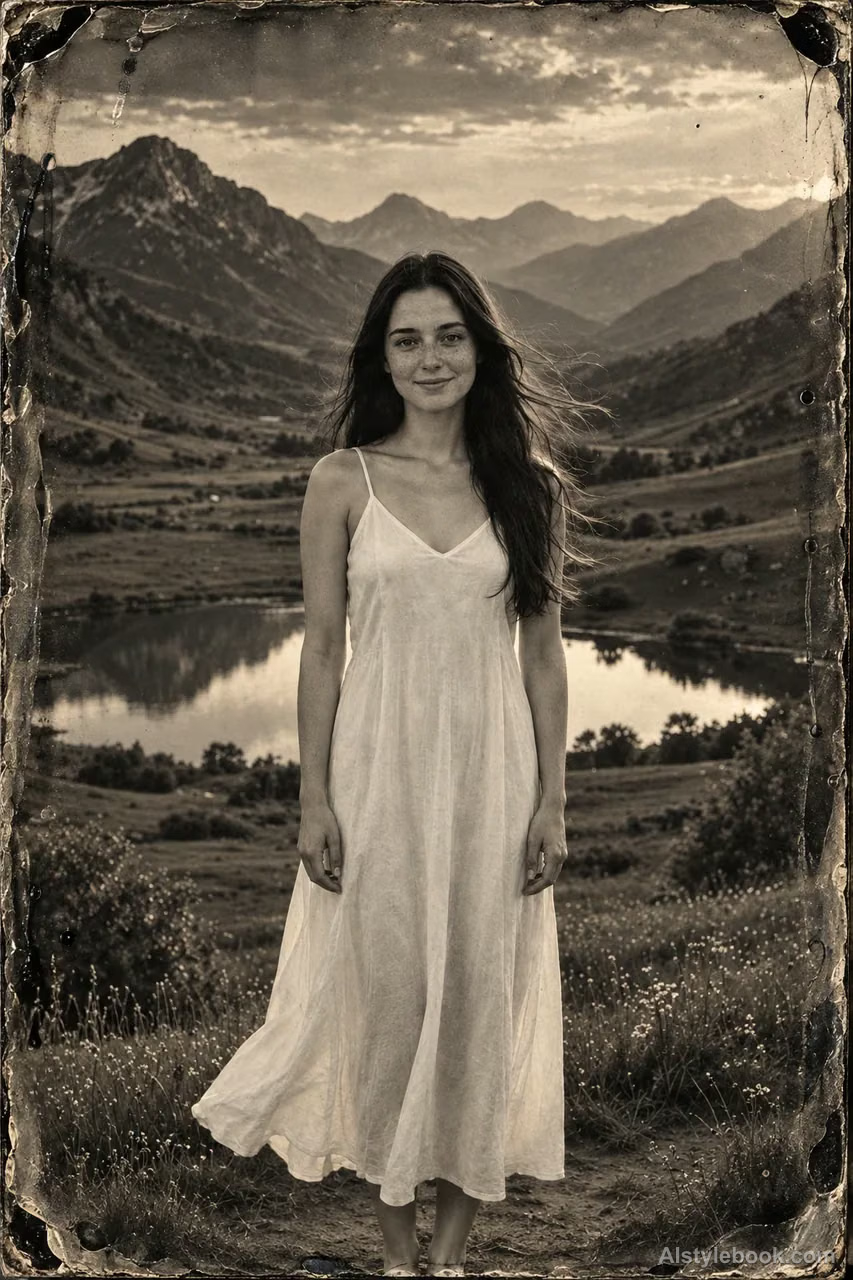
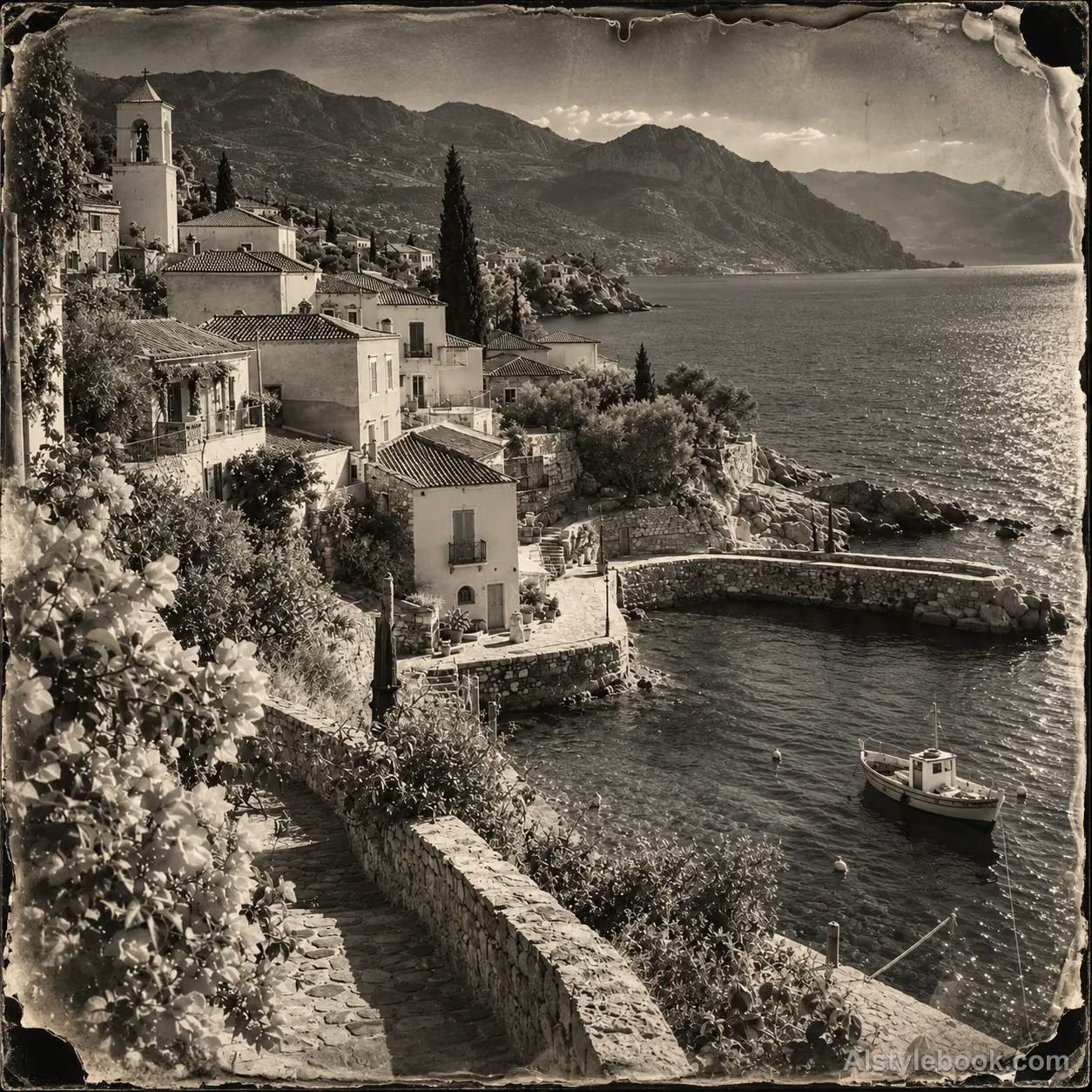
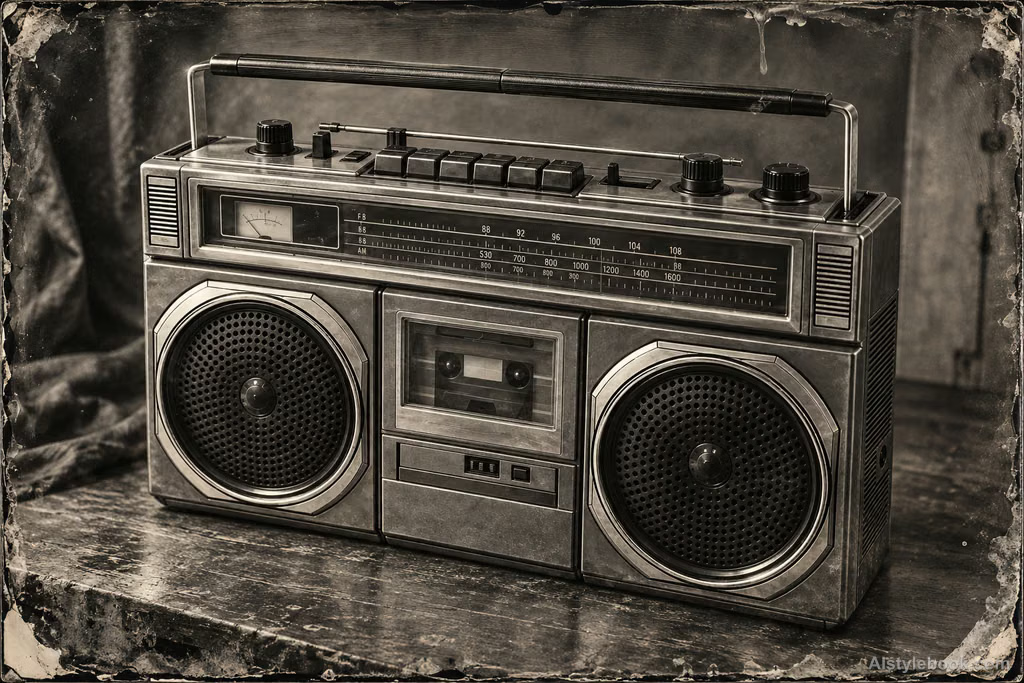
Dark glass, milky silver highlights and irregular coated emulsion edges create a detailed wet-collodion plate appearance.
The visual language
What is Wet Collodion Plate?
Dark glass and milky silver highlights produce detailed, uneven tones. Handmade emulsion edges, local coating variations and clear detail keep the plate itself perceptible.
Wet collodion uses a sensitized plate processed while wet, leaving potential coating irregularities.
Sharp central portrait detail beside uneven margins can emphasize an image held on a prepared physical plate.
How the style changes different subjects
- Portrait
- Skin tones or grayscale transitions soften; grain and uneven tones reduce digital crispness while keeping expression central.
- Landscape
- Skies, haze and distance become gentler, with grain and tonal shifts suggesting the passage of time.
- Objects
- Grain breaks up fine surface detail and contrasts smooth highlights with the character of a photographic plate or print.
- Subjects
- Choose naturally lit portraits, gardens, older streets and simple still lifes with readable shadows and highlights.
Background
The V&A records Frederick Scott Archer’s introduction of wet collodion in 1851. Glass plates were exposed while wet and developed immediately; hand coating and rapid processing contextualize visible plate edges and emulsion variation.
Artists & practitioners
Creators to know
Frederick Scott Archer
Developer of the wet-collodion photographic process.
Bring the style to your photos
Reusable style prompt for Wet Collodion Plate
Render the image in the language of a wet-collodion glass plate. Creamy silver-white highlights emerge from a deep dark-glass ground, with warm charcoal monochrome and blue-sensitive tonal relationships. Resolve fine central detail while gently softening toward the perimeter. Retain irregular hand-poured emulsion edges, subtle chemical flow marks and localized losses revealing bare glass, keeping the chemical artifacts delicate and integrated with the image.Use the same style prompt for portraits, landscapes and objects.
Create with this styleKeep exploring


