
Textiles & Embroidery
Shibori-Inspired Resist Picture
Style guide
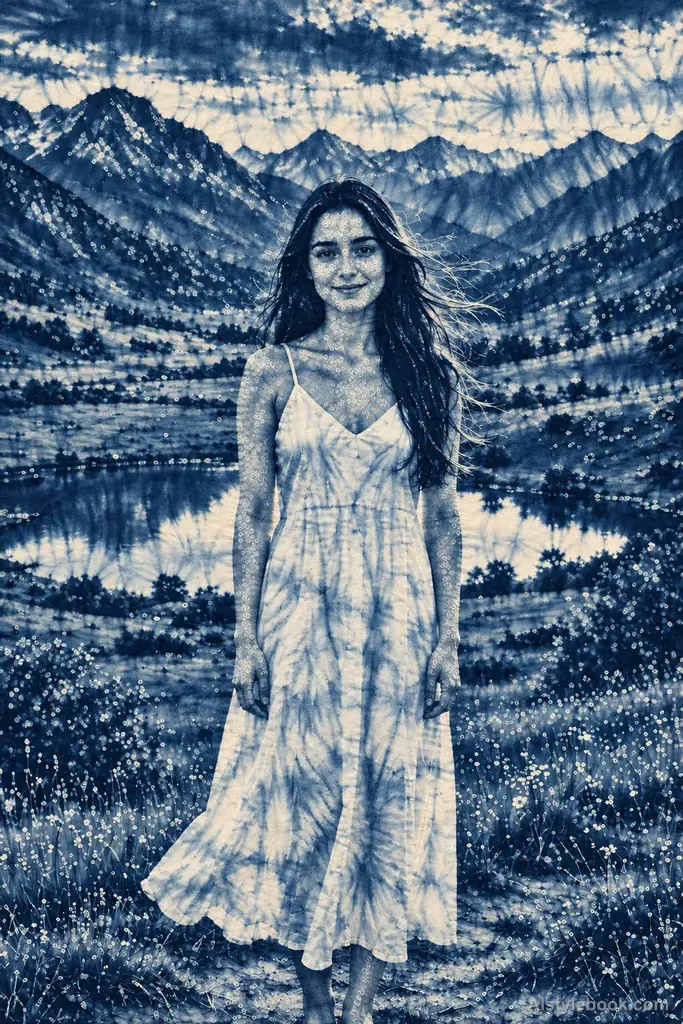
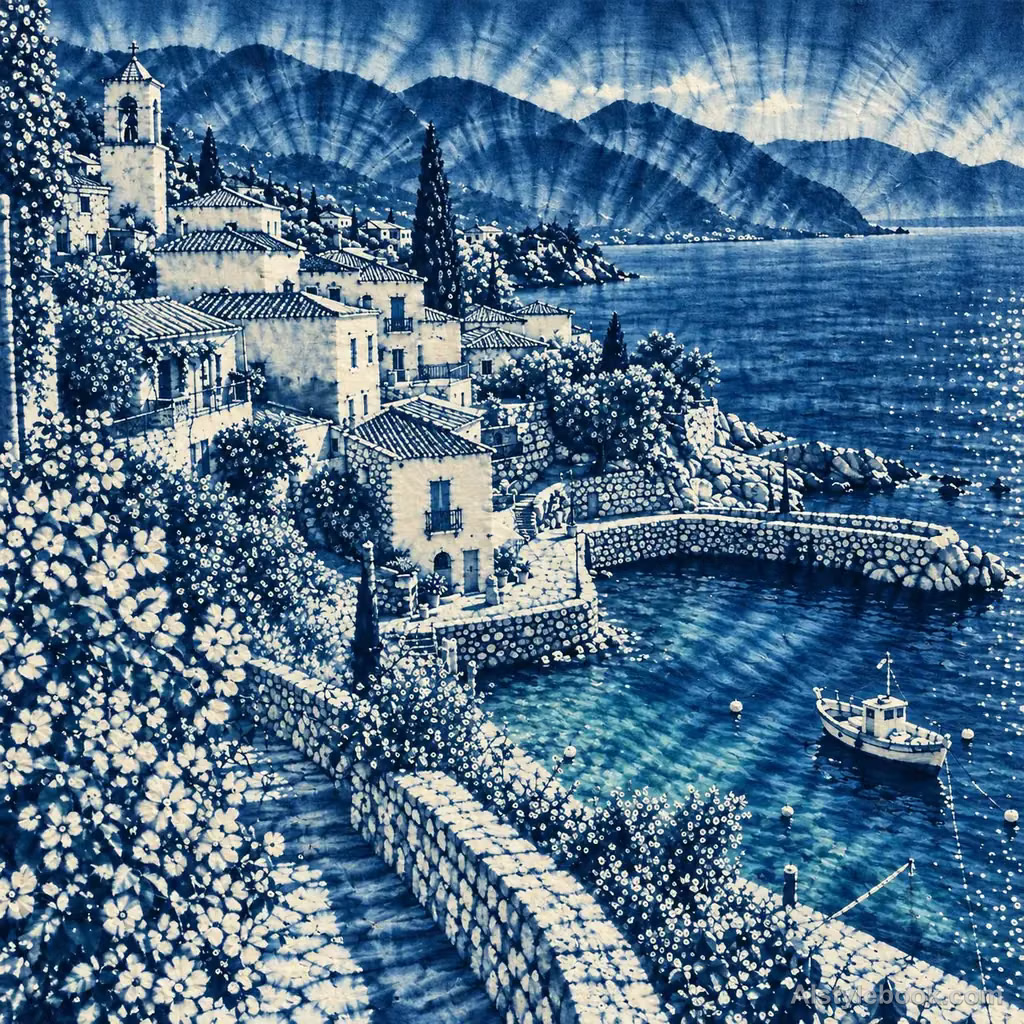
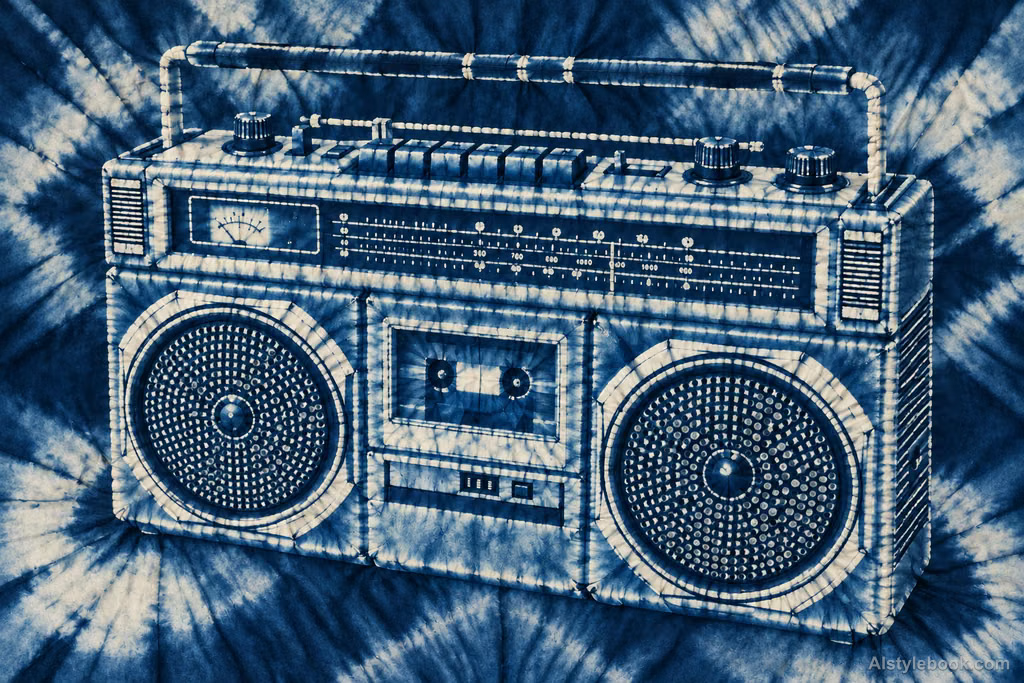
Bound white rings and fan-shaped folded reserves on indigo cotton rebuild the image through feathered dye edges and visible weave.
The visual language
What is Shibori-Inspired Resist Picture?
Binding and folding resist indigo dye, leaving pale rings and fan-shaped reserves. Feathered boundaries cross the cotton weave, with handmade tension giving each repeated pattern a slight difference.
Shibori uses shaped resist to produce varied reserved patterns on cloth.
Slightly different pale rings in indigo, with feathered edges following the weave, can reveal individual binding tension.
How the style changes different subjects
- Portrait
- Dyed fabric tones and softened resist edges replace skin and clothing detail.
- Landscape
- Reserved areas and dye divide scenery over a continuous fabric weave.
- Objects
- Resist boundaries and pale gaps replace object surfaces and reflections.
- Subjects
- Choose foliage, mountains, animals or simple portraits with broad areas for dye variation.
Regional traditions of Japanese resist dyeing
Japanese shibori developed traditions ranging from fine kanoko patterns on silk to indigo-resist patterns on linen and cotton. During the Edo period, places including Arimatsu and Narumi developed household indigo-dyeing practices into regional commercial crafts.
Bring the style to your photos
Reusable style prompt for Shibori-Inspired Resist Picture
Redraw the entire image as pictorial shibori on indigo-dyed cotton. Clustered tiny white resist rings describe details, while fan-shaped folded resist bands model broad forms, with slight feathering at the indigo edges. Use only deep indigo, medium blue and undyed ivory cotton. Retain recognizable structure through visible weave, folding rhythm and controlled resist density, unifying the whole image in a convincing dyed-textile surface.Use the same style prompt for portraits, landscapes and objects.
Create with this styleKeep exploring


