
Printmaking & Printing
Collagraph
Style guide
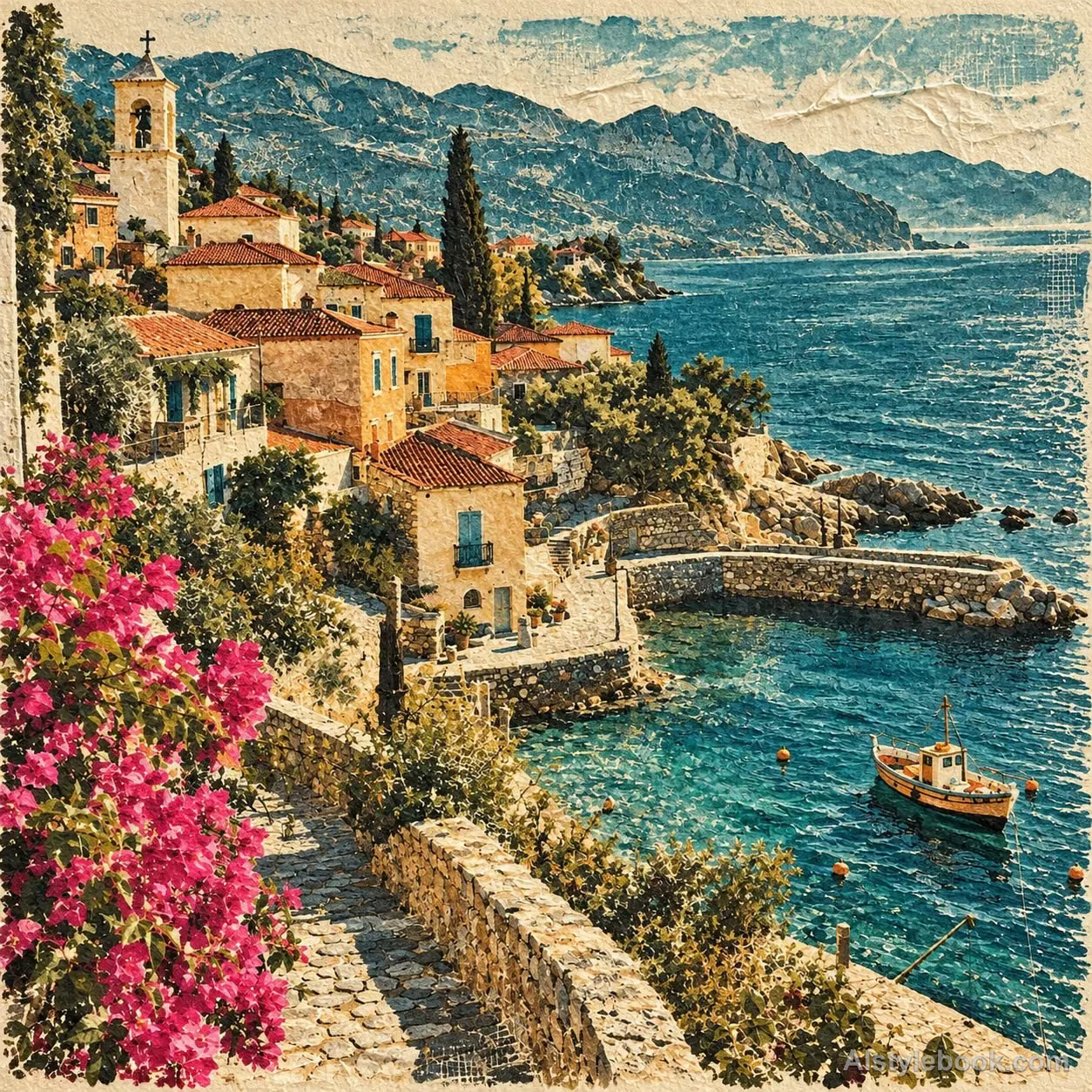
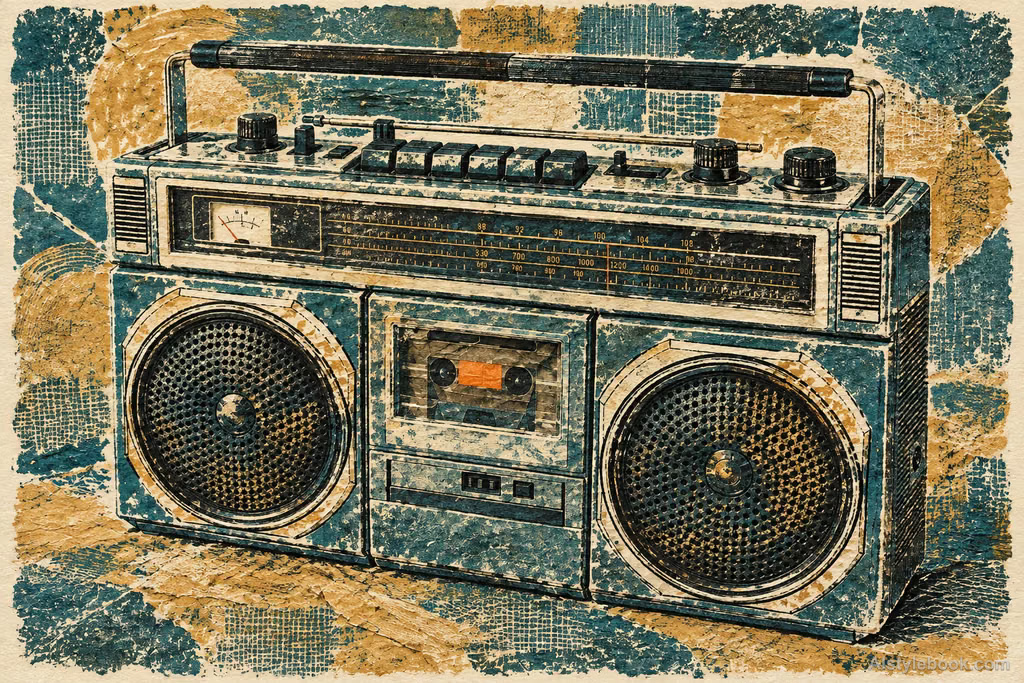
Cardboard edges, mesh and crumpled-paper textures become a unified ink print, with delicate thick-paper impressions and pressure-created white areas.

The visual language
What is Collagraph?
The relief of card, mesh and crumpled paper becomes a unified ink impression while seams remain legible. Embossed thick paper and uninked highlights record changes in pressure.
Collagraph transfers marks from an assembled plate rather than presenting the collage itself.
Mesh and crumpled paper can print different textures and tonal values even when both carry the same black ink.
How the style changes different subjects
- Portrait
- Pressed or scraped marks simplify features and clothing into rough tactile surfaces.
- Landscape
- Material textures and uneven edges separate buildings, rocks and plants.
- Objects
- Objects resemble impressions or incisions in a rough ground, emphasizing outline and texture.
- Subjects
- Choose bark, stone, architecture or strongly lit figures with a readable hierarchy of coarse and fine forms.
Collage as a printing plate
Collagraph printing fixes different materials to a base plate so that their textures and relief enter the printed image.
Bring the style to your photos
Reusable style prompt for Collagraph
Translate the image into a collagraph impression. Construct existing forms through the different ink-catching qualities of cardboard edges, gauze weave, wrinkled tissue and coarse fabric textures. Use turquoise, ochre and warm black ink. Lightly wiped raised areas leave pale pressure gaps, while recesses hold broken dark lines. Let heavy ivory printmaking paper show slight embossing, integrating every material texture into one coherent print with legible structure and depth.Use the same style prompt for portraits, landscapes and objects.
Create with this styleKeep exploring


