
Printmaking & Printing
Decalcomania Picture
Style guide
Fine branching suction patterns spread from wet color pools, with dense and sparse veins and pulled-apart edges jointly shaping the forms.
The visual language
What is Decalcomania Picture?
Wet color is pressed between surfaces and separated, pulling fine branching tips from the edges of pools. Uneven veins and torn-looking borders grow like natural texture.
Decalcomania pulls wet color into branching textures as surfaces separate.
Selected green impressions can suggest ferns or underwater growth while retaining detail that was not individually drawn.
How the style changes different subjects
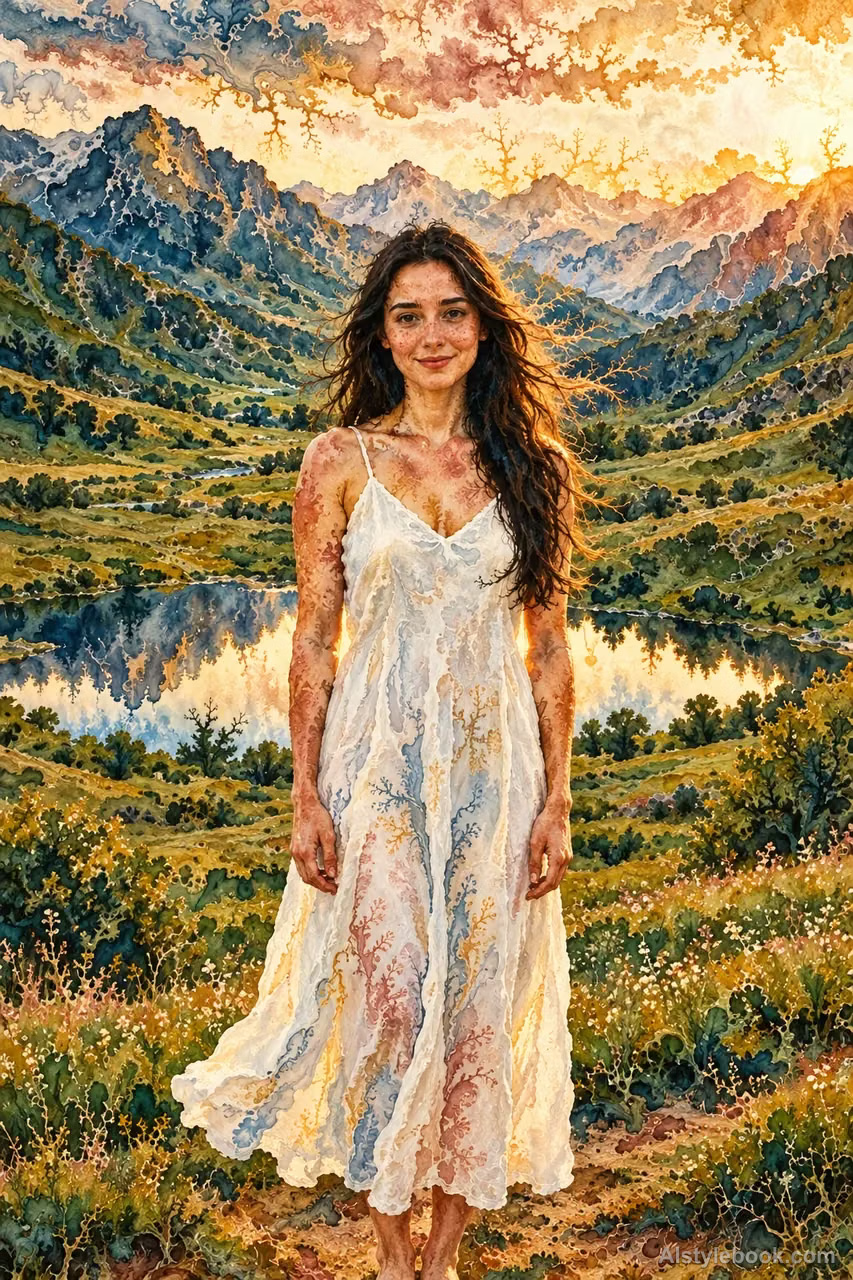
- Portrait
- The figure emerges through scraped, pressed or irregular color marks, with pose anchoring softened features.
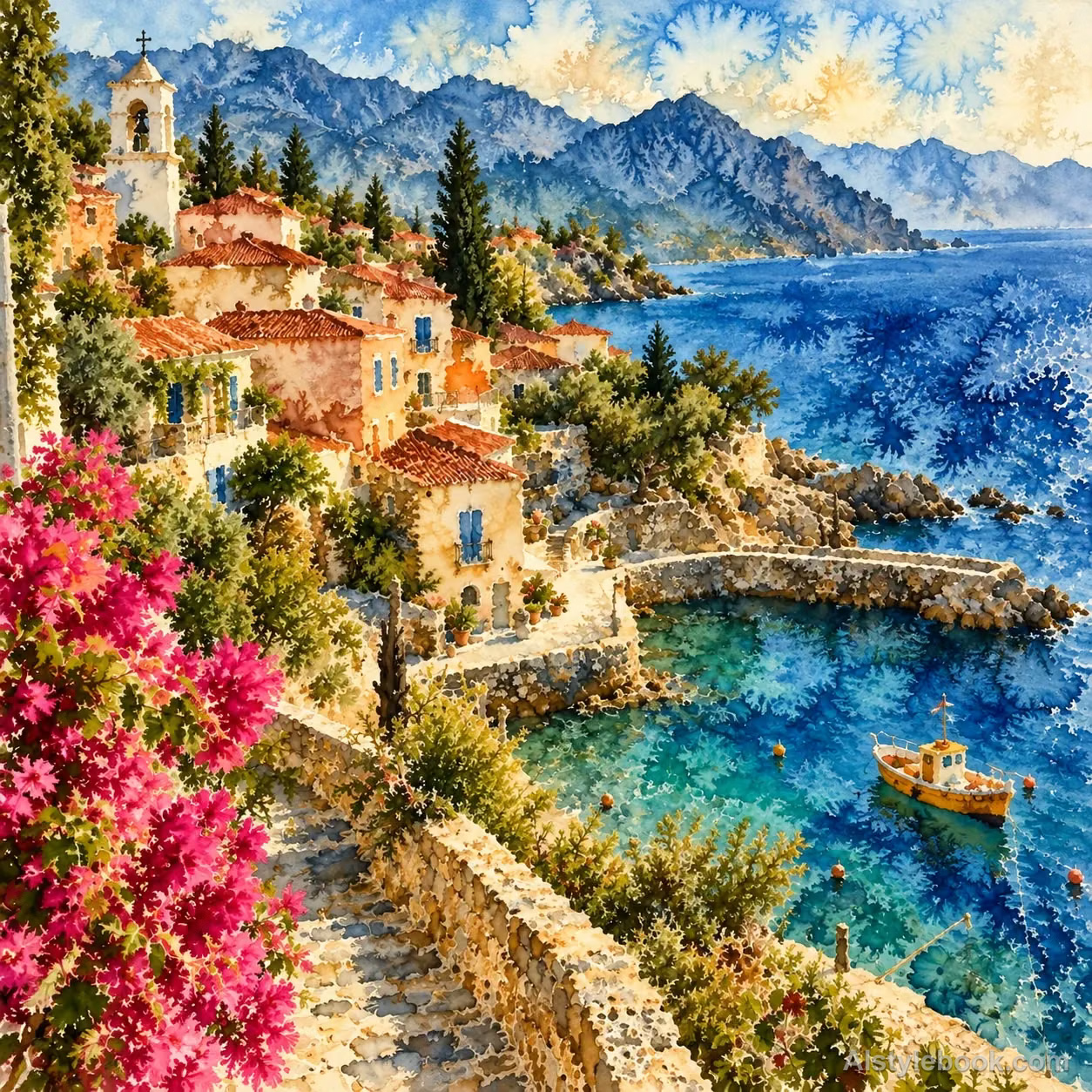
- Landscape
- Terrain and plants merge into accidental textures as if discovered within the material.
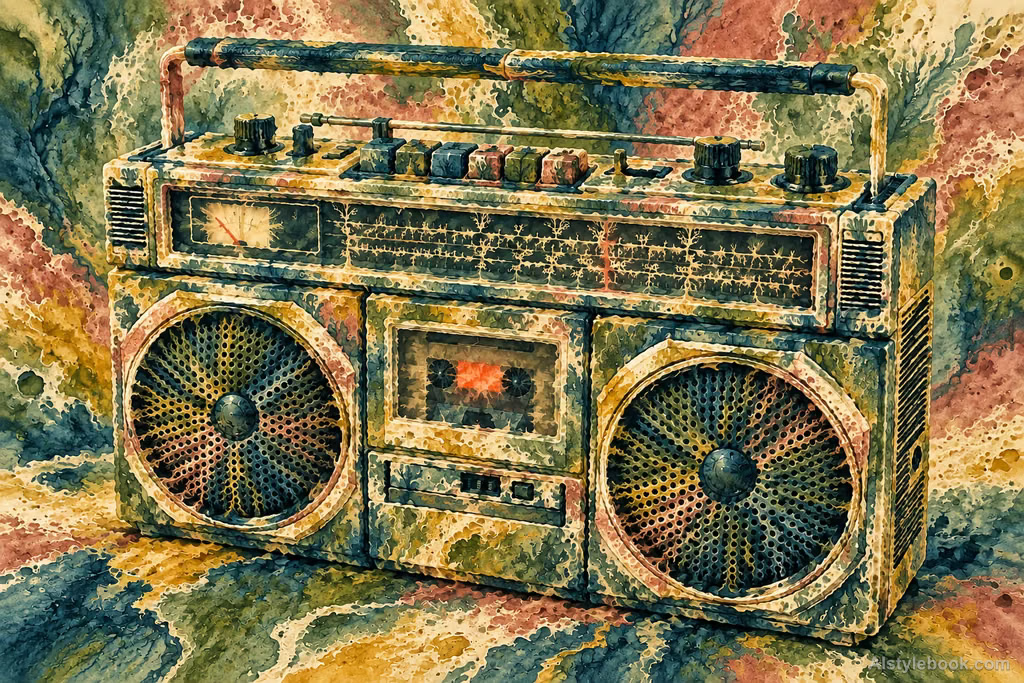
- Objects
- Irregular marks interrupt exact surfaces, making silhouette and broad tones more important.
- Subjects
- Choose trees, rocks, clear portraits or simple still lifes with a readable shape anchoring the material variation.
Wet-color transfer
Decalcomania presses wet color between surfaces and separates them, leaving chance patterns that can be developed further.
Bring the style to your photos
Reusable style prompt for Decalcomania Picture
Repaint every form through pressed-pigment dendritic transfer. Show the sharp branching suction veins left when wet paint is pressed against a smooth surface and pulled apart. Let fractal ridges, fine pores and soft pigment pools converge along existing structure in ochre, gray-green, cream, muted rose and deep blue. Densify branching in shadows and open it in highlights, preserving clear contours and volume through pulled edges and varying wet-pigment thickness.Use the same style prompt for portraits, landscapes and objects.
Create with this styleKeep exploring


