
Printmaking & Printing
Ebru Marbling
Style guide
Clear liquid-film color bands interweave into combed feathers and nested waves, with flowing edges turning continuously along the forms.
The visual language
What is Ebru Marbling?
Films of color turn along the forms, combed into feather patterns and nested waves. Their edges stay distinct yet fluid, giving each region a unique floating trajectory.
Ebru transfers patterns formed by moving color on a liquid surface.
A tool drawn through layered floating colors can leave nested featherlike turns that preserve the continuity of that motion.
How the style changes different subjects
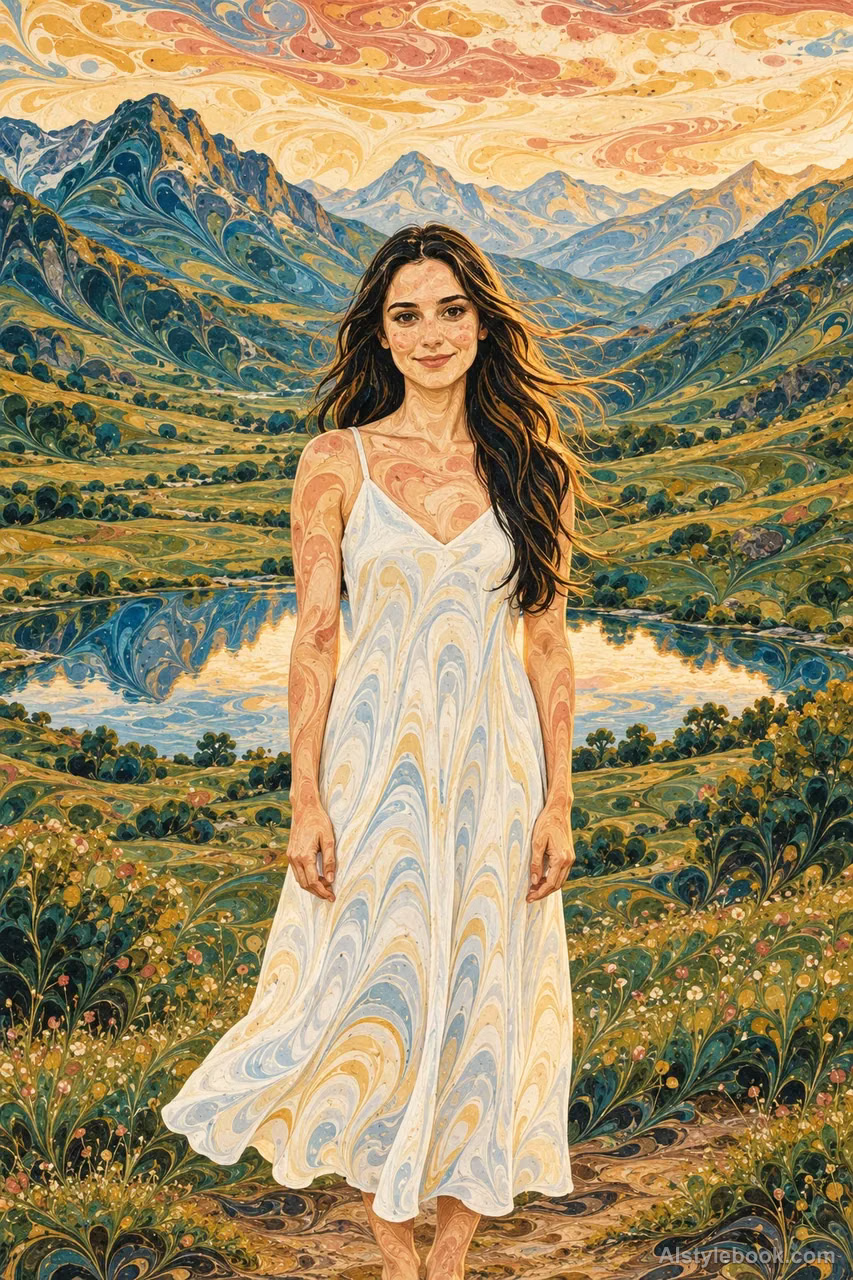
- Portrait
- Flowing color veins merge skin, hair and clothing into a more abstract figure.
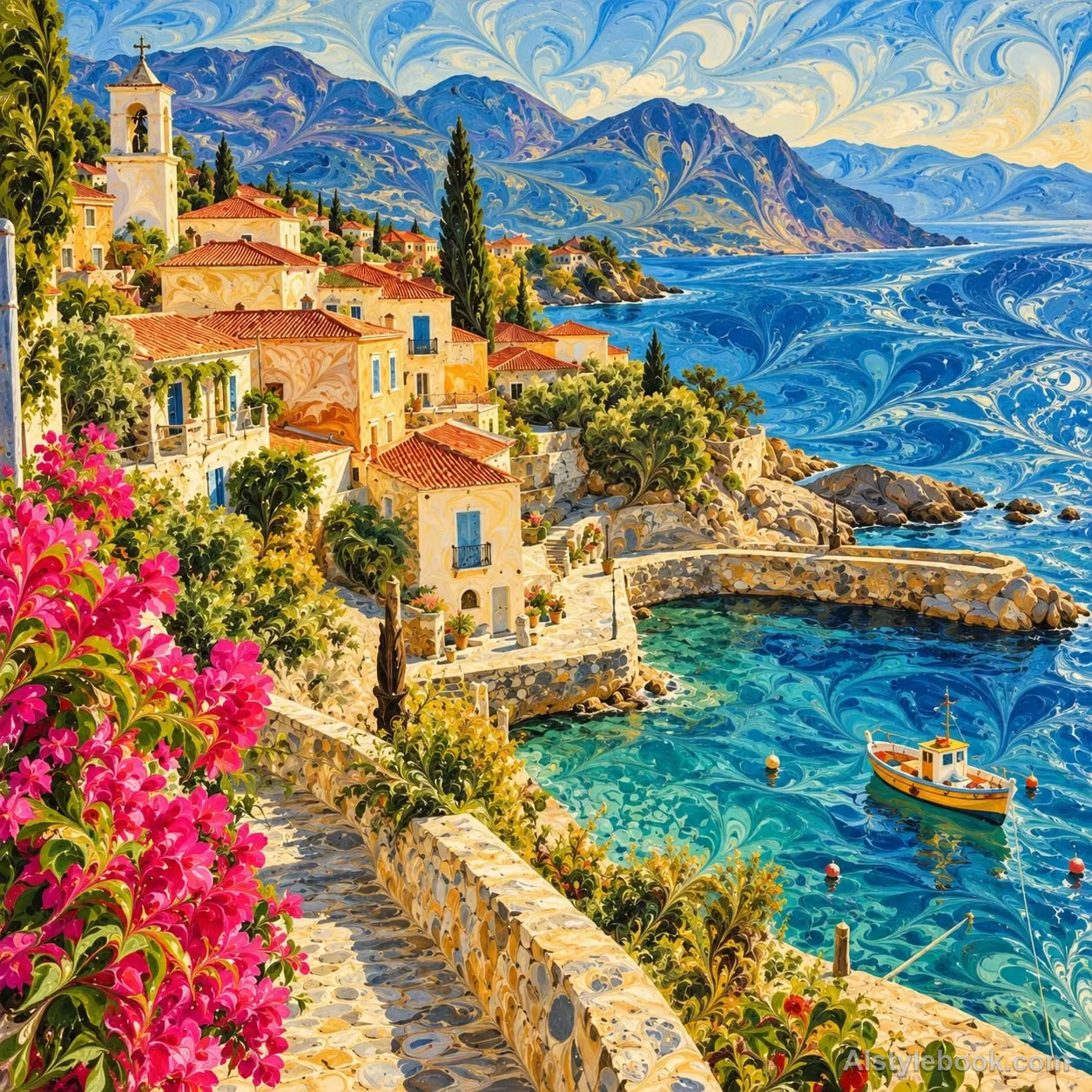
- Landscape
- Water, sky and clouds become swirling patterns with fluid rather than fixed depth.
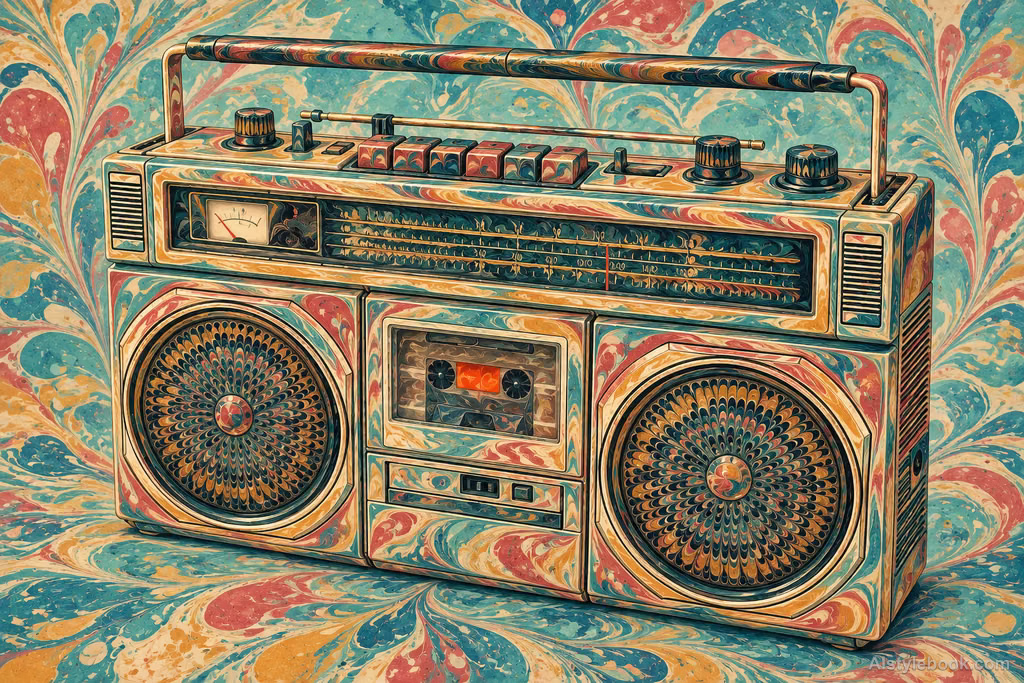
- Objects
- Dragged color bands disrupt material boundaries and emphasize curves.
- Subjects
- Choose water, clouds, flowers, curved objects or simple profiles with enough silhouette to anchor flowing patterns.
Transferring floating patterns
Ebru is the Turkish art of marbling, in which color forms patterns on a liquid surface before being transferred to paper.
Bring the style to your photos
Reusable style prompt for Ebru Marbling
Reconstruct the image through controlled figurative ebru marbling. Let floating pigment films form fine combed feather trails, nested ripples and sinuous branching edges that follow existing forms. Keep turquoise, ochre, rose and deep ink films clearly separated, turning restrained eddies with volume. Preserve the thin, softly lustrous quality of a paper transfer. Build values from band width and layered liquid contours, integrating every detail into the flowing pattern.Use the same style prompt for portraits, landscapes and objects.
Create with this styleKeep exploring


