
Photography & Film
Fluorescence-Imaging Interpretation
Style guide
Colored fiber networks, clustered cells and granular membranes on near-black rebuild external forms through localized fluorescence.
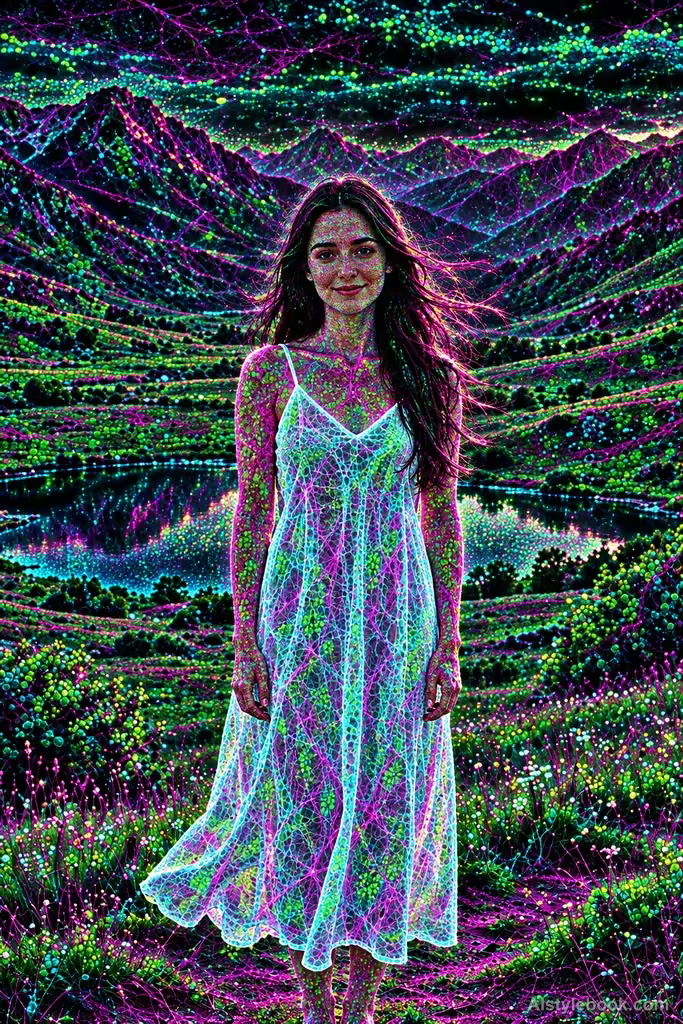
PortraitStyle effect
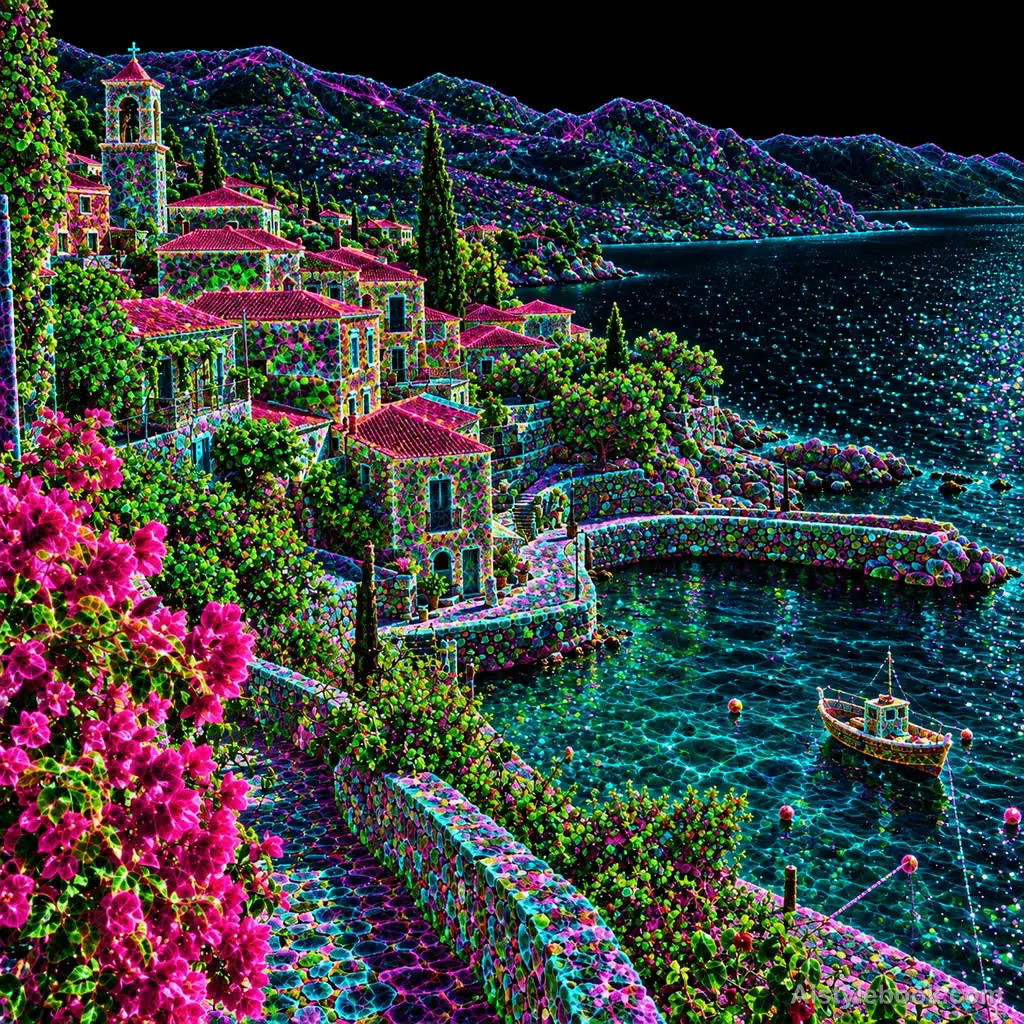
LandscapeStyle effect
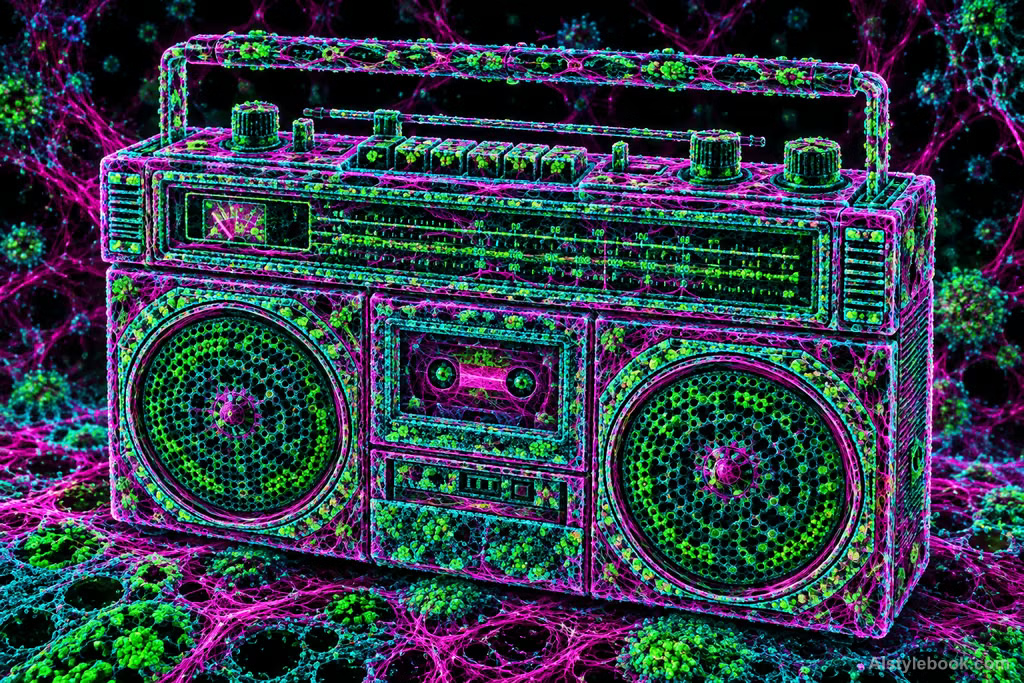
ObjectsStyle effect
The visual language
What is Fluorescence-Imaging Interpretation?
Colored fibers, cellular clusters and granular membranes rebuild external shapes on near-black. Fluorescence concentrates on microstructures as an artistic microscopy analogy rather than a record of staining or observation.
Fluorescence microscopy isolates emitted light against a dark field; this artwork borrows that viewing logic.
A figure built from bright fibers and cell-like clusters suggests microscopic scale without representing an observed specimen.
How the style changes different subjects
- Portrait
- Luminous microstructures or translucent membranes replace skin and clothing, retaining broad contours and density changes.
- Landscape
- Layered membranes, particles and edge halos make scenery resemble magnified tissue.
- Objects
- Cell-like clusters, fibers or gray films replace familiar object surfaces.
- Subjects
- Choose plants, translucent objects, simple sculptures or broad silhouettes with clear boundaries for luminous particles or membranes.
Bring the style to your photos
Reusable style prompt for Fluorescence-Imaging Interpretation
Reconstruct all external forms through an artistic fluorescence-imaging analogy. Against near-black, magenta fibers, clustered green cells and cyan granular membranes interweave into recognizable structures. Bright nodes and dark gaps establish depth. Distinguish materials with segmented lattices, fine speckles and translucent networks, concentrating fluorescence along these microstructures so the large-scale contours stay readable while acquiring intricate internal visual layers.Use the same style prompt for portraits, landscapes and objects.
Create with this styleKeep exploring


