
Photography & Film
Phase-Contrast Interpretation
Style guide
Translucent pearl-gray density layers and paired bright-dark boundary halos create a soft, deep phase-contrast impression.
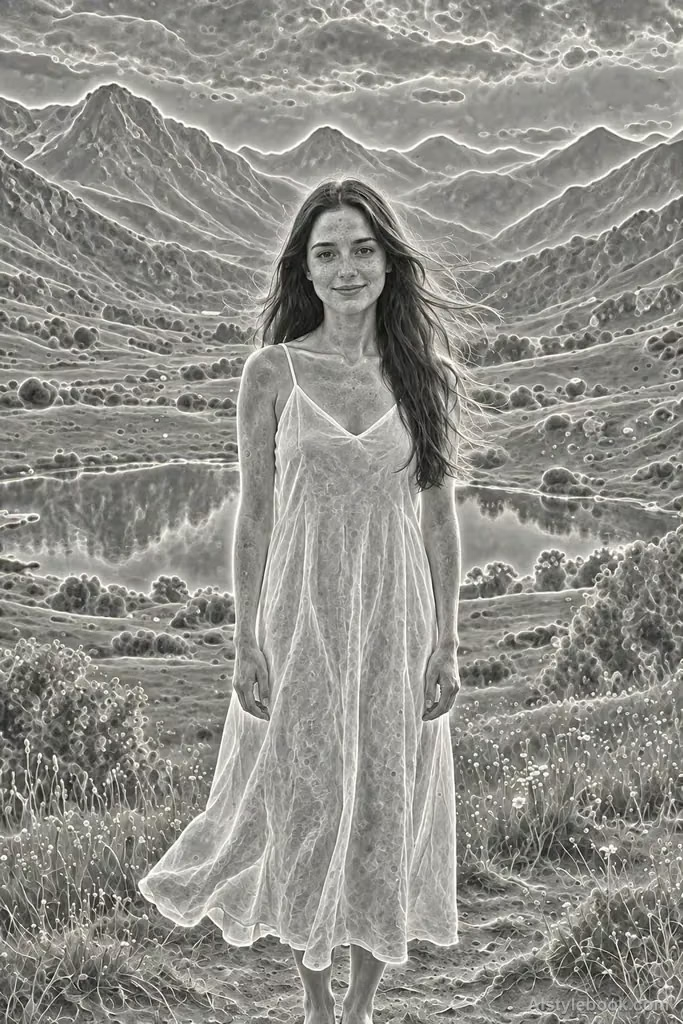
PortraitStyle effect
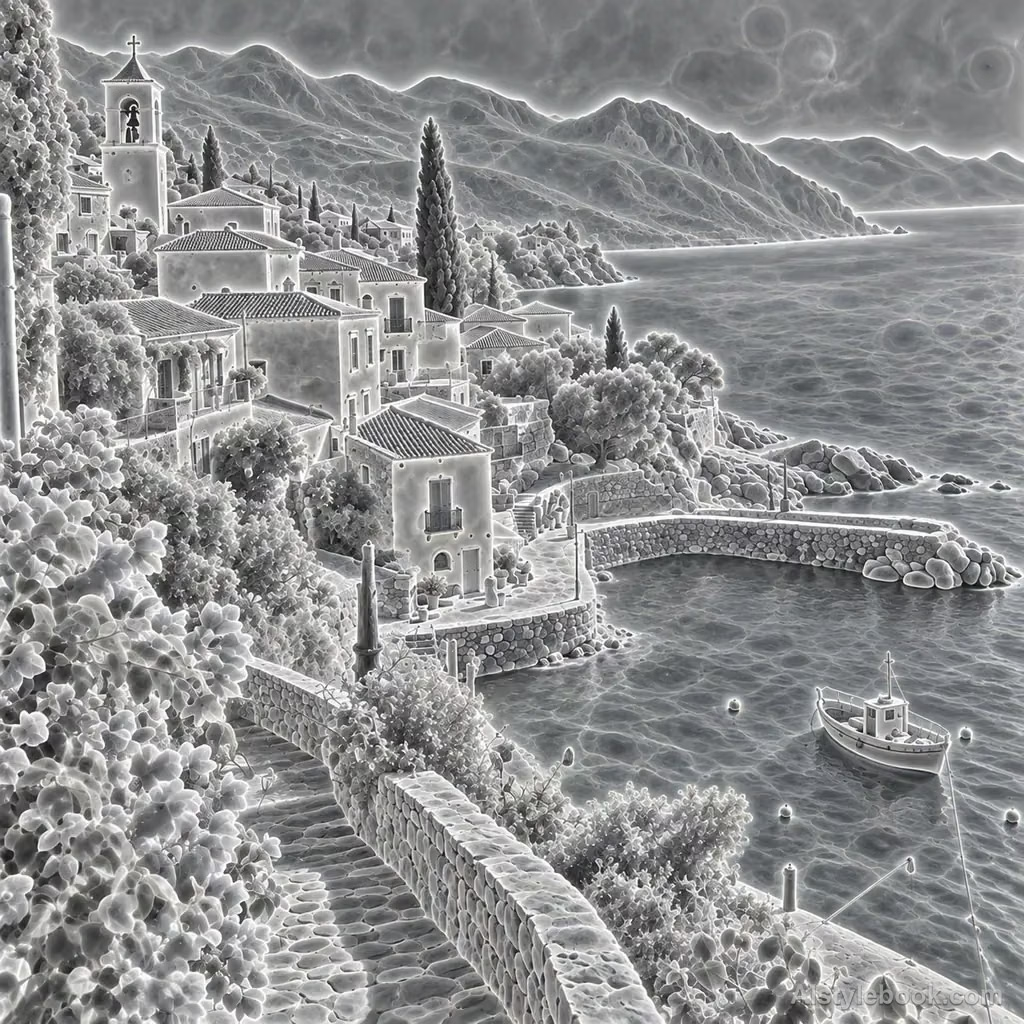
LandscapeStyle effect
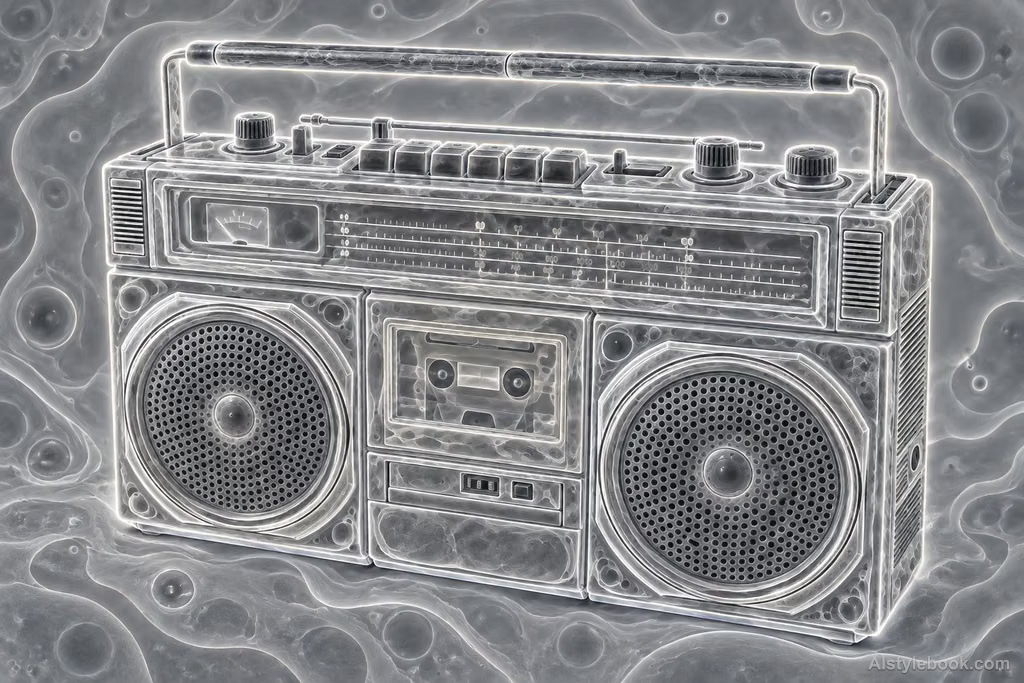
ObjectsStyle effect
The visual language
What is Phase-Contrast Interpretation?
Pearl-gray density layers interpenetrate as paired light-dark halos trace boundaries. Cloudlike interiors and transparent membranes create microscopy-inspired art rather than identifying a real specimen.
Phase contrast turns optical phase differences into visible contrast; this artwork borrows its translucent layers and halos.
A familiar object rendered as overlapping gray membranes remains an artistic analogy rather than a test result.
How the style changes different subjects
- Portrait
- Luminous microstructures or translucent membranes replace skin and clothing, retaining broad contours and density changes.
- Landscape
- Layered membranes, particles and edge halos make scenery resemble magnified tissue.
- Objects
- Cell-like clusters, fibers or gray films replace familiar object surfaces.
- Subjects
- Choose plants, translucent objects, simple sculptures or broad silhouettes with clear boundaries for luminous particles or membranes.
Bring the style to your photos
Reusable style prompt for Phase-Contrast Interpretation
Reconstruct the image through an artistic phase-contrast analogy, turning forms into translucent pearl-gray density layers within a continuous gray field. Paired bright and dark halos trace major material boundaries; soft cloudy interiors contain nested transparent membranes. Model volume through restrained grayscale, boundary halos and subtle refractive relief, keeping external contours and spatial relationships coherent and legible.Use the same style prompt for portraits, landscapes and objects.
Create with this styleKeep exploring


