
3D & Miniatures
Particle Dispersion
Style guide
A small clear form gradually disperses into fine lines and particles, with limited ink and broad negative space creating dynamic tension.
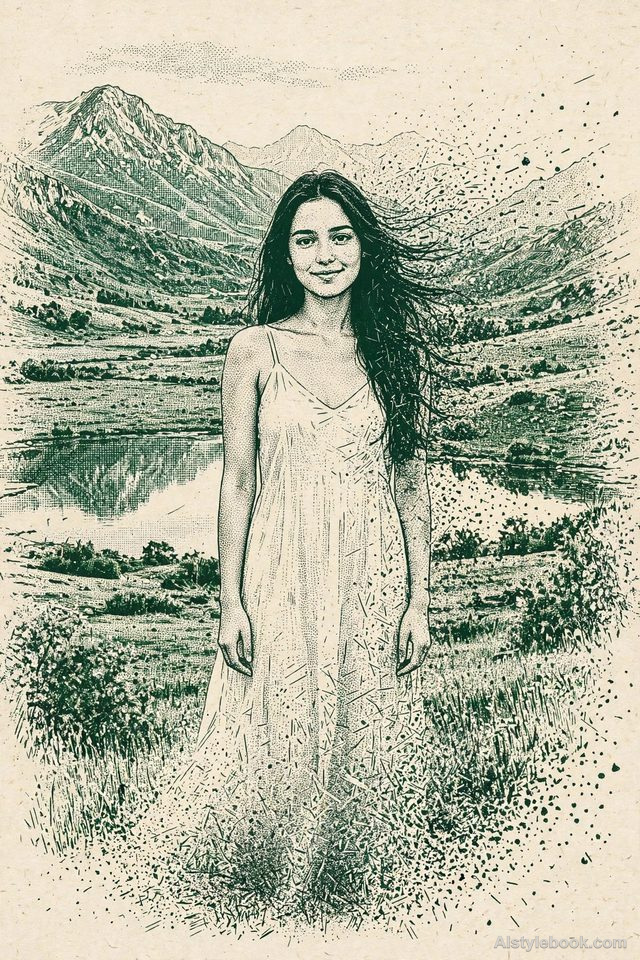
PortraitStyle effect
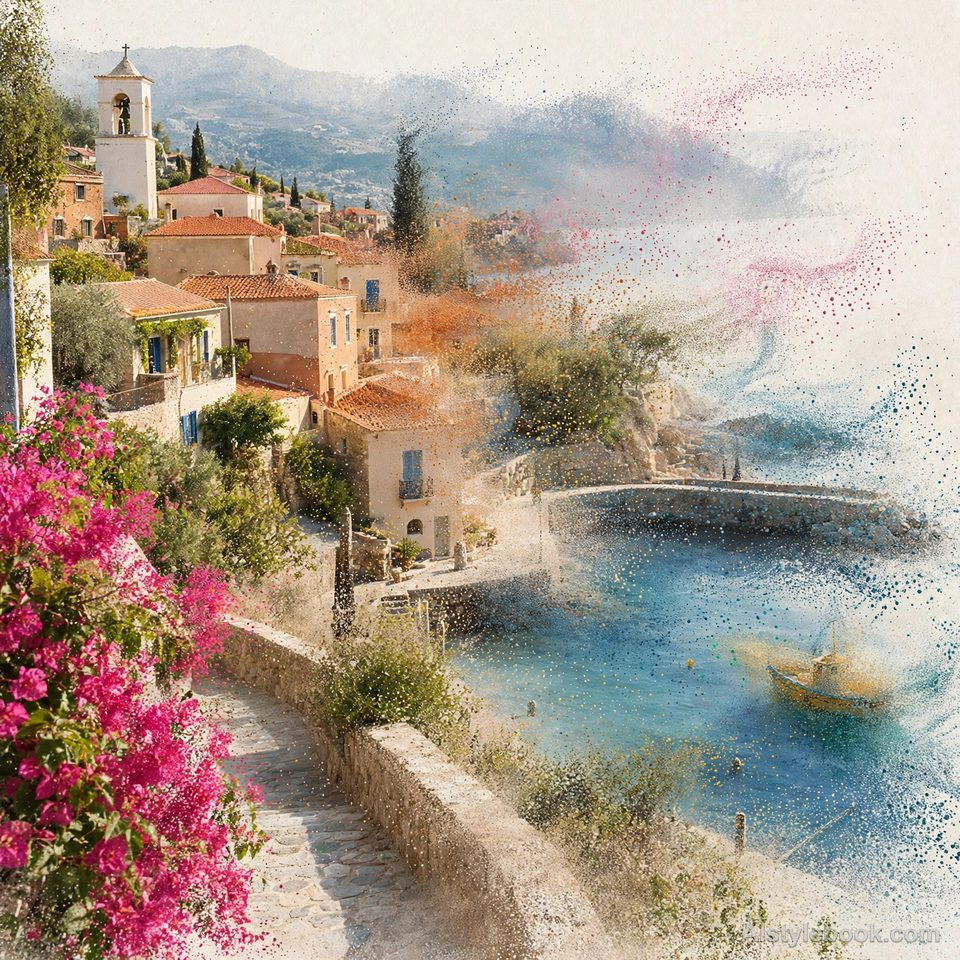
LandscapeStyle effect
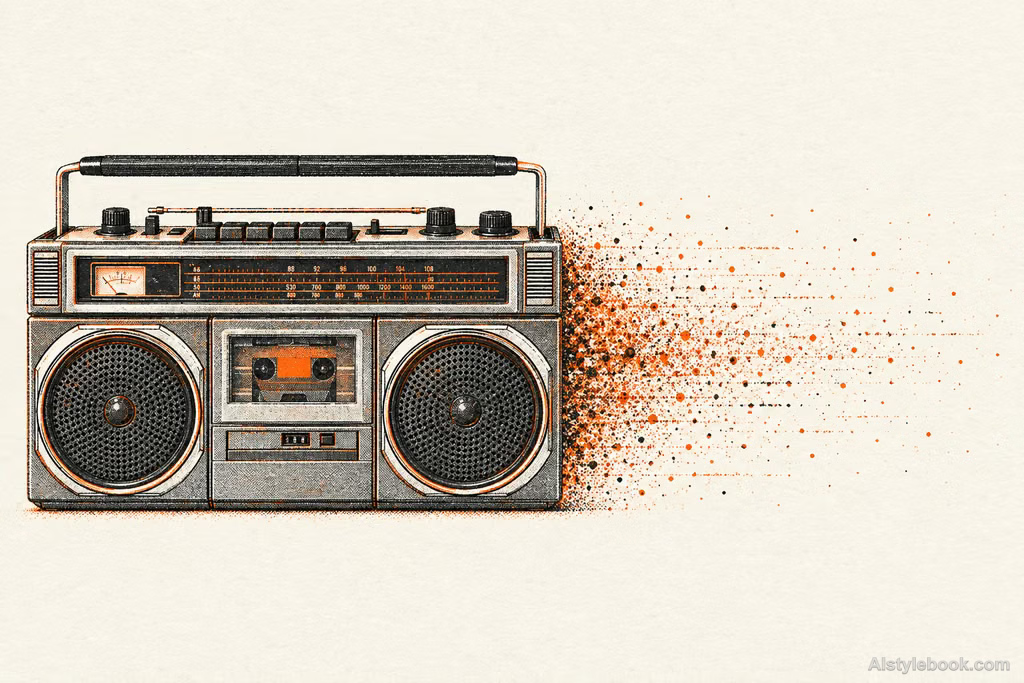
ObjectsStyle effect
The visual language
What is Particle Dispersion?
A clear small subject gradually disperses into fine lines and particles, with density transitions preserving its movement direction. Limited ink and broad blank space focus tension on the dissolving edge.
Particle dispersion preserves continuity between a solid form and increasingly separate elements.
A garment becoming lines and then scattered points, beside a clear face, makes the transition traceable.
How the style changes different subjects
- Portrait
- A clear core pose contrasts with hair or body edges dissolving into lines and particles.
- Landscape
- Buildings, trees or ridges transition from solid form to dispersed grains against open space.
- Objects
- Selected edges break outward while the main object remains recognizable.
- Subjects
- Choose moving figures, birds, vehicles or bold objects with one clear direction of dispersal.
Bring the style to your photos
Reusable style prompt for Particle Dispersion
Compress the subject into a small, clear anchor within expansive negative space. Extend fine lines, broken trails, and coarse halftone particles along one distinct direction of movement. Make the core dense and forceful, with edges progressively sparse and fragmented as they dissolve into paper white. Maintain one coherent motion logic. Build depth with two or three ink colors, varied grain density, overprinting, and slight misregistration. Let trail length, tonal strength, and directional negative space create spatial rhythm.Use the same style prompt for portraits, landscapes and objects.
Create with this styleKeep exploring


