
Painting & Drawing
Rococo Painting
Style guide
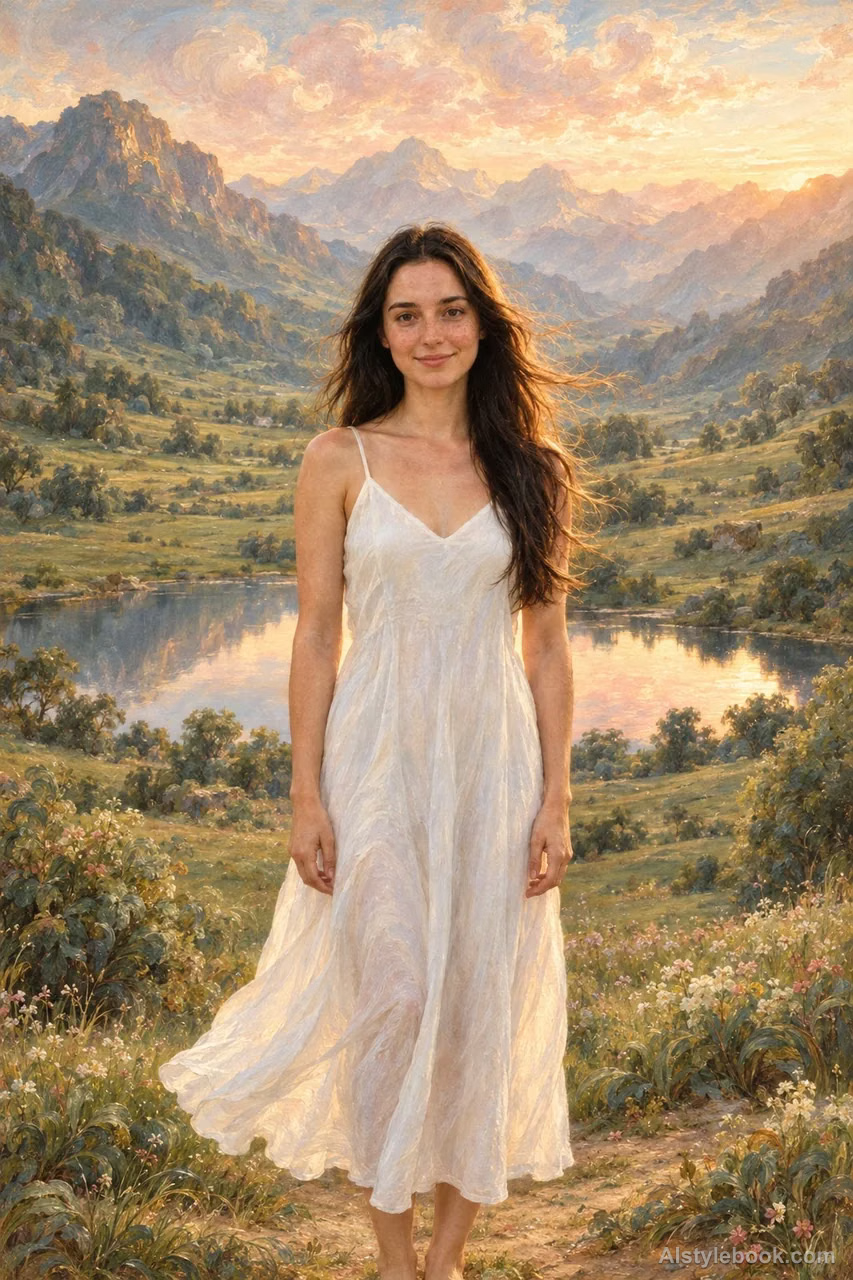
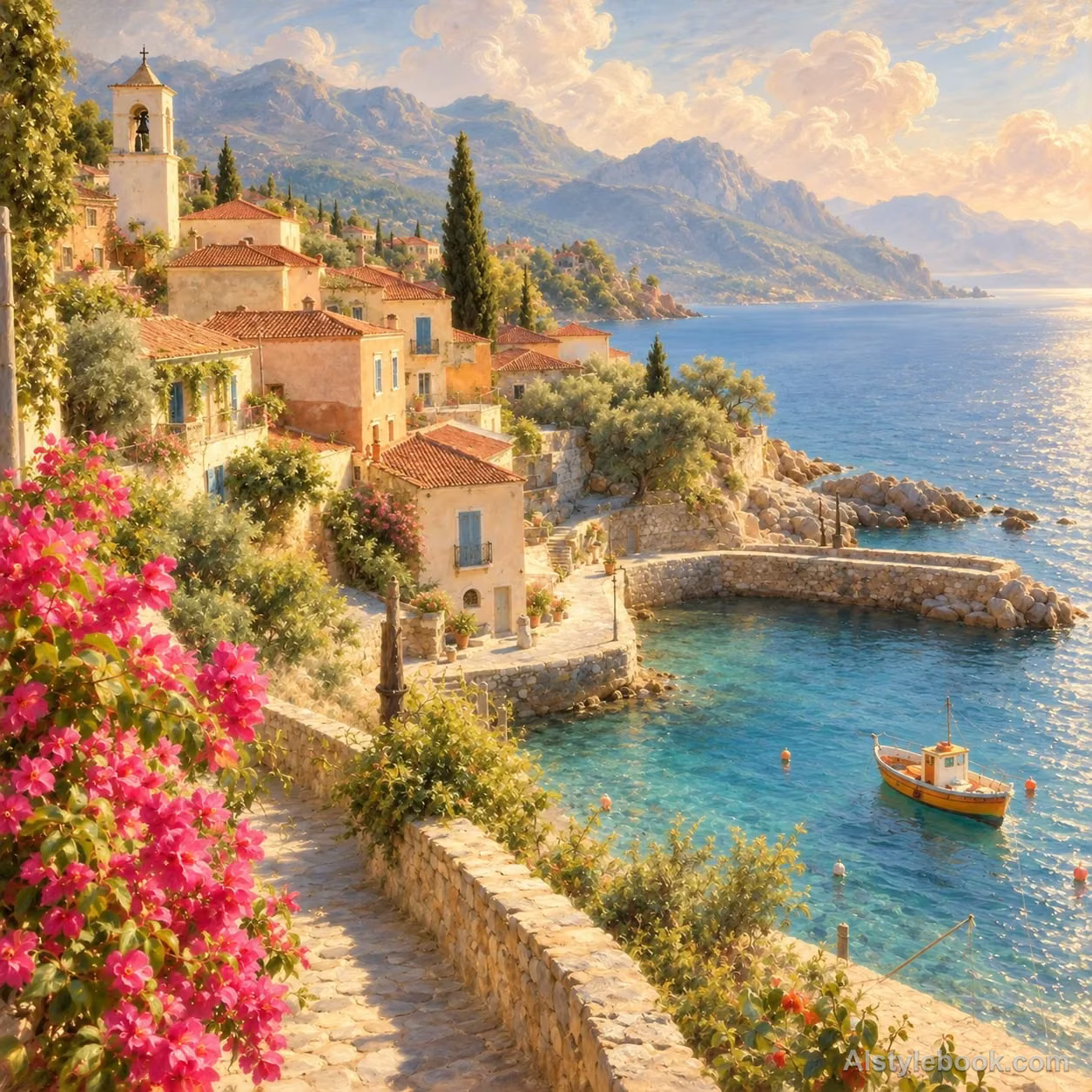
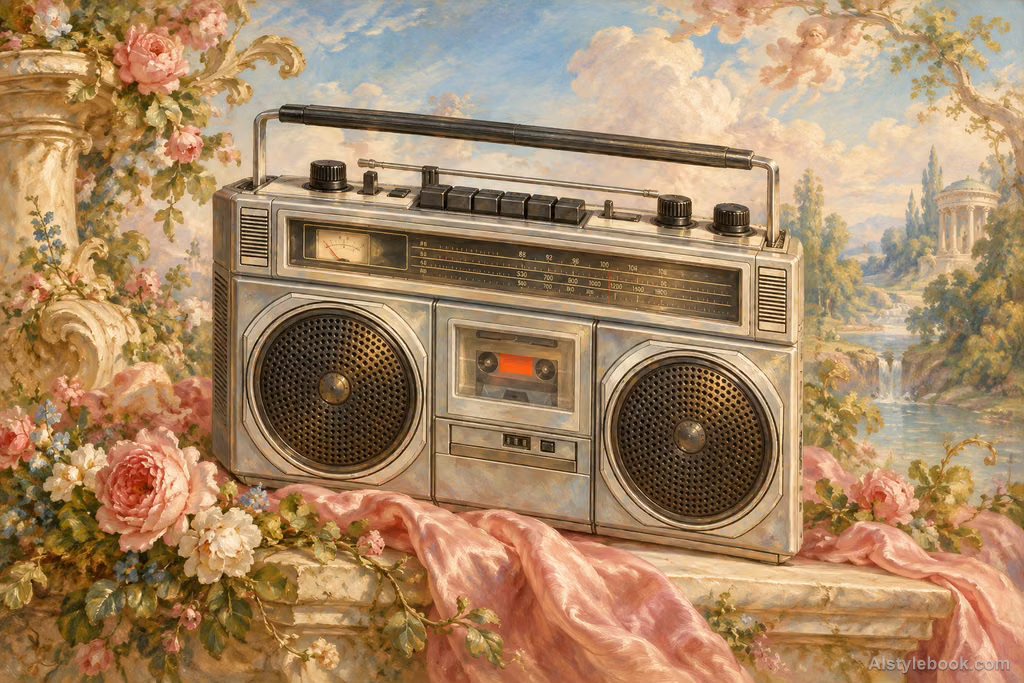
Thin glazing and fine feathered strokes create pearly light, with soft pink, cool blue and curling lines giving a light, translucent appearance.
The visual language
What is Rococo Painting?
Thin glazing and fine feathered marks create pearly highlights, with pale pink, cool blue and warm gold reflecting one another. Turning curves lighten the space while shadows remain transparent.
Rococo lightness depends on curving composition, luminous color and nuanced gestures.
Highlights following a figure's pose into surrounding foliage can make the whole scene feel choreographed.
How the style changes different subjects
- Portrait
- Luminous skin and fabric emphasize folds, ornaments and light gestures with gentle edges.
- Landscape
- Gardens, clouds and architecture take on soft colors, decorative curves and a bright atmosphere.
- Objects
- Curved silhouettes, ornament and reflections become more elaborate within a pastel palette.
- Subjects
- Choose garden figures, flowers, porcelain, mirrors or curved furniture with rich detail and gentle lighting.
Rococo in the eighteenth century
Rococo emerged in France during the 1720s and 1730s, shaped by craftspeople and designers. It spread to Britain and elsewhere across furniture, silver, ceramics and artistic design.
Bring the style to your photos
Reusable style prompt for Rococo Painting
Repaint the image with Rococo-inspired refinement. Harmonize light through thin luminous glazing, pearly soft volume and fine feathering strokes. Let contours dissolve gently in bright areas and gather gradually in transparent warm brown and pale violet shadows. Favor pink-white, soft blue and warm pale gold. Organize existing curves into graceful arabesque rhythms, keeping detail light and spacious while layered translucency creates soft air and delicate relief.Use the same style prompt for portraits, landscapes and objects.
Create with this styleKeep exploring


