
Illustration & Design
Swiss Grid Composition
Style guide
A clear asymmetric grid stabilizes the subject.


The visual language
What is Swiss Grid Composition?
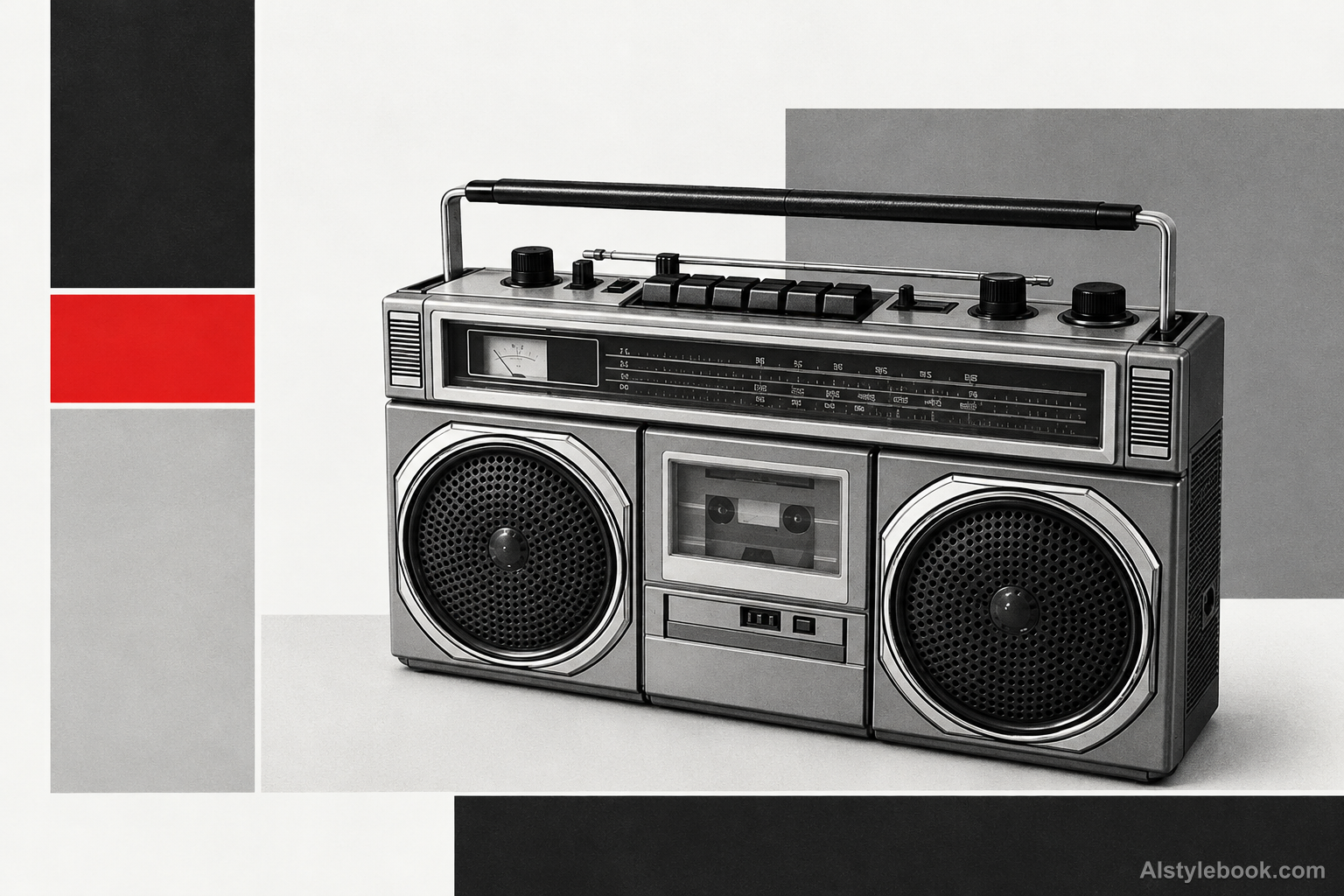
A clear asymmetric grid stabilizes the subject. Black, white and gray image regions with a small red accent establish a restrained editorial hierarchy through spacing and alignment.
Swiss grid composition coordinates alignment, spacing and asymmetrical balance without needing visible grid lines.
A left-positioned subject, aligned gray components and one red accent can create a restrained hierarchy.
How the style changes different subjects
- Portrait
- Geometric contours and color shapes reduce facial detail, emphasizing placement, proportion and open space.
- Landscape
- Lines, planes and grids organize buildings and terrain around spatial order rather than texture.
- Objects
- Circles, rectangles and straight lines break objects into balanced compositional elements.
- Subjects
- Choose geometric buildings, tools, clear figures or orderly object arrangements with distinct colors and scales.
Variant relationship
A Swiss-grid arrangement variant of editorial composition. Compare with Editorial Magazine Poster.
Editorial composition allows varied image-text hierarchies. This variant restricts the design to an asymmetric orthogonal grid, grayscale with one red accent, consistent spacing and broad white areas; atlas samples omit extra headline text.
Bring the style to your photos
Reusable style prompt for Swiss Grid Composition
Keep the source subject and its identifying arrangement in one coherent image. Interpret it as a restrained Swiss-grid editorial composition: clearly aligned asymmetric rectangular regions, measured consistent margins, large quiet white areas and disciplined black-gray image planes. Use grayscale for the source-derived picture with one small flat red rectangular accent aligned to an existing structural edge. Make the grid visible through crop boundaries, alignment and spacing rather than drawing a mesh over the subject. Avoid decorative serifs, ornamental patterns, multiple duplicate pictures, headlines, body text, numbers, logos, interface elements or added scene objects.Use the same style prompt for portraits, landscapes and objects.
Create with this styleKeep exploring


