
Illustration & Design
Woven Image Lattice
Style guide
Interlaced horizontal and vertical strands retain grid connections while bends and shading form the image.
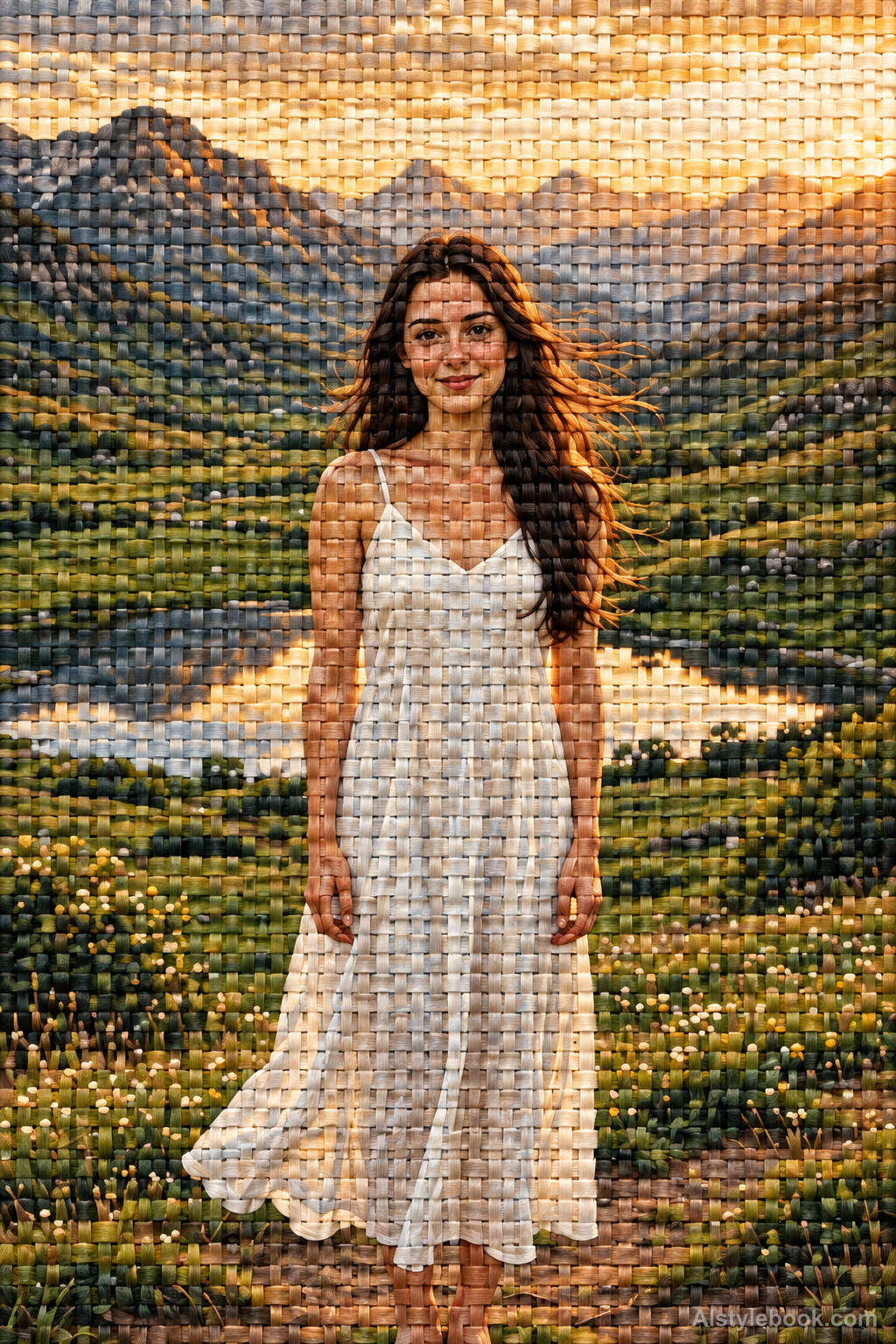
PortraitStyle effect
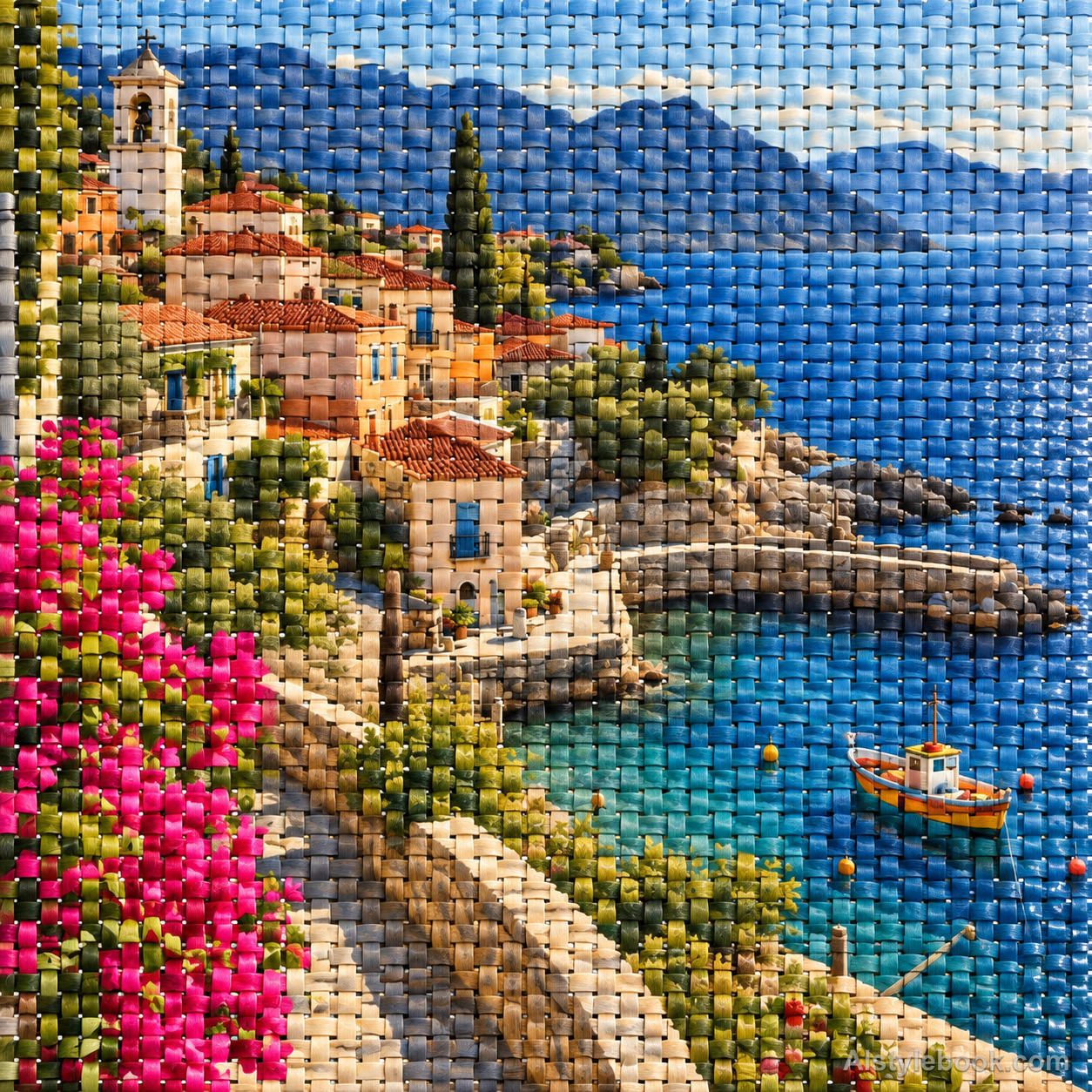
LandscapeStyle effect
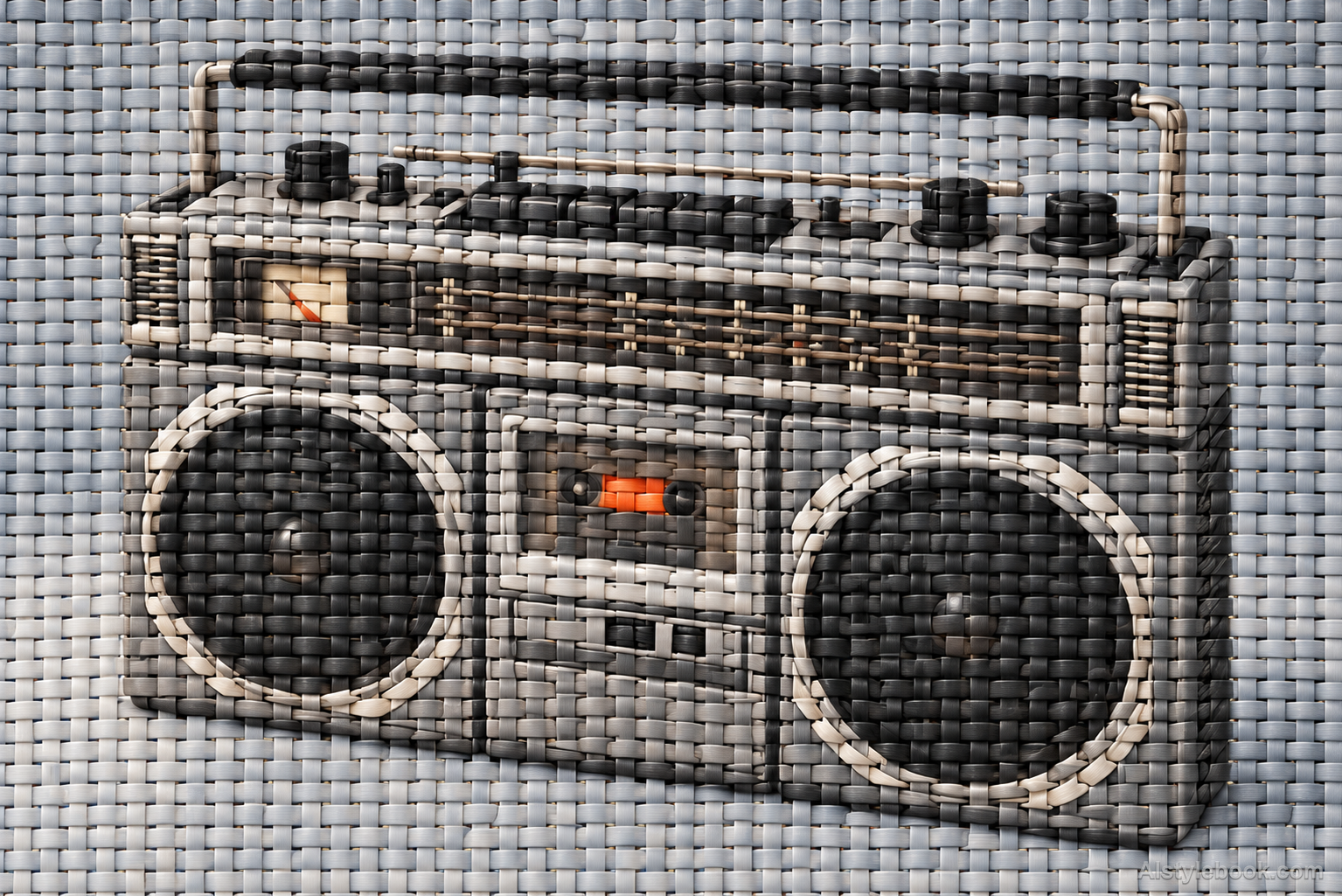
ObjectsStyle effect
The visual language
What is Woven Image Lattice?
A woven image lattice keeps narrow horizontal and vertical strands continuously interlaced. Their bending and shading follow the source image. Alternating over-under crossings and small openings make the shallow surface legible as weaving, emphasizing sheet continuity rather than separate rods.
Woven lattices preserve alternating over-under crossings as their bands curve.
A cheek rising within continuous interlaced strips can make its volume understandable through the weave itself.
How the style changes different subjects
- Portrait
- Continuous crossing bands reveal features through grid curvature and tone.
- Landscape
- Scenery becomes relief within a woven surface whose gaps and crossings supply depth.
- Objects
- Objects emerge from a connected lattice rather than separate material textures.
- Subjects
- Choose close portraits, rounded objects or clear tonal images with broad curves for grid deformation.
Bring the style to your photos
Reusable style prompt for Woven Image Lattice
Translate the complete image into a tightly organized woven lattice of narrow horizontal and vertical strands. Preserve a continuous over-under crossing pattern and equal base spacing, then bend the grid gradually and change strand darkness according to source shape and tone. Let small open cells remain visible between strands and use restrained source-derived color to maintain the original forms. Show a shallow graphic woven surface with gentle local relief, not a three-dimensional rod skeleton, basket object, triangular truss or unchanged photograph under a mesh overlay.Use the same style prompt for portraits, landscapes and objects.
Create with this styleKeep exploring


