
Printmaking & Printing
Line Etching
Style guide
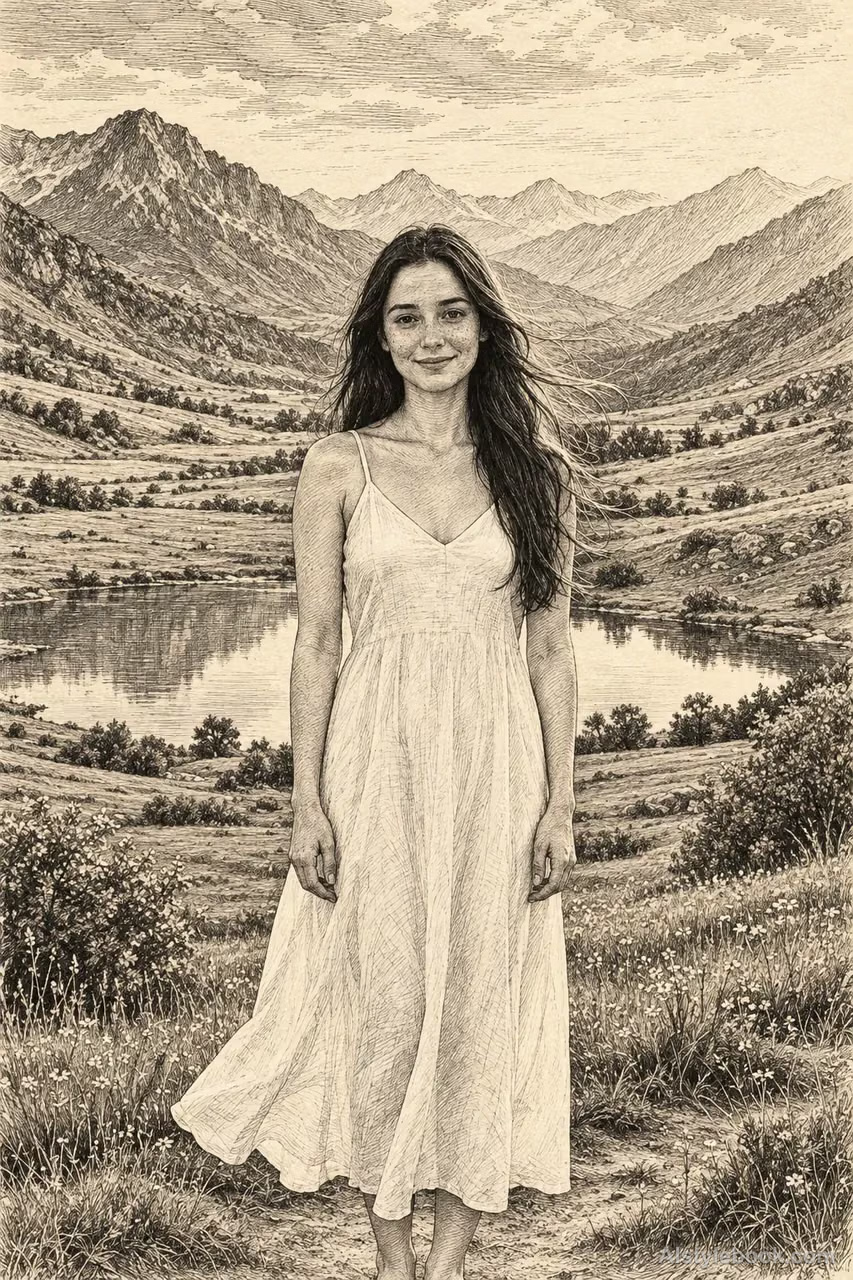
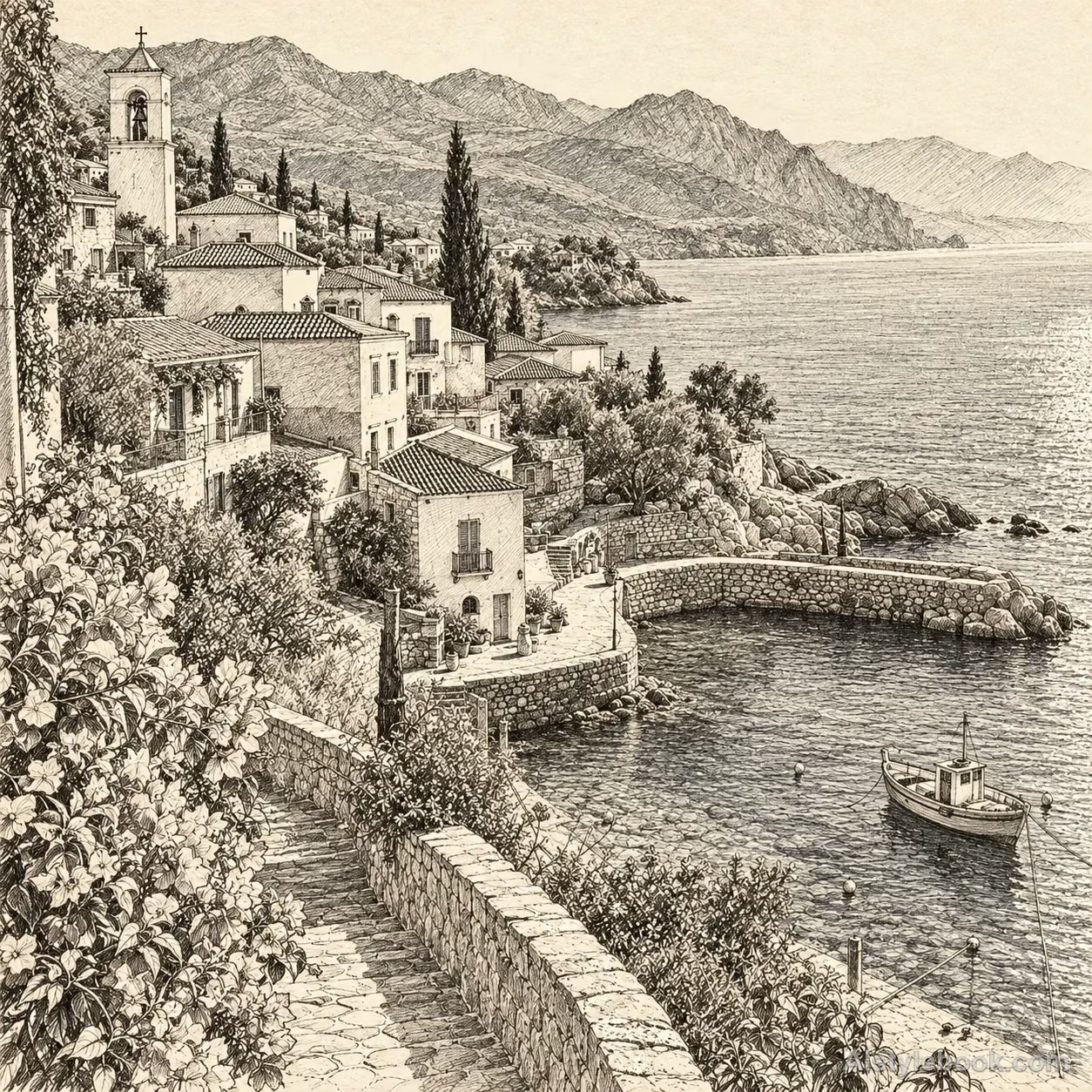
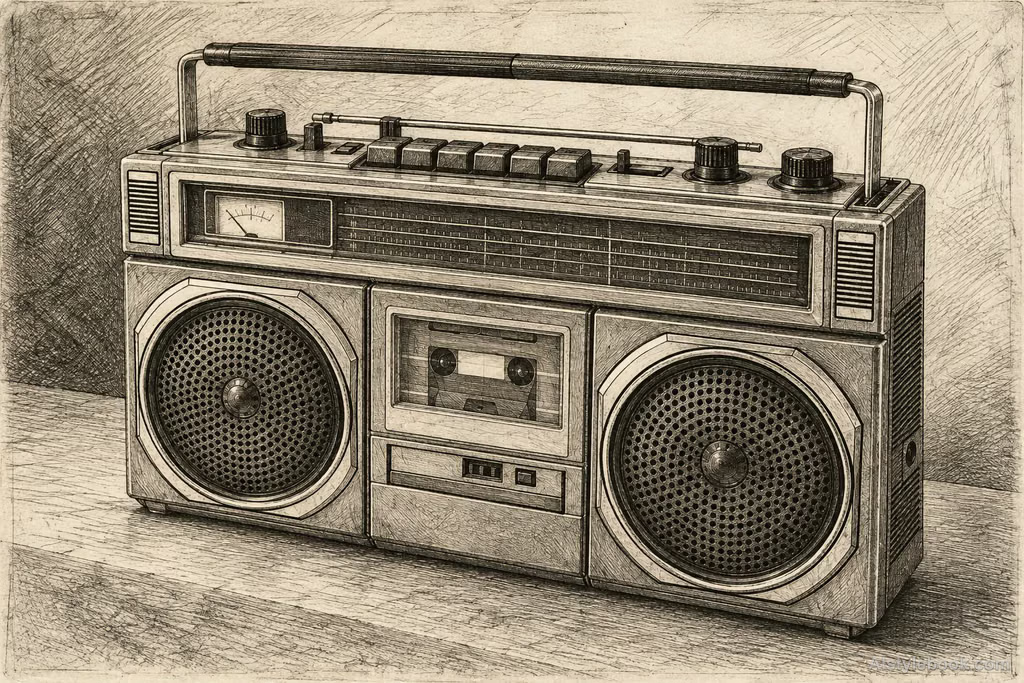
Free fine lines and varied crosshatching create light tonal modeling, with a pale wiped plate tone preserving the brightness of paper.
The visual language
What is Line Etching?
Freely drawn fine lines and crosshatching form the tone, while a faint plate tone connects the open areas. Paper brightness shines between marks and keeps even the shadows light.
Etching translates needle-drawn marks through a resist into printable recessed lines.
Loose window strokes and crossed shadow lines can preserve both architectural structure and the movement of the hand.
How the style changes different subjects
- Portrait
- Dense lines model features and folds, turning light and shadow into changing line spacing.
- Landscape
- Directional engraved or hatched marks separate architecture, branches and rocks.
- Objects
- Contour-following lines describe curves while bare areas and dense marks separate light and dark.
- Subjects
- Choose side-lit portraits, fur, trees, buildings or metal objects with clear changes of surface direction.
Etching as a painter’s medium
In the seventeenth and eighteenth centuries, artists including Rembrandt and Piranesi favored etching, making its freely drawn lines an important medium for original pictorial experiments.
Bring the style to your photos
Reusable style prompt for Line Etching
Render the image as a fine line etching. Record contours and surface turns with freely drawn needle-like lines carrying slight acid-bitten irregularity. Accumulate shadows through changing crosshatch density, preserve luminous unprinted highlights and retain soft wiped plate tone in selected areas. Warm heavy paper shows fine fibers and a slight impression. Vary spacing and gesture with form to create light, precise and tactile intaglio detail.Use the same style prompt for portraits, landscapes and objects.
Create with this styleKeep exploring


